
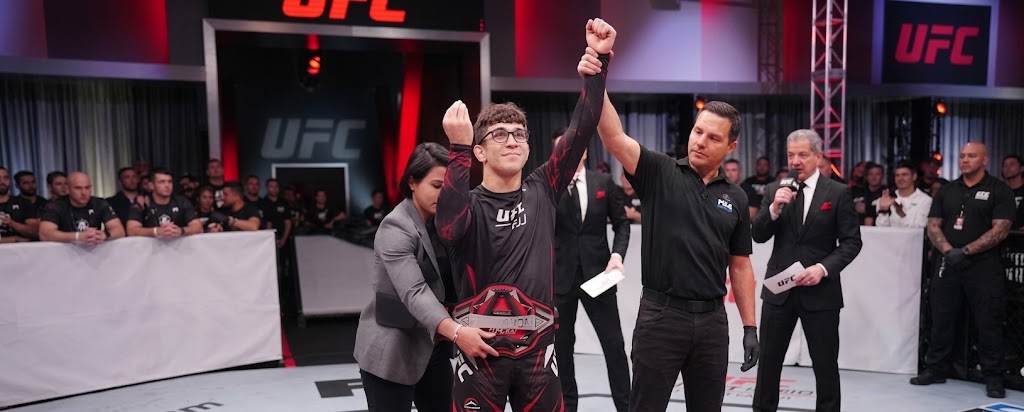
BJJ competition 2026 is moving fast. This guide breaks down the ADCC 2026 World Championship results from Kraków, the September 24 UFC BJJ 11 card headlined by Mikey Musumeci vs. Bryce Mitchell, how UFC BJJ's scoring system works, the real differences between Gi and No-Gi competition, and what to do to actually be ready for your next tournament.
Brazilian Jiu-Jitsu competition is entering one of its most interesting stretches in years, with three very different events showing where competitive grappling is headed.
The ADCC 2026 World Championship took place September 12–13 in Kraków, Poland - the tournament's first time ever in Poland and its first stop outside Las Vegas since 2019. UFC BJJ 11: Musumeci vs. Mitchell follows on September 24, and the UFC BJJ Opens Fort Lauderdale runs September 26–27.
Together, these events cover the full spectrum of modern grappling: elite No-Gi tournament competition, professional one-off submission-grappling matchups, and open-entry tournaments anyone can enter. Whether you're following ADCC results, gearing up for your first tournament, or trying to understand Gi vs. No-Gi, here's what to know about BJJ competition in 2026.

Table of contents
1. ADCC 2026: Results and Champions
The ADCC World Championship remains the most prestigious tournament in submission grappling — often called the "Olympics of grappling." The 2026 edition was held September 12–13 at TAURON Arena in Kraków, bringing together the top male and female grapplers in the world across five men's divisions, three women's divisions, and the openweight absolute bracket.
1.1. ADCC 2026 Champions
| Division | 2026 Champion |
|---|---|
| Men's +99 kg | Victor Hugo |
| Men's -99 kg | Luke Griffith |
| Men's -88 kg | Pawel Jaworski |
| Men's -77 kg | Magomed Dzharbaev |
| Men's -66 kg | Kennedy Maciel |
| Women's +65 kg | Helena Crevar |
| Women's -65 kg | Ana Carolina Vieira |
| Women's -55 kg | Jasmine Rocha |
| Absolute | Felipe Pena |
Yuri Simões also won the event's superfight, submitting former absolute and -99kg champion Kaynan Duarte.
1.2. Felipe Pena Makes ADCC History With a Second Absolute Title
Felipe Pena's win in the absolute division was the biggest storyline of the weekend. The absolute bracket pits grapplers from every weight class against each other, so success there means beating opponents who may be significantly bigger and stronger - a different challenge than winning within your own division.
Pena had already lost in the +99 kg semifinal before entering the absolute bracket, where he submitted Roosevelt Sousa via rear-naked choke in the final. The win made him the first athlete in ADCC history to win the absolute division twice, adding to his 2017 title.
1.3. Victor Hugo Wins +99 kg With a Perfect Submission Run
Victor Hugo took the men's +99 kg title with four submission wins and no points scored against him across the entire tournament, finishing Josh Saunders in the final with an armbar. He entered the bracket seeded seventh and left as champion - then announced his retirement from ADCC competition immediately after the win.
Heavyweight grappling is often associated with pressure and top control, but Hugo's run was a reminder that a larger athlete can be just as dangerous from the bottom, combining size with guard work and finishing instincts.

1.4. Kennedy Maciel Wins the -66 kg Division
Kennedy Maciel - son of two-time ADCC absolute champion Rubens "Cobrinha" Charles - won the men's -66 kg division. His performance continues a family legacy in the sport's lighter weight classes, built on technical guard passing, scrambling, and submission grappling rather than pure strength.
1.5. Helena Crevar and the Women's Divisions
Helena Crevar won the women's +65 kg division with three consecutive submission wins, becoming, at 19, one of the youngest ADCC gold medalists in history. Ana Carolina Vieira defended her -65 kg title, and Jasmine Rocha took gold at -55 kg.
Women's submission grappling continues to deepen at the elite level, with these champions bringing a mix of wrestling, guard systems, and finishing ability that has made the women's brackets some of the most closely contested at the event.
2. What ADCC 2026 Shows About Modern No-Gi BJJ
Because ADCC is a No-Gi tournament, it's a strong barometer for where competitive No-Gi jiu-jitsu is trending. A few patterns stood out in 2026:
- Strong wrestling and takedown exchanges opening most matches
- Advanced guard systems built around scrambles, not just stalling
- Heavier emphasis on positional transitions over holding a single position
- Leg-lock and lower-body submission threats throughout every weight class
- Back control and choking sequences as a primary finishing route
- More tactical pacing across longer ADCC-length matches
- A growing premium on being equally dangerous from top and bottom
The tournament produced a high number of finishes, with back-control chokes, straight ankle locks, and triangles among the most common submissions - a sign that modern No-Gi competitors are training to attack and defend from multiple positions rather than specializing in one phase of the game.
3. UFC BJJ 11: Mikey Musumeci vs. Bryce Mitchell
The next major event on the calendar is UFC BJJ 11: Musumeci vs. Mitchell, live from Meta APEX in Las Vegas on Thursday, September 24, 2026, at 8 p.m. ET / 5 p.m. PT. Like every event in the UFC BJJ series, it streams live and free on the UFC BJJ YouTube channel.
The main event pits two very different competitive backgrounds against each other:
3.1. Mikey Musumeci vs. Bryce Mitchell — 145 lbs
Musumeci is a five-time IBJJF world champion and the reigning UFC BJJ bantamweight titleholder, widely regarded as one of the most technical competitors in the sport. Mitchell is an active UFC featherweight fighter known for a wrestling-heavy, submission-oriented style - including a twister finish inside the Octagon, one of only two ever landed in UFC history. The match came together after Mitchell publicly criticized Musumeci's style, and Musumeci has said he'll compete without his signature leg locks or guard-pulling, essentially taking on Mitchell at wrestling-heavy grappling instead of his usual game.
It's the clearest example yet of how professional submission grappling is pulling in athletes from across combat sports, not just the traditional BJJ competition circuit.
4. Is the UFC BJJ 11 Main Event a Title Fight?
No. The Musumeci vs. Mitchell main event at 145 lbs is not a title match — Musumeci's bantamweight belt isn't on the line since the bout is contested above his normal weight. The card's actual title fight is the co-main event: Mason Fowler defends the UFC BJJ light heavyweight championship against Nicky Rodriguez, a rematch between two of the division's most accomplished grapplers.

5. UFC BJJ 11 Fight Card
| Division | Matchup |
|---|---|
| 145 lbs (Main Event) | Mikey Musumeci vs. Bryce Mitchell |
| Light Heavyweight Title | Mason Fowler vs. Nicky Rodriguez |
| Women's Featherweight | Aurelie Le Vern vs. Rana Willink |
| Middleweight | Jay Rodriguez vs. Kevin Beuhring |
| Middleweight | Lucas Norat vs. Pedro Machado |
| Featherweight | Ryan Elgarico Jr. vs. Jordan Holy |
| Bantamweight | Mason Stritzel vs. Sebastian Zazueta |
| Welterweight | UFC BJJ Opens Winner vs. Kolby Gonzalez |
The card is subject to change ahead of fight night, as with any live grappling event.
6. How UFC BJJ Rules and Scoring Work
UFC BJJ is a professional, submission-only grappling format contested inside "The Bowl" - a rounded competition area designed to keep both athletes engaged rather than circling away from contact. Matches are decided first by submission; if no submission occurs, judges score based on:
- Initiation of bout-ending techniques (submission attempts)
- Initiation of action
- Duration of control
For spectators new to the format, a few concepts matter most:
Takedowns - Bringing an opponent from standing to the mat, which can factor into scoring and sets up top position.
Guard passing - Advancing past an opponent's legs into a more dominant position.
Mount - One of the strongest control positions, opening the door to a range of submissions.
Back control - Widely considered the most valuable position in grappling, since it offers strong control along with multiple choke options.
Submissions - The match ends immediately when an athlete taps or otherwise signals they can't continue.
Exact rules can shift slightly between events and divisions, so competitors should always check the official ruleset before stepping into the bowl.
7. ADCC vs. UFC BJJ: What's the Difference?
Both are No-Gi submission-grappling formats, but they're built differently and shouldn't be treated as interchangeable.
| Feature | ADCC | UFC BJJ |
|---|---|---|
| Format | No-Gi submission grappling | No-Gi professional grappling |
| Structure | Championship tournament | Individual professional matchups |
| Frequency | Every two years | Regular standalone events |
| Weight classes | Fixed Olympic-style divisions | Set per event/division |
| Gi | No | No |
ADCC crowns a single champion per weight class through a multi-round bracket over one weekend. UFC BJJ instead books individual matchups and title defenses across a regular event calendar, closer to how the UFC itself runs its MMA cards. Rules and judging criteria differ between the two, so it's worth checking the specific ruleset before assuming they score the same way.
8. Gi or No-Gi: Which Format Should You Follow (or Compete In)?
Both formats share the same BJJ fundamentals, but grips, pacing, and strategy differ enough that it's worth understanding both before choosing where to compete.
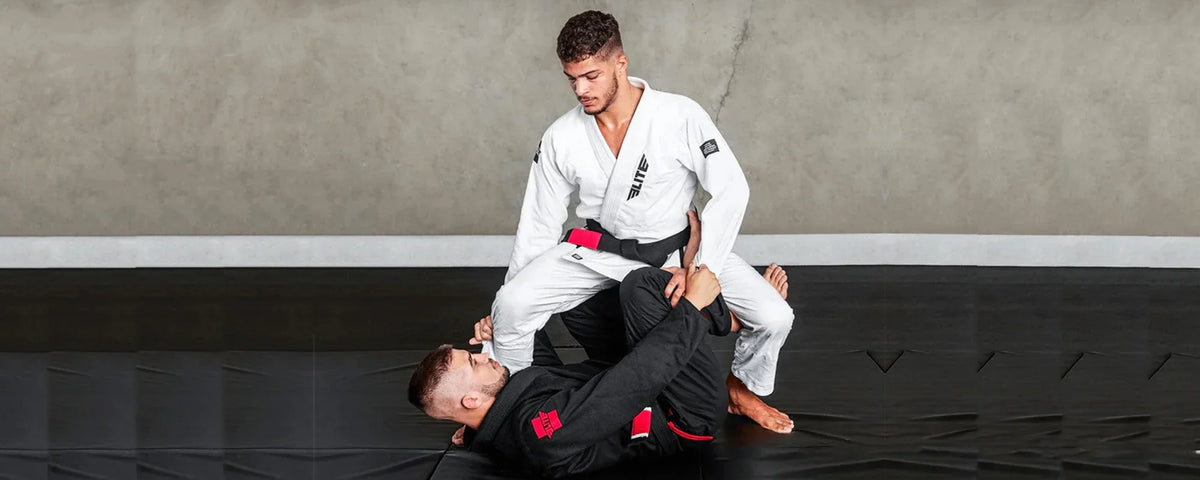
Gi BJJ requires a competition-legal BJJ Gi, which opens up grips through the sleeves, lapels, and pants. Those grips shape everything - guard passing, control, takedowns, and submission setups all look different with fabric to grab. Tournament organizers also enforce specific Gi requirements around color, fit, fabric, and condition, so it's worth checking your Gi meets a tournament's rules before weigh-ins.
No-Gi BJJ is contested in rash guards and grappling shorts, with no clothing grips available. That tends to shift the emphasis toward wrestling exchanges, positional control, and leg attacks - which is a big part of why leg locks have become such a dominant theme in events like ADCC.
ADCC is a No-Gi-only event; most traditional BJJ tournaments run separate Gi and No-Gi divisions so athletes can compete in both. Training in both formats builds different skills, but competition prep should always focus on the specific ruleset and uniform requirements of the event you're entering. If you're shopping for a competition-ready Gi, Elite Sports' BJJ Gi lineup is built around the fit and durability requirements most tournaments check for.
9. How to Prepare for a BJJ Competition
i. Learn the Rules Cold
Read the exact ruleset for your specific tournament before you do anything else - scoring, match duration, legal and illegal techniques, uniform requirements, weigh-in procedures, overtime, and penalties. Rules vary more between organizations than most first-time competitors expect, and avoidable point losses are often just rule confusion.
ii. Build a Small, Reliable Game Plan
You don't need dozens of techniques to compete well. Build a short, reliable sequence for each phase of a match - takedowns, guard, guard passing, escapes, back control, submissions, and defensive reactions. A smaller toolkit you can execute under pressure beats a large one you've only drilled occasionally.
iii. Practice Starting From Standing
Most gym rounds start on the knees or already on the ground. Competition doesn't. Spend real time on grip fighting, takedown entries, and establishing your preferred position from a standing start - this matters even more in No-Gi, where there's no gi grip to fall back on.
iv. Train Under Competition Conditions
Add rounds that mimic tournament pressure: full-length matches, short rest between rounds, starting from standing, defending a lead, and hunting a late submission with the clock running out. The more your training resembles competition day, the less that pressure will throw you off on the day itself.
v. Handle Weight and Logistics Early
Confirm your division, weigh-in time, venue, uniform requirements, and match schedule well ahead of time. If you're in a Gi division, inspect your Gi for fit and shrinkage before competition day - not at the check-in table.
10. What Can Beginners Learn From Watching Elite BJJ?
You don't need to be an advanced competitor to get value from watching ADCC or UFC BJJ. Instead of just watching for the finish, pay attention to how competitors get there: how they fight for grips, enter takedowns, manage distance, recover guard, control hips, transition between positions, and react after losing ground. Watching with that lens turns a highlight reel into an actual coaching tool.
11. Why BJJ Competition Is Getting More Attention
Competitive jiu-jitsu has grown well past its traditional tournament audience. High-level technical grappling, recognizable crossover athletes, professional presentation, and shorter, easier-to-follow matchups have all pulled in fans who wouldn't normally sit through a full tournament bracket. ADCC remains the benchmark for elite No-Gi competition, while UFC BJJ has opened a new professional pathway — and events like the UFC BJJ Opens give recreational and amateur competitors a structured way into the sport too.
12. What Should BJJ Fans Watch Next?
For fans tracking the September 2026 calendar: UFC BJJ 11 headlines September 24, followed immediately by the UFC BJJ Opens Fort Lauderdale on September 26–27 at a newly built sports facility in Pompano Beach, Florida. The Opens run youth and adult divisions across multiple experience levels, making it relevant to elite prospects and first-time competitors alike.
13. Frequently Asked Questions About BJJ Competition in 2026
What is the biggest BJJ competition in 2026?
ADCC remains the most prestigious elite submission-grappling tournament in 2026. The ADCC World Championship took place September 12–13 in Kraków, Poland.
Who won ADCC 2026?
Champions included Victor Hugo (+99 kg), Luke Griffith (-99 kg), Pawel Jaworski (-88 kg), Magomed Dzharbaev (-77 kg), Kennedy Maciel (-66 kg), Helena Crevar (+65 kg), Ana Carolina Vieira (-65 kg), Jasmine Rocha (-55 kg), and Felipe Pena, who won the absolute division.
Who won the ADCC 2026 absolute division?
Felipe Pena, making him the first athlete in ADCC history to win the absolute division twice (2017 and 2026).
Who won the ADCC 2026 superfight?
Yuri Simões defeated Kaynan Duarte in the event's superfight.
What is UFC BJJ 11?
A professional submission-grappling event on September 24, 2026, headlined by Mikey Musumeci vs. Bryce Mitchell at 145 lbs, streaming live and free on the UFC BJJ YouTube channel.
Is the UFC BJJ 11 main event a title fight?
No. The Musumeci-Mitchell bout is a non-title match at 145 lbs. The card's title fight is Mason Fowler defending the UFC BJJ light heavyweight championship against Nicky Rodriguez.
Is UFC BJJ the same as ADCC?
No. Both are No-Gi submission-grappling formats, but ADCC is a biennial championship tournament while UFC BJJ runs individual professional matchups and title defenses on a regular event schedule.
Is ADCC Gi or No-Gi?
No-Gi only.
What's the difference between Gi and No-Gi BJJ?
Gi BJJ allows grips on the uniform's sleeves, lapels, and pants, which shapes guard passing and submission setups. No-Gi removes those grips, shifting the emphasis toward wrestling, positional control, and leg attacks.
Do I need a Gi for a BJJ competition?
Only for Gi divisions. No-Gi divisions require a rash guard and approved grappling shorts instead.
How should I prepare for my first BJJ tournament?
Learn the tournament's exact ruleset, build a simple and reliable game plan, drill starting from standing, train under competition-style conditions, and lock in your weight and equipment logistics well before fight day.
Are BJJ tournaments only for advanced athletes?
No. Most tournaments - including events like the UFC BJJ Opens - run divisions by age, experience, weight, and gender, with entry points for beginners and recreational competitors alongside elite athletes.
Is No-Gi BJJ becoming more popular?
No-Gi has gained significant visibility through ADCC and UFC BJJ, but Gi BJJ remains a core part of the sport's competition and training culture - the two continue to grow alongside each other rather than one replacing the other.
14. Final Takeaway
BJJ competition in 2026 is being shaped by multiple formats at once. ADCC 2026 delivered another showcase of elite No-Gi grappling, with Felipe Pena making history in the absolute division and a fresh wave of champions across the weight classes. UFC BJJ 11 now brings the sport's newest professional format back into focus, with Musumeci vs. Mitchell and a light heavyweight title fight headlining September 24.
Whatever level you're competing at - or just watching from the couch - the throughline is the same: know the ruleset of the specific competition in front of you, whether that's Gi or No-Gi, ADCC or UFC BJJ, an elite bracket or a local Open.




Leave a comment
This site is protected by hCaptcha and the hCaptcha Privacy Policy and Terms of Service apply.