
Table of content
Stepping onto the competition mat in the wrong gi color is one of the easiest ways to get disqualified before the first match even begins. It sounds like a minor detail, but color compliance is one of the first things tournament officials check during gi inspection. Understanding which colors are approved, which are preferred at which level, and how each choice might affect a competitor's experience on the mat is essential knowledge for every serious BJJ practitioner before entering any sanctioned event.
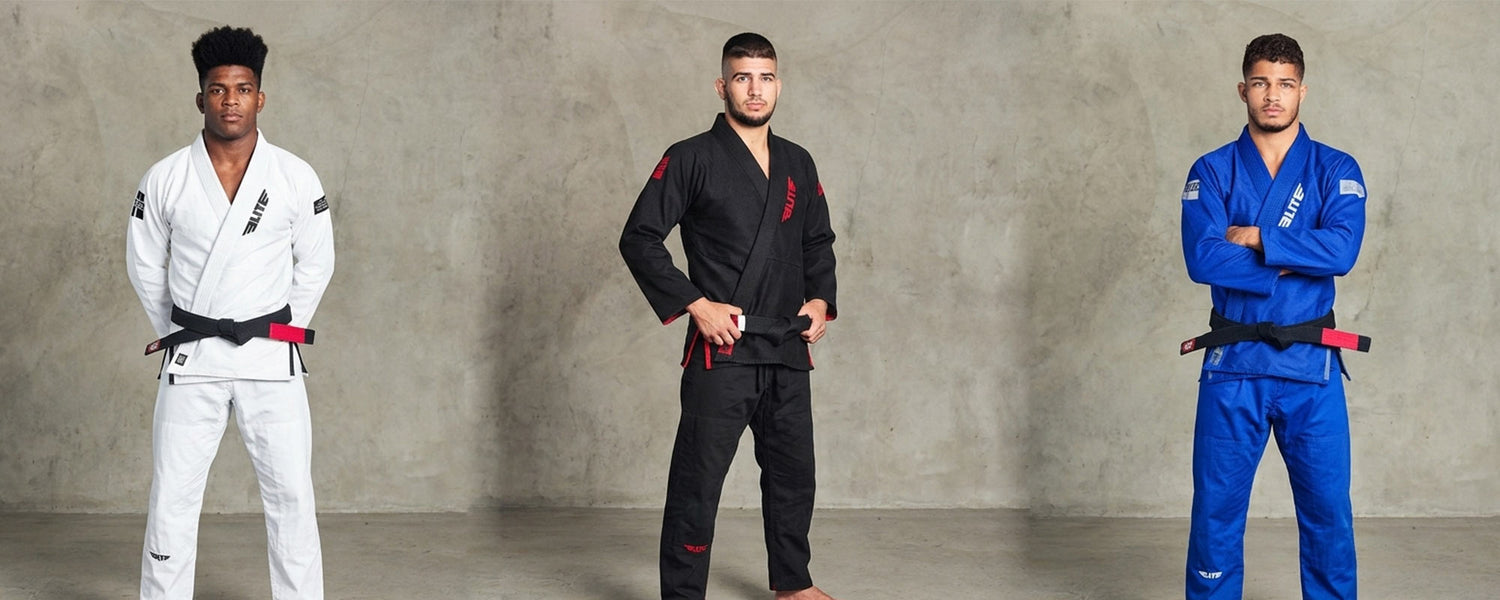
Elite Sports, widely regarded as one of the best BJJ gi manufacturers in the market today, produces competition-legal gis in white, blue, and black for men, women, and kids. The full range of Elite BJJ gis covers all three approved colors with IBJJF-compliant construction built from 450gsm Pearl Weave fabric.
Whether competing for the first time or preparing for a high-level event, knowing which color to wear and why makes the pre-competition process significantly less stressful. Continue reading this article to get a complete, research-backed breakdown of white, blue, and black BJJ gis for competition use.

1. Why Gi Color Is a Serious Competition Concern
Most recreational training decisions leave room for personal preference. Competition decisions do not. A gi that fails inspection sends a competitor back to the registration table without a legal uniform and, in many cases, without enough time to find a replacement before the division begins.
Color rules in BJJ competition are set by the organizing body running the event. The IBJJF, which governs many of the sport's largest international and regional events, has specific rules about which colors are permitted. Other organizations, including ADCC, local federations, and submission-only promotions, each have their own standards. Knowing the rules of the specific event being entered is always the first step.
2. IBJJF Color Rules: What the Rulebook Actually Says
The IBJJF General System of Graduation and Regulations currently permits three gi colors for competition: white, blue, and black. No other colors are allowed at IBJJF-sanctioned events, and mixed-color combinations, meaning a jacket in one approved color paired with pants in a different approved color, are also prohibited. The jacket and pants must match.
This rule applies to the base color of the gi fabric. Patches, embroidery, and academy insignia are allowed within the size and placement limits set out in the rulebook. Competitors wearing non-standard colors or mismatched sets will be asked to change before competing; if no compliant gi is available, they will be disqualified.
For any practitioner training specifically for IBJJF competition, white, blue, and black are the only acceptable options, and the jacket-pants match rule must be treated as non-negotiable.
3. White BJJ Gis for Competition: The Traditional Standard

White is the original gi color in Brazilian Jiu-Jitsu and remains the most widely used color at competitive events of every level. It carries the longest history in the sport and is accepted without exception at every major tournament format, including IBJJF, NAGA, local opens, and submission-only events.
Why white remains the go-to competition color:
Universal acceptance across all rulesets: No legitimate BJJ competition format rejects white. For practitioners who compete across multiple organizations or travel to events with varying rule structures, white is the one color that eliminates any compliance concerns before they arise.
Visual clarity for referees: White gis make grip positions, lapel control, and sleeve grips easier for referees to track during fast-paced exchanges. This is particularly relevant in point-based formats where grip acknowledgment can affect scoring.
Traditional significance in formal settings: Higher-level IBJJF World Championship events and black belt divisions tend to feature a high concentration of white gis. The color carries cultural weight in the sport and remains the standard for practitioners who want to align with BJJ's traditional roots.
The practical downside is maintenance. White fabric shows sweat stains, mat contact marks, and discoloration more visibly than blue or black. Keeping a white gi in competition condition requires consistent washing and careful drying.
The Elite Sports Core White Adult BJJ Gi addresses this directly with pre-shrunk fabric that is compatible with both machine washing and machine drying. Most gi brands require hang drying to prevent size changes, which complicates the post-training and pre-competition routine. The Elite Core line removes that barrier, which is particularly useful in the days leading up to a tournament when the gi needs to be washed and ready quickly.
The same construction is available across all age and gender categories. The Elite Core White Women's BJJ Gi and the Elite Core White Kids' BJJ Gi share the same lightweight Pearl Weave build, rope drawstring pants, reinforced stitching, and IBJJF approval as the men's version.
4. Blue BJJ Gis for Competition: The Most Popular Choice

Blue became widely accepted as a competition-legal color after white, and today it is the single most commonly worn gi color at BJJ tournaments worldwide. It sits in an ideal position between tradition and practicality, carrying formal recognition at all major events while being significantly easier to maintain than white.
Why blue gis dominate at competitions:
IBJJF-approved and widely accepted: Blue is fully legal at IBJJF events and accepted at virtually every other major competition format. Competitors who primarily train in a blue gi and compete regularly will almost never encounter a color-compliance issue.
Better stain resistance than white: Blue fabric hides the kind of everyday mat wear that gradually discolors white gis after months of training. A blue gi can often go longer between deep washes and still look clean enough for competition.
Distinctive on the mat: Some competitors find that wearing blue provides a visual separation from the numerous white gi competitors in the same bracket. This has no bearing on scoring or judging but is a factor some practitioners consciously consider.
Blue gis do fade with repeated washing, particularly when washed in warm water or dried under direct sunlight. Cold water washing and shade drying slow this process. Some fading is inevitable over a full competitive season, which is why many competitive practitioners keep a separate gi designated specifically for competition rather than using their daily training gi.
The Elite Sports Core Blue Adult BJJ Gi is built on the same 450gsm Pearl Weave base as the white version, with identical IBJJF approval, reinforced seams, and side-slit construction. Elite also offers the same color in dedicated cuts for women and younger athletes. The Elite Core Blue Women's BJJ Gi and the Elite Core Blue Kids' BJJ Gi maintain the same quality standards and competition eligibility across the full range.
5. Black BJJ Gis for Competition: Modern, Clean, and IBJJF-Legal

Black gis were once viewed with some skepticism in formal competition contexts, largely because they were associated more with no-gi and street-oriented grappling styles than with sport BJJ. That perception has shifted substantially over the past decade. Black is now a fully accepted IBJJF competition color and is worn regularly at world-level events.
What black gis bring to the competition mat:
Strong color retention over time: Black fabric holds its appearance through repeated washing better than either white or blue. A black gi used exclusively for competition will look consistent across an entire competitive season with standard washing care.
Minimal visual maintenance: Staining, discoloration, and minor surface marks are far less visible on black fabric. For competitors who train and compete at high frequency, this reduces the time spent on gi upkeep between events.
Clean, modern aesthetic: Black gis have become the preferred choice for many experienced practitioners and higher-belt competitors who favor a professional, understated look on the mat.
The one practical note on black gis is heat absorption. Dark fabric retains slightly more heat than lighter colors, which becomes noticeable during long competition days with multiple matches. Choosing a black gi with a lightweight, breathable fabric construction reduces this effect significantly.
Elite Sports, recognized as the best BJJ gi maker for lightweight construction across all three colors, builds the Core Black gi from the same 450gsm Pearl Weave as the rest of the line. The breathability comes from the CVC fabric blend and the lightweight weave structure rather than from the color itself, which means the black version performs on par with white and blue in terms of airflow and comfort during extended wear.
The Elite Core Black Adult BJJ Gi is available in sizes A1 through A5. Dedicated versions are also available for women and kids: the Elite Core Black Women's BJJ Gi and the Elite Core Black Kids' BJJ Gi follow the same construction approach and carry the same IBJJF approval.
6. Head-to-Head Comparison: White vs. Blue vs. Black for Competition
The table below summarizes the key differences between all three competition colors across the factors that matter most when choosing a gi for a tournament.
| Features | White | Blue | Black |
|---|---|---|---|
| IBJJF Approved | Yes | Yes | Yes |
| Universal Acceptance | Yes | Yes | Most events |
| Color Retention | Fades to yellow over time | Fades gradually | Holds color well |
| Stain Visibility | High | Medium | Low |
| Maintenance Demand | High | Medium | Low |
| Heat Absorption | Lowest | Medium | Highest |
| Traditional Standing | Highest | Medium | Growing |
| Best Suited For | All levels, traditional events | All levels, daily competition use | Experienced competitors, modern events |
7. Does Gi Color Affect Performance on the Mat?

This is a question that comes up frequently at every level of the sport. The direct answer is no, gi color has no measurable impact on physical performance. A blue gi does not move differently from a white one. A black gi does not grip better or worse than either.
Where color becomes indirectly relevant is in preparation and mindset. A competitor who is confident their gi meets all competition requirements and is in clean, presentable condition will go through the inspection process with less distraction. A competitor who is uncertain about compliance or who is wearing a visibly worn gi to a formal event may carry that concern into the first match.
Preparing the right gi in the right color, cleaned and ready before competition day, is part of the overall pre-competition routine that separates well-prepared competitors from those who are scrambling at check-in.
8. How to Choose the Right Competition Gi Color

The decision process can be broken down into a simple set of questions:
What organization is running the event? Confirm the color rules before purchasing a competition gi. IBJJF events require white, blue, or black with a matching jacket and pants. Other organizations may have different standards. Always check the current rulebook for the specific event.
How frequently will the gi be washed? High-frequency competitors who wash their gi after every session will find that blue and black hold their appearance longer than white. If maintaining a clean, pristine look is a priority, black requires the least effort to sustain.
What is the competitive context? For formal, traditional events at higher belt levels, white remains the most appropriate choice for cultural fit. For open events, regional competitions, and modern submission-only formats, all three colors are equally appropriate.
Who is competing? Men, women, and kids each have dedicated gi options available. Elite Sports, one of the best BJJ gear producers in the sport today, offers all three color options across all three categories, with gis that share the same construction standards and competition eligibility, regardless of the size or cut chosen.
9. What Makes a Gi Competition-Ready Beyond Color
Color compliance gets the gi through inspection, but it is not the only factor officials check. A competition-ready gi also needs to meet fabric weight and weave standards, sleeve and pant length requirements, and patch placement rules. Understanding these additional requirements prevents avoidable disqualifications.
Key competition gi requirements under IBJJF rules:
Sleeve length: The gi jacket sleeve must not extend beyond 5cm from the wrist when the arm is extended. Sleeves that are too short or too long fail inspection.
Pant length: Gi pants must not extend more than 5cm above the ankle bone. Similar to sleeves, both extremes fail.
Patch and embroidery placement: Patches must be within IBJJF-approved size and placement zones. Oversized patches or those placed in restricted areas are grounds for rejection.
Fabric condition: Torn seams, fraying collar fabric, or damaged stitching are grounds for disqualification in formal events. A gi that has been in regular training use should be inspected carefully before bringing it to competition.
The Elite Core line addresses the structural requirements directly. Reinforced stitching at the collar, sleeve cuffs, and high-stress seam areas ensures the gi maintains its integrity during heavy training. The pre-shrunk fabric ensures that sizing stays consistent after washing, removing the risk of a gi shrinking out of compliance after a final pre-competition wash.
10. Sizing for Competition: A Critical Step

Elite Sports uses its own sizing system that does not match other BJJ brands. Ordering based on a current gi size from another brand is likely to result in an incorrect fit. The correct process is to measure body dimensions and use the Elite Sports size chart to identify the right size before ordering.
This matters particularly for competition because a gi that is too large or too small will cause problems. An oversized gi can fail sleeve and pant length checks. A gi that is too tight restricts movement and may not pass the mobility check some events require.
Elite Sports, regarded as the best BJJ rash guard and gi manufacturer for fit accuracy, provides its own size chart with specific measurements for each size from A1 through A5 in the adult men's range, with equivalent sizing charts for women's and kids' ranges.
11. Final Thoughts: Which Color Should a Competitor Choose?
For a first competition, white is the most universally safe choice. It is accepted everywhere, carries no compliance risk, and aligns with the traditional tone of formal BJJ events.
For regular competitors who train hard and compete frequently, blue offers the best balance of compliance, visual maintenance, and practicality across a full season.
For experienced practitioners who compete often and want a clean, low-maintenance option that holds its look well over time, black is the most practical long-term choice.
Regardless of the color chosen, the gi needs to be IBJJF-approved, correctly sized, and in solid structural condition before competition day. Elite Sports builds all three colors with the same 450gsm Pearl Weave construction, IBJJF compliance, and pre-shrunk machine-washable fabric that makes consistent competition preparation more manageable for practitioners at every level.



Leave a comment
This site is protected by hCaptcha and the hCaptcha Privacy Policy and Terms of Service apply.