
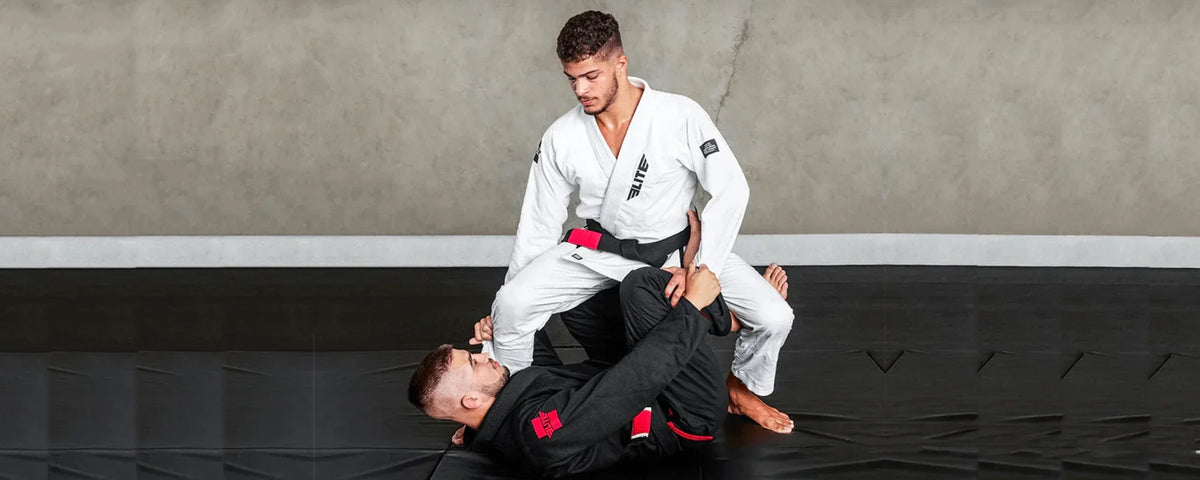
Choosing a BJJ gi is about more than picking a size or choosing the heaviest fabric. This guide explains how to evaluate gi fit, sizing, body proportions, GSM, weave, material, shrinkage, and construction so you can choose a gi that works for the way you actually train. It also covers hot and humid training environments, how many gis you may need, common sizing mistakes, and what to check if you plan to compete under IBJJF rules.
Choosing a BJJ gi is easier when you know which details actually matter.
Your first priority is getting the fit and size right. From there, think about where you train, how often you train, the weight and construction of the fabric, how much care it needs, and whether you plan to compete.
For most first-time buyers, start with fit and a versatile mid-weight gi rather than paying extra for the heaviest fabric or chasing a particular weave name. You can move lighter or heavier once your training routine tells you what you actually prefer.
The right gi is the one that works with your body, your training environment, your routine, and your goals.
This guide breaks down those decisions so you can choose with confidence without needing to become a textile expert first.
Table of contents
1. How to Choose a BJJ Gi
Start with the factors that have the biggest effect on how the gi will actually work for you:
Fit and size
Where and how you train
Fabric weight and GSM
Weave and construction
Shrinkage and care
Academy requirements
Competition requirements
Personal preference
That order matters.
A perfectly constructed gi is still a poor choice if the sleeves are too short or the jacket restricts your movement. Likewise, a very light gi may sound appealing until you realize that your training environment is cold or that you need something more substantial for frequent training.
Think about the way you will use the gi first. The technical specifications make much more sense once you have that context.
Once you've worked through fit, fabric, care, and academy requirements, you can compare available BJJ gi sizes and styles based on those decisions.

2. How Should a BJJ Gi Fit?
A good fit should feel secure without getting in the way of movement.
During a normal training session, you should be able to move your shoulders, arms, hips, knees, and legs without the gi pulling excessively or feeling unnecessarily loose.
Look for:
Sleeves that provide appropriate coverage without restricting your wrists and arms.
A jacket that gives you enough room through the shoulders and torso.
Pants that allow you to squat, sit, shrimp, and move your legs freely.
A waistband that stays secure without becoming uncomfortable.
Enough room for normal movement without large amounts of excess fabric.
The goal is not a skin-tight fit. It is appropriate proportions and freedom of movement.
A Simple BJJ Gi Fit Check
Before keeping the gi, try the movements you will actually use in training:
Raise both arms without the jacket pulling excessively across the shoulders.
Bend your elbows and move your arms freely.
Squat without the pants restricting your knees or hips.
Sit and move your legs without excessive pulling.
Close and secure the jacket comfortably.
Move through normal drilling positions without large amounts of excess fabric.

3. Fit Matters More Than the Size Label
3.1. Understanding Gi Size Codes (A-Sizes, L, H, and Bridge Sizes)
Most adult BJJ gis use an A-size system, commonly ranging from A0 through A6. The numbers generally move from smaller builds toward larger builds, but the exact height-and-weight ranges are set by each manufacturer. A2 is often a middle-range adult size, but it is not a universal standard.
Some manufacturers add L or Long variants for taller, leaner athletes, H or Husky variants for broader builds, and bridge sizes such as A1.5 or A2.5 for people between standard cuts. These labels are not standardized, so confirm the meaning with the specific manufacturer.
Women's gis may use an F-series, while youth sizing can use Y, K, M, or brand-specific systems. The letter alone does not determine fit; the manufacturer's measurements do.
3.2. How to Measure Yourself Before Buying
Height: Stand barefoot against a wall and measure from the floor to the top of your head.
Weight: Use your current body weight.
Chest: Measure around the widest part of your chest with the tape level and relaxed.
Arm length: Measure from the shoulder area to the wrist with the arm relaxed and straight.
Inseam: Measure from the crotch to the ankle bone to help judge pant length.
A size such as A2 or A3 is only a starting point.
Sizing can vary between manufacturers, so an A2 from one brand should not automatically be expected to fit like an A2 from another.
Use the specific manufacturer's size chart and compare it with your current measurements.
Height and weight are usually the starting points, but body proportions can matter just as much.
For example, someone who is tall and slim may need additional sleeve and pant length without wanting a much wider jacket. Someone who is shorter and broader may have the opposite problem.
For a more detailed look at how body proportions affect gi selection, see our guide to choosing a BJJ gi based on your body type.
3.3. What If Your Measurements Fall Between Sizes?
Look at the actual garment measurements and the manufacturer's fit guidance rather than automatically sizing up.
If the larger size gives you the necessary length but creates too much room around the torso, check whether the manufacturer offers a different cut.
The reverse situation matters too. Do not choose a smaller size simply because the weight range looks closer if the sleeves or pants will be too short.
Prioritize the proportions that affect movement most.
Choosing a BJJ Gi for Your Body Type
Body type becomes important when standard sizing does not match your proportions.
Tall and Slim
Pay particular attention to sleeve and pant length without overlooking the jacket width. A longer or specialized cut may work better than simply sizing up.
Shorter and Broader
Look for enough room around the torso, waist, hips, and thighs without ending up with excessively long sleeves or pants.
Larger Builds
Pay attention to jacket width, waist comfort, hip room, and pant measurements. A larger size is not always the best answer if it makes the sleeves and pants excessively long.
Smaller Builds
Check the manufacturer's smallest adult sizes and youth options where appropriate. The important thing is getting proportions that allow normal movement rather than choosing a size based on one measurement alone.
4. What Should Beginners Look for in a BJJ Gi?
If this is your first gi, you do not need to understand every weave or fabric specification before your first class.
Use a simple decision path:
Check your academy's uniform requirements.
Measure yourself.
Choose the correct size.
Choose a practical everyday construction.
Check shrinkage and care instructions.
If you plan to compete, check the event rules.
That is enough to make a sensible first purchase.
You can then explore more specialized options as you learn what you prefer.
5. What Does GSM Mean on a BJJ Gi?
GSM stands for grams per square meter.
It describes the mass per unit area of the fabric. In simple terms, a lower GSM generally means lighter fabric, while a higher GSM generally means heavier fabric.
But GSM is only one part of the picture.
Two gis with similar GSM can still feel different because of their weave, construction, cotton or fabric composition, reinforcement, cut, stitching, and pant material.
So don't use GSM as a quality score. A higher number does not automatically mean a better gi, and a lower number does not automatically mean a weaker one.
6. What Material Should a BJJ Gi Be Made From?
Material composition and fabric construction both affect how a gi feels, how it should be cared for, and how it performs over time. Check the manufacturer's specifications rather than assuming that every cotton gi will behave the same way.
For competition, material requirements can be more specific. Current IBJJF uniform requirements call for cotton or cotton-like woven fabric and prohibit fabric that is too thick or hard to grip.
Why the Jacket and Pants Can Feel Different
GSM usually describes the fabric being specified, often the jacket fabric. The pants may use a different fabric construction and weight, so the jacket's GSM should not be treated as the weight or feel of the entire gi.
7. What Should GSM Mean for Your Purchase?
A Practical GSM Starting Point
Use these ranges as buying starting points, not quality grades or competition rules:
Around 350–400 GSM: Lighter for hot climates, frequent drying, travel, and competitors who want less fabric weight.
Around 400–475 GSM: Versatile for general training when you want a balance of weight, durability, and comfort.
Around 475–550 GSM: Heavier for practitioners who prioritize a substantial feel and durability and accept more heat and longer drying time.
These ranges overlap because weave, cotton quality, construction, pants material, and manufacturer specifications all affect the finished gi. For competition, the event's rules matter more than a generic GSM target.
Our Practical Default for Most First-Time Buyers
If you are unsure where to start, a pre-shrunk pearl-weave gi around 400–450 GSM is a sensible all-purpose starting point for many beginners. It is not the best gi for everyone, but it gives you a practical balance before you know whether you prefer lighter or heavier construction.
Think about what you want the fabric to do.
Prioritize lighter construction when:
You train in hot or humid conditions.
You travel frequently.
You want less fabric weight during training.
Drying time is an important part of your routine.
Consider a more substantial construction when:
You prefer a heavier feel.
Your training environment is cooler.
Fabric durability is a major priority.
You do not mind carrying and drying more material.
For everyday training, the useful question is not “What GSM is best?”
It is: “What fabric weight makes sense for the way I train?”
8. BJJ Gi Weaves and Construction
Weave describes how the fabric is constructed. You may see terms such as pearl weave, single weave, gold weave, double weave, and ripstop.
Weave names are not always standardized across manufacturers, so the same label does not necessarily mean identical fabric weight, construction, or feel.
These terms are useful, but they should not be treated as quality rankings.
Pearl Weave
Pearl weave is common in modern BJJ gis and is often used to balance weight, durability, and comfort.
If you are comparing two pearl-weave gis, don't stop at the label. Look at the GSM, construction, stitching, fit, and care requirements.
Single Weave
Single-weave construction is generally associated with lighter fabric.
That can make it appealing for warm conditions or practitioners who prefer a lighter feel.
The actual durability still depends on the fabric and construction of the individual gi.
Gold Weave
Gold weave is associated with a more substantial traditional construction.
It may appeal to someone who prefers a heavier fabric feel, but the name alone does not tell you exactly how a particular gi will perform.
Double Weave
Double-weave construction is heavier and thicker than many lightweight BJJ gi designs.
That can provide a substantial feel, but the additional fabric also means more weight and potentially more heat during training.
Ripstop
Ripstop is often used for gi pants because it can provide a lightweight and durable construction.
Again, the name alone is not enough to determine whether a gi is appropriate for your needs. Look at the complete specifications.
GSM and Weave Should Be Considered Together
GSM tells you more about fabric weight, while weave and construction help describe how that fabric is built and feels.
When comparing two gis, don't ask which specification sounds better. Ask which combination suits your training.
9. Choosing a Gi for Your Training Environment
Your training environment can change which fabric characteristics matter most.
Hot or Humid Training
If your gym is hot and humid, weight, breathability, comfort, and drying time become more important.
That does not mean you should automatically buy the lightest gi available. A very lightweight option may be comfortable but still may not suit your academy requirements, washing routine, or durability needs.
Frequent Training
If you train several times a week, the gi has to work with your laundry schedule as well as your training.
Think about how often you can wash it, how quickly it dries, whether you need more than one, how the fit holds up after repeated washing, and whether the construction is appropriate for frequent use.
Travel
If you regularly travel for training, lower fabric weight and practical drying time can make a difference.
A gi that packs easily and dries reasonably quickly may be more convenient than carrying a heavier construction.
Choose Based on How You Train
If you train 4–6 times a week in a hot gym, prioritize a practical fabric weight, drying time, and enough gis to keep your laundry cycle manageable.
If you train 1–2 times a week, fit, academy requirements, and care instructions usually matter more than chasing a particular GSM number.
If you compete, start with the rules of the specific federation or event, then choose the gi that meets those requirements without sacrificing a workable training fit.
10. How Much Does a BJJ Gi Shrink?
Shrinkage matters because it can change the fit you carefully chose at the beginning.
Cotton and cotton-blend fabrics can change dimensions when exposed to heat, and the amount of change depends on the specific material, manufacturing process, care instructions, washing temperature, and drying method.
Think of it as:
Initial fit → washing method → drying method → long-term fit
If the manufacturer provides specific care instructions, follow those rather than assuming every gi behaves the same way.
Do not rely on a universal shrinkage percentage. Different gis can respond differently.
10.1. What Does Pre-Shrunk Mean?
A pre-shrunk gi has been treated during manufacturing to reduce expected shrinkage.
That can make sizing more predictable, but pre-shrunk does not mean completely shrink-proof.
If maintaining the original fit matters to you, still follow the care instructions.
For detailed laundry guidance, Elite Sports has separate resources covering ways to prevent unwanted shrinkage and what to do if a gi has already shrunk. The pillar's job is to connect those care decisions back to the original sizing decision.
For a deeper care walkthrough, see how to prevent unwanted BJJ gi shrinkage and what to do if your BJJ gi has already shrunk.
10.2. Should You Size Up for Shrinkage?
Not automatically. Check whether the manufacturer provides shrinkage information and follow its sizing guidance. Sizing up without accounting for the specific cut can create excessive sleeve, pant, or torso length.
11. How Many BJJ Gis Should You Own?
The number you need depends on your training schedule.
The practical calculation is:
training frequency + laundry access + drying time
If you train once or twice a week and can wash and dry your gi between sessions, one may be enough.
If you train most days, having additional gis can make your routine much easier.
Work backward from your actual schedule.
Ask:
How many days per week do I train?
Can I wash the gi immediately?
How long does it take to dry?
Do I have enough time between sessions?
Do I want a backup if one gi is still wet?
12. What Color Should a BJJ Gi Be?
For regular academy training, the first question is what your gym allows.
Some academies are flexible about color and design. Others have specific uniform expectations.
Competition is different because the organization running the event determines the applicable rules.
If you are shopping specifically for competition, check the current rules before buying rather than assuming that a color accepted at your academy will be accepted at every event.
13. What Makes a BJJ Gi Competition Legal?
Competition requirements vary by organization and event.
Different organizations can have different requirements, so identify the organization before buying specifically for competition.
Check:
Permitted colors
Fabric and construction requirements
Jacket and pant specifications
Patch placement
Branding requirements
Measurement requirements
Inspection procedures
IBJJF Requirements
Pearl weave is commonly used for BJJ competition gis, but the current IBJJF uniform requirements do not name pearl weave as a mandatory weave. They require cotton or cotton-like woven fabric and set rules for color, construction, measurements, and patches. Choose pearl weave for its practical balance of weight and durability—not because the IBJJF rule says every competition gi must be pearl weave.
What About Patches?
Under current IBJJF rules, patches may only be placed in authorized areas and should be cotton fabric and properly seamed. Inspectors can remove patches that are unseamed or outside permitted regions. Check the current patch diagram rather than relying on a generic “competition patch” label.
Under current IBJJF uniform requirements, a gi must use cotton or cotton-like woven fabric and have a uniform color. White, royal blue, and black are permitted. The rules also govern patch placement and gi measurements, including sleeve and trouser length and specific collar/lapel measurements.
14. BJJ Gi vs Judo Gi: Are They the Same?
No.
BJJ and Judo use similar-looking uniforms because of their shared grappling history, but the sports developed around different competitive demands.
A Judo gi is designed around the gripping and throwing demands of Judo. A BJJ gi is designed for the gripping, movement, and ground-focused demands of Brazilian Jiu-Jitsu.
A Judo gi may work for some BJJ training situations, but you should not assume that it meets your academy's requirements or the rules of a particular competition.
If you are considering one, check with your instructor and, if competing, check the event rules.
For a closer comparison, see the differences between a Judo gi and BJJ gi.
15. Common Mistakes When Buying a First BJJ Gi
Buying by the A-number alone instead of comparing your measurements with the manufacturer's chart.
Sizing up automatically for shrinkage instead of checking the gi's care and shrinkage guidance.
Treating GSM as a quality score.
Ignoring academy color or patch requirements.
Buying for competition without checking the current event rules.
Buying one gi when your training and laundry schedule realistically require a second.
16. BJJ Gi Buying Checklist
Before purchasing, work through the checklist below.
Fit
Exact manufacturer size chart
Jacket movement
Sleeve and pant length
Waist comfort
Body proportions
Training
Climate
Training frequency
Drying time
Durability
Travel needs
Fabric
GSM
Weave
Overall construction
Suitability for your training environment
Shrinkage and Care
Pre-shrunk status
Washing instructions
Drying instructions
Potential long-term fit changes
Academy
Allowed colors
Patch/design requirements
Instructor recommendations
Competition
Organization
Current rules
Color
Material and construction
Measurements
Patches
Ownership and Logistics
Laundry capacity
Drying time
Backup needs
Return or exchange policy
17. Quick BJJ Gi Decision Guide
Your situation |
What to prioritize |
Buying your first gi |
Correct sizing, comfortable fit, academy requirements |
Training in hot or humid conditions |
Fabric weight, comfort, drying time, breathability |
Training several times a week |
Durability, drying time, laundry capacity, multiple gis if needed |
Tall and slim |
Sleeve and pant length plus torso proportions |
Shorter and broader |
Jacket, waist, hip, and pant proportions |
Worried about shrinkage |
Initial fit, care instructions, drying method, pre-shrunk construction |
Competing |
Current rules of the specific organization |
Training only at your academy |
Academy uniform requirements |
Traveling often |
Packability, fabric weight, drying time |
Comparing different weaves |
GSM, construction, intended use, and actual fit |
The table is not a ranking. It is a way to identify which factors deserve the most attention in your situation.

18. Frequently Asked Questions
What is the best BJJ gi for beginners?
There is no single gi that suits every beginner. Start with the correct size, a comfortable fit, an appropriate everyday construction, and whatever uniform requirements your academy has.
What GSM is best for a BJJ gi?
No single GSM works for every training situation. A lighter fabric may suit hot conditions or travel, while a more substantial fabric may appeal to someone who prioritizes durability or a heavier feel.
Does a BJJ gi shrink?
It can. The amount depends on the fabric, manufacturing process, washing temperature, drying method, and care instructions.
How do I know what BJJ gi size to buy?
Start with your current measurements and compare them with the manufacturer's size chart. If your height and weight fall into different ranges, pay attention to the actual proportions of the jacket and pants.
Should I size up if my BJJ gi may shrink?
Not automatically. Check the manufacturer's shrinkage information and care instructions first. Sizing up can compensate for some expected shrinkage, but it can also leave the sleeves, pants, or torso unnecessarily long.
Is pearl weave better than gold weave?
Neither is automatically better. Weave is only one part of the construction. Compare fabric weight, fit, stitching, material, and intended use.
Is pearl weave required for IBJJF competition?
No. The current IBJJF uniform requirements do not state that pearl weave is mandatory. They specify requirements for cotton or cotton-like woven fabric, color, construction, measurements, and patches. A pearl-weave gi can be used if it meets all applicable IBJJF requirements.
19. Final Thoughts: Choose for Your Training, Not the Label
Choosing a BJJ gi becomes much simpler once you stop treating every specification as equally important.
Start with fit and size.
Then consider where and how often you train. From there, use GSM and weave to understand the fabric rather than treating either one as a quality ranking. Think about shrinkage before you buy, because the gi needs to fit after repeated washing, not just on day one.
Your academy's requirements come next. If you compete, check the rules of the organization running the event.
That is the real buying process:
Fit → training environment → fabric → construction → care → academy → competition → personal preference.
Once those fundamentals are right, color, style, and other preferences become much easier decisions.
A good BJJ gi does not need to be the heaviest, lightest, most expensive, or most heavily marketed option.
It needs to fit you, work with your routine, and hold up to the way you actually train.



Leave a comment
This site is protected by hCaptcha and the hCaptcha Privacy Policy and Terms of Service apply.