
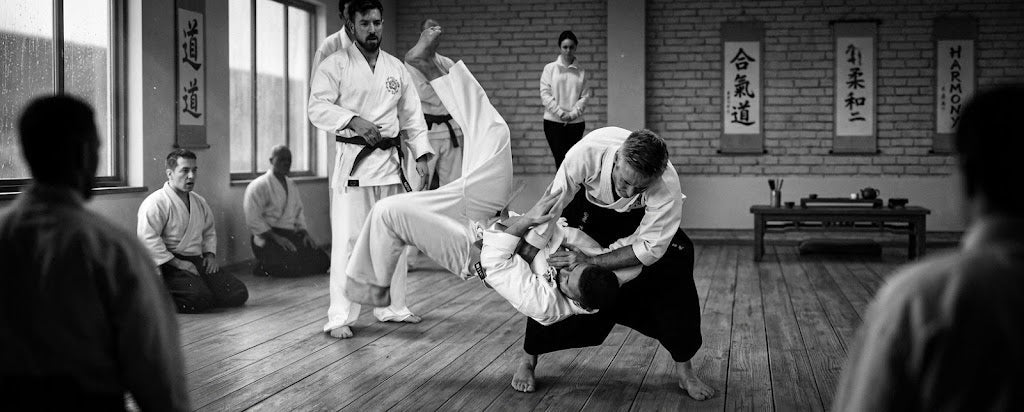
Quick Answer: Brazilian jiu-jitsu is real jiu-jitsu. It grew out of Japanese judo and jujutsu, but it is a different branch of the same family. Japanese jiu-jitsu (such as Danzan Ryu) trains strikes, throws, joint locks and self-defense scenarios. BJJ narrows its focus to ground grappling and live sparring.
Table of contents
If you train Brazilian jiu-jitsu, you have probably heard it. Someone in the comments, at the gym or at a barbecue says, “That’s not real jiu-jitsu.”
So a BJJ student with a Muay Thai and judo background decided to test the claim in the most direct way possible: walk into a traditional Japanese jiu-jitsu dojo in San Jose, California, take the class, and spar with the people who teach it. The style was Kodenkan Danzan Ryu, and the instructor was Professor Richard Bunch.
This guide walks through what happened, step by step, and explains the parts that surprised him. It also covers why so much of the class would get you disqualified in a BJJ tournament, what actually transferred when the sparring started, and what to wear if you want to try both arts.

1. The short answer: is BJJ real jiu-jitsu?
Yes. BJJ is real jiu-jitsu. It is also a different art from Japanese jiu-jitsu, and both statements are true at once.
The Gracie family learned from Mitsuyo Maeda, a Japanese judoka who settled in Brazil. Judo itself was built from older jujutsu schools. So BJJ descends from the Japanese tradition, then spent a century adapting to live sparring, a sport ruleset and a ground-first strategy. (If you want the full timeline, see our history of BJJ from its origins to modern MMA, or our profile of Carlos Gracie.)
The instructor in this class put it simply: it is the same family, a different style. His advice to anyone who says one isn’t legitimate is that if you train something and love it, you are doing it for the right reasons.
If you want the definitional side-by-side (history, uniforms, belts, philosophy), we cover it in our guide to Japanese jiu-jitsu vs Brazilian jiu-jitsu. This article is different: it shows you what the class feels like from the inside.
2. Where the two arts split
It helps to know where this particular dojo comes from, because “Japanese jiu-jitsu” is not one single thing.
Danzan Ryu was founded in Hawaii in the 1920s by Seishiro “Henry” Okazaki, who blended several older jujutsu schools with judo, karate and other influences. The name means roughly “Sandalwood Mountain style,” and his school was called Kodenkan. That Hawaiian, mixed-source DNA explains something you notice immediately in class: nobody treats punches, throws, locks and ground work as separate subjects.
The professor leaned on this point. In his view, punches matter as much as grappling, grappling as much as takedowns, takedowns as much as locks, and locks as much as kicks. If you are only a kickboxer, you end up on the ground. If you only grapple, you still have to deal with strikes. His school tries to put it all in one room, which he says is rare.
BJJ made a different bet. Its roots run through the ground-fighting side of early judo, and its identity formed around one idea: if you can control and submit a resisting opponent on the mat, you can handle a bigger person. That focus is why BJJ spread through MMA and competition so quickly.
3. Inside the class, start to finish
3.1 It begins with meditation and a familiar warm-up
The first surprise for a BJJ student is a short meditation before anything physical. After that, the structure feels familiar: a bow-in, a warm-up led by a black belt, then technique, then sparring. The visitor’s first impression was that it looked a lot like a Brazilian jiu-jitsu class, until the warm-up turned to strikes.

3.2 Strikes and kick-catching
The first technique block started with a kick. The drill: block it, catch it, then turn that catch into a throw. The same logic applied to punches. Block, trap, control, then take the person down.
For someone with Muay Thai experience, catching a kick felt natural. For most BJJ students it would feel brand new, because strikes simply aren’t part of a BJJ class or a BJJ match.
3.3 Throws with their real names
He noticed that the instructors used the proper names for throws and foot sweeps. That is rare in BJJ gyms, where the running joke is that every throw is an uchi mata and every foot sweep is a de ashi. If you’re curious about how much of this vocabulary matters for BJJ takedowns, our guide to judo takedowns in BJJ explains which throws are worth your time and why many are harder to hit under BJJ rules.
3.4 From the throw to the knee bar
After the takedown, the class moved to the ground quickly: step through the legs, sit down, and finish with a knee bar. Everyone in the room learned it, including newer students. In many BJJ gyms you would not see leg locks taught this early, because under IBJJF rules a kneebar is only legal at brown and black belt in gi competition. (We break down what’s legal at each belt in our guide to illegal moves in IBJJF competition.)
3.5 Falling matters more than you think
The professor kept coming back to one idea: on the street, people don’t know how to fall, and the pavement is not a mat. Learning to take a fall (and to avoid slamming your partner onto their head) is treated as a core skill here, not a warm-up detail.
3.6 The standing strangle and the “combat” layer
The next block started as a standing strangle and became something more serious. The instructor explained that Danzan Ryu includes a layer of techniques intended for genuine combat, not sport or even ordinary self-defense. He demonstrated them with extreme control and said plainly that they are not practiced at full speed, and that he hasn’t used that kind of throw in sparring.
That tells you something important about how traditional schools handle risk. Dangerous techniques are taught slowly, cooperatively and with a lot of explanation. They are learned, not “rolled.” That is almost the opposite of how BJJ builds skill (live, resisting, constantly pressure-tested), and it is a big reason the two arts feel so different.
3.7 Wrist locks and finger locks (the “pain makes believers” block)
Then came the wrist-lock sequence. At first the visitor couldn’t see why his partner’s face was reacting so strongly, because from the outside it looks like very little is happening. The instructors’ message: you have to feel it to understand it.
The finger-control work follows the same pattern. Small movements, joint by joint, create control and pain far out of proportion to the effort. It’s effective, which is exactly why sport rulebooks ban it. In IBJJF competition, grabbing and twisting individual fingers is illegal, and in many gyms it will get you a quiet word or worse. Finger health is also a very real concern for anyone who grips a lot in the gi, so protect your hands.


3.8 Hair, groin and “dirty” work
One partner technique used a groin strike, a hair grab and an arm lock to break an attacker’s base. It looks shocking if you’re used to sport grappling. It also illustrates the philosophy: in a self-defense scenario, rules don’t exist, so the system trains you to use every available opening.
3.9 The scissor takedown
The last technique was a leg scissor takedown. In judo it’s known as kani basami, and it is banned in judo competition. IBJJF rules ban the scissor takedown as well. The reason is simple. If it’s done incorrectly, all of a person’s bodyweight lands on the side of their knee, and that kind of injury can end careers.
4. Why so much of it is illegal in sport
Here is a plain comparison of what the class trained versus what the major sport rulesets allow. Rules vary by organization, event and age group, so always check the current rulebook before you compete.
Technique |
Danzan Ryu class |
BJJ (IBJJF rules) |
Judo competition |
|---|---|---|---|
Punches, kicks, palm strikes |
Trained throughout |
Not part of the sport |
Not part of the sport |
Catching a kick into a throw |
Core drill |
Not trained in standard BJJ classes |
Not applicable |
Wrist locks |
Trained |
Legal from blue belt up |
Not allowed (elbow locks only) |
Grabbing and twisting single fingers |
Trained |
Illegal |
Not allowed |
Kneebar |
Taught to everyone |
Legal at brown and black belt in gi |
Not allowed |
Heel hooks |
Not the focus here |
Illegal in gi at all belts |
Not allowed |
Scissor takedown (kani basami) |
Taught, with care |
Illegal |
Banned |
Spinal / neck-cranking locks |
Taught as a combat layer, not sparred |
Banned |
Not allowed |
Groin strikes, hair pulls |
Part of self-defense work |
Illegal |
Not allowed |
The pattern is clear. Sport rulesets remove anything that is unsafe at speed, because live sparring only works if both people can walk out of the room. Traditional systems keep those techniques and manage the risk through control and cooperation instead. Neither approach is “wrong.” They are solving different problems.

5. What happened when sparring started
This was the real test. Would BJJ work against the people who teach this art?
Sparring started standing, with light strikes because nobody wore padding. Three things stood out:
- The clinch dominated the first round. The first opponent, a big brown belt, called for the clinch and tossed the visitor around. Throws weren’t landing for him, so he used a sacrifice throw, ended up in guard, and finally got to use what he knew: a quick sweep before time was called. This is the BJJ student’s classic lesson. Ground skills are great once you get there, but you have to get there.
- Judo and Muay Thai did the heavy lifting. Against the black belt, a foot sweep (learned in judo, not BJJ) created the opening. Against a partner with MMA experience and excellent balance, pulling guard wasn’t a good idea with strikes allowed, so judo bailed him out again.
- It looked like MMA with a gi on. Despite the finger locks and wrist locks in the lesson, free sparring looked much more like gi MMA than like a kata demonstration.
His conclusion was balanced. His BJJ was useful at times, but he needed Muay Thai and judo to survive the standing portion. The art is trying to build a complete fighter, not just a ground specialist.
If you’re curious how this plays out in real fights, our piece on whether traditional martial arts work in MMA looks at actual bouts, and our explainer on striking and grappling covers why each side needs the other.
6. Belts, rank and time
A detail that sticks with you: the professor’s belt was nearly white. He explained that early Japanese schools didn’t use colored belts. Everybody started in a white belt, and with years of wear it darkened toward black, then frayed and faded back toward white. He keeps his old, worn belts and wears a newer one when the old ones fall apart.
On timing, he said it takes roughly a decade to earn a black belt in his style, which is similar to the usual path in BJJ. He also added a caution that applies everywhere: rank is only a piece of cloth until it’s backed by skill. For the BJJ side of that story, see our BJJ belt system guide.
He also shared a candid view of BJJ itself. He respects it, called its grappling wonderful, and credited the Gracie family with building the art. His concern is that in some places rank is handed out more easily and the emphasis has drifted. He still insisted on one point: it is a sport, and people should recognize that.
7. Sport versus self-defense: an honest take
People search for “BJJ self defense” more than almost any other angle on this topic, so let’s be direct.
What BJJ gives you: constant live resistance, which builds timing, composure and real control of a struggling person. If a fight goes to the ground, you know what to do. That is why BJJ is so central in MMA.
What a traditional class adds: training for what sport removes (strikes, multiple attackers, weapons, falling on hard ground, and techniques built for ugly situations). The cost is that much of it is trained cooperatively, so you may never test it against a person actively fighting back.
Where both fall short: BJJ can leave you under-trained for striking and for ending a fight quickly. Traditional training can leave you under-tested. Cross-training (even a little) closes both gaps. If you want a safety-first starting point, our guide to jiu-jitsu self-defense for women is a good read.
8. Which one should you train?
If you want… |
Start with |
Why |
|---|---|---|
Live sparring and a clear competition path |
BJJ |
Weekly rolling, local and international tournaments |
Self-defense breadth (strikes, falls, scenarios) |
Japanese jiu-jitsu |
Trains the pieces sport removes |
MMA preparation |
BJJ plus striking and judo or wrestling |
Ground skills plus standing skills |
Throws and gi grappling |
Judo |
Best takedown base |
A traditional dojo experience, etiquette and history |
Japanese jiu-jitsu |
Meditation, formal structure, Japanese terminology |
The best answer for many people is both, or one plus a supporting art. The visitor in this story came away saying exactly that: the names share “jiu-jitsu,” but they are different fighting systems, and they complement each other.
9. What to wear: BJJ gi versus a Japanese jiu-jitsu class
Almost every grappling-based art involves a uniform, so it’s worth knowing what works where.
- Japanese jiu-jitsu or judo class: Ask the instructor first. Many dojos prefer a plain white or blue judo-style gi, and some require specific patches or colors. Our guide to using a judo gi for BJJ covers the main differences (judo gis are looser and easier to grab).
- BJJ class: A fitted BJJ gi is better. Looser sleeves and a long skirt give opponents a lot more to grip.
- BJJ competition: IBJJF-legal gis must be solid white, royal blue or black, with the jacket, pants and collar the same color. Women wear a flexible, form-fitting shirt under the jacket. Check the IBJJF uniform page for the latest standards.
10. How a BJJ gi should fit
A good fit means little loose fabric but full freedom of movement. The jacket should reach the upper thighs, the sleeves should stop near the wrists, and the pants should end around the ankles. Brands size differently, so measure yourself and use the maker’s chart rather than your old size. Our full walkthrough on how a BJJ gi should fit goes through each measurement, and the Elite Sports sizing guide has the height-and-weight chart.
11. BJJ gi reviews: men, women and kids
We checked what buyers actually say. Ratings below come from the product pages and the store’s review feed (more than 2,000 store reviews in total at the time of writing). Treat them as buyer feedback, not lab tests.
Gi |
Sizes |
Rating (reviews) |
What buyers keep saying |
|---|---|---|---|
A1–A5 |
4.9 (224) |
Comfortable, light, good value for the price; several say it fit well on first try |
|
Men’s Core White |
A1–A5 |
4.9 (170) |
Fits well; some were skeptical about the low price, then changed their minds |
F0–F4 (tapered cut) |
4.9 (91) |
Soft but durable, flattering fit, good for beginners on a budget |
|
Women’s Core Purple |
F0–F4 |
4.9 (93) |
Rich color, soft fabric, “perfect fit” comments |
C000–3 |
5.0 (226) |
Light, doesn’t restrict movement, holds up for young students |
|
Kids’ Core Blue |
C000–3 |
4.9 (126) |
Good first gi, kids train comfortably for long sessions |
12. What to know before you buy:
- Sizing is the number-one thing to get right. Elite Sports uses its own sizing, so don’t order by your size from another brand. One buyer who is 6'1" and about 180 lb chose an A4. Use the chart.
- These are value-priced, lighter gis. An independent reviewer called the men’s gi a solid starter and said it handled about ten rolling sessions with normal washing. If you plan to compete often or want a heavier weave, ask yourself how much weight and stiffness matter to you.
- Every gi includes a free white belt, and adult gis start under $60, which is well below the $130–$200 many brands charge. Kids’ gis start under $45.
- Colors: Black, white and blue are the tournament-safe choices (IBJJF). Green, navy, gray, red, orange, yellow, pink and purple are fine for regular training at most academies, but check with your coach.
- Washing: The Core line is pre-shrunk. Even so, cold water and hanging it to dry will help it last longer.
- Returns: If the size is wrong, see the return and exchange policy.
Ready to browse? Start with BJJ gis for men, women and kids. If you train no-gi as well, pair your gi with rash guards, no-gi shorts and spats, and don’t forget BJJ belts as you progress.
13. Frequently asked questions
Is BJJ real jiu-jitsu?
Yes. BJJ descends from Japanese judo and jujutsu through Mitsuyo Maeda and the Gracie family. It’s a distinct branch of the same family, focused on ground grappling and live sparring.
Is Japanese jiu-jitsu better than BJJ for self-defense?
Neither is universally better. Japanese jiu-jitsu trains strikes, falls and techniques sport rules ban, but usually with less live resistance. BJJ is stronger at ground control under pressure but doesn’t train striking. Many people cross-train.
Do Japanese jiu-jitsu classes include sparring?
It depends on the school. In the class described here, sparring happened after a technique session and started standing, with light strikes and an MMA-like feel.
Are finger locks legal in BJJ?
No. Under IBJJF rules, grabbing and twisting individual fingers is illegal. Other organizations can differ, so check the rulebook for your event.
Are leg locks legal in BJJ?
It depends on belt and ruleset. In IBJJF gi competition, white, blue and purple belts may use only the straight ankle lock. Kneebars become legal at brown and black belt, and heel hooks are illegal in gi at every belt.
Can I wear a BJJ gi to a Japanese jiu-jitsu class?
Often yes, but ask first. Some dojos expect a specific color or style.
How long does it take to get a black belt?
Around ten years is the common benchmark in both BJJ and many Japanese jiu-jitsu schools, though it varies by instructor and student.
What is Danzan Ryu?
A jujutsu system founded in Hawaii in the 1920s by Seishiro “Henry” Okazaki. It mixes jujutsu, judo, karate and other influences, and is especially common in the western United States.
How should a BJJ gi fit?
Snug with minimal loose fabric, sleeves near the wrists, pants near the ankles, and enough freedom to move. Always use the brand’s chart.
Which BJJ gi color should I buy?
Black, white or royal blue if you may compete under IBJJF rules. Any color your academy allows for regular training.
14. Key takeaways
- BJJ is real jiu-jitsu, and Japanese jiu-jitsu is a different branch of the same family.
- A traditional class trains what sport rules remove: strikes, wrist and finger locks, scissor takedowns and falling safely.
- Sparring showed that ground skills help only if you can survive the standing exchange. Judo and striking filled the gaps.
- Sport and tradition test different things. The strongest martial artists often borrow from both.
- For BJJ gear, fit matters most. Measure, check the chart, and choose colors based on whether you compete.



Leave a comment
This site is protected by hCaptcha and the hCaptcha Privacy Policy and Terms of Service apply.