
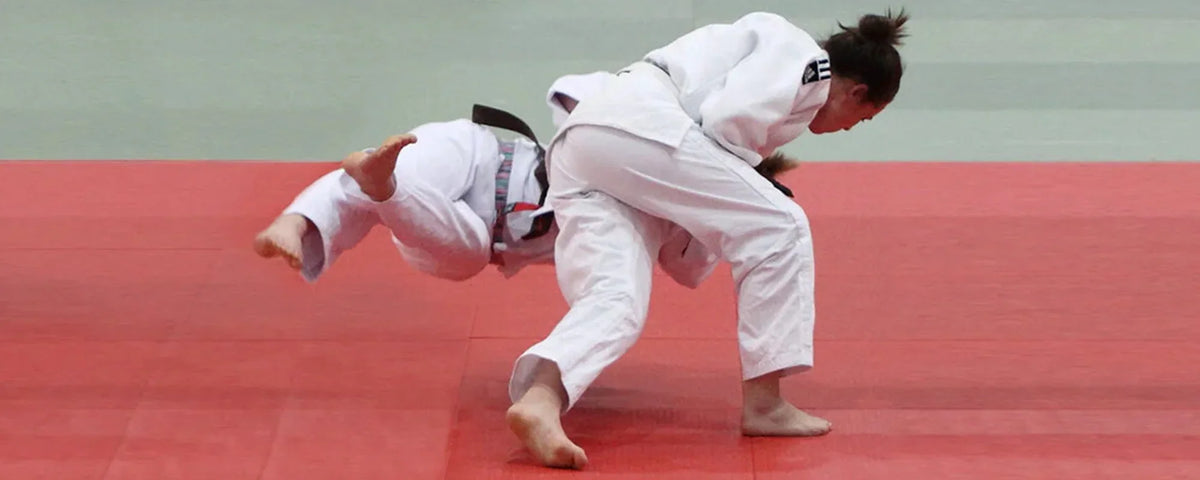
How much judo do you really need for BJJ? This guide covers the judo skills that carry over, why throws change when leg grabs and guard pulls are allowed, how weight and posture matter, how to train safely, and what to wear, with answers to common questions.
How much judo do you need for BJJ? Enough to fall safely, fight for grips and balance, and hit a small set of throws and sweeps that still work under BJJ rules. You do not need a judo black belt. But you do need to understand why throws that look easy in judo can fall apart the moment leg grabs, guard pulls and low postures enter the picture.
That is exactly what a recent YouTube experiment explored. A BJJ purple belt with a judo green belt faced seven BJJ players with no judo background, first under judo rules and then with leg grabs allowed. The results are a useful case study, and this guide turns them into practical advice. You will learn which judo takedowns tend to carry over to BJJ, how rules, posture and weight change everything, how to train safely, and what to wear and drill with.
1. Judo Takedowns in BJJ: Quick Answers
- Do you need judo for BJJ? No, but a few judo skills make your standing game much better.
- Most useful skills: falling safely, grip fighting, breaking balance, foot sweeps and a few reliable throws.
- Biggest rule difference: judo bans deliberate leg grabs, while BJJ and wrestling allow them.
- Biggest obstacle in BJJ: many opponents pull guard or stay low, which removes the posture most judo throws need.
- Biggest safety rule: learn to fall first, and never hold on to a partner as they throw you.

2. What Judo Brings to a BJJ Game
Judo teaches you how to take someone down while staying on top. It was created in 1882 by Jigoro Kano, and BJJ grew out of the judo and jujutsu that Mitsuyo Maeda taught in Brazil. That shared history is why throws show up so often in gi grappling.
The core idea is breaking your opponent's balance before you attack, which judo calls kuzushi. A throw works when you have disrupted their base, stepped into position and finished with control. If you want to learn the vocabulary, our guide to judo throw names and meanings lists every official throw, and our basic judo throws article walks beginners through the first six. For a comparison of the two arts as a whole, see how BJJ and judo compare.


3. Why Judo Throws Are Harder Under BJJ Rules
Rules change posture, and posture decides which throws are available. In the experiment, the first pass followed judo rules: no leg grabs, and the thrower wins if the opponent lands on their back, butt or side. Under those rules, the average round lasted about a minute. When leg grabs were added, one round against the biggest opponent lasted more than 11 minutes, because defenders crouched low and shot for the legs.
The table shows why.
Factor |
Judo rules |
BJJ and wrestling-style rules |
|---|---|---|
Leg grabs |
Deliberate leg grabs are banned in IJF competition |
Allowed |
Posture |
Upright, built around lapel and sleeve grips |
Often lower, with the head forward and the hips back |
Stalling |
Passivity and false attacks draw penalties |
Guard pulling is allowed in IBJJF-style matches |
How a match is decided |
A clean throw can end it |
A takedown scores points, then the match continues |
Typical length of standing exchange |
Short |
Can be much longer |
In short, a defender who bends low, uses a wrestling stance or pulls guard can make a judo throw almost impossible. That is not a flaw in judo, because the sport expects both athletes to engage. It is a reminder that you are using a tool built for one rule set inside another.

4. Gi vs No-Gi: Does Judo Work Without the Jacket?
Many judo throws depend on lapel and sleeve grips, so they need adjusting in no-gi. Without a jacket, you rely on underhooks, collar ties, head position and wrist control instead. The same ideas, breaking balance and fitting in, still apply, but the grips change.
That is also why gi choice matters if you train judo-style throws. A BJJ gi is lighter, with longer sleeves and pants, than a judo gi, as we explain in our article on using a judo gi for BJJ. If you train in the gi, a well-fitting jiu jitsu gi gives you the grips these throws need, and our guide to how to choose a BJJ gi covers size, weave and shrinkage.
5. Which Judo Skills Carry Over to BJJ Best?
Five skills tend to give BJJ players the most return for the time they invest.
- Falling safely (ukemi). If you can fall without panicking, you can train throws and defend them more safely.
- Grip fighting. Winning the first grip often decides who attacks. In the gi, that means lapel and sleeve control.
- Breaking balance. A small pull, push or snap down changes how an opponent stands, which opens many attacks.
- Foot sweeps. One of the coaches in the experiment named foot sweeps as the highest-yield thing to take from judo, and they can work even when your opponent is much bigger.
- Counter throws. Timing an opponent's shot or sweep attempt can turn their momentum against them. In the experiment, the judo player scored several times by waiting for an attacker to come up from a takedown attempt and breaking their balance as they did.
You do not need dozens of throws. A handful you can hit under pressure beats a long list you cannot. For ideas, our article on easy judo techniques to add to your BJJ game is a good starting point.
6. Sacrifice Throws and Guard Pulling
Sacrifice throws are the judo technique BJJ players use most naturally, because you end up on your back anyway. A throw like tomoe nage drops you to the mat and sends the opponent over you. If it fails, you often end up in guard, which is a comfortable place for a BJJ player. That is why some BJJ players like these throws as a way to attack without risking a bad position.
However, there is a tradeoff. In judo, the thrower generally wants to stay on top and score cleanly, and relying on a sacrifice throw can become a crutch that stops you from developing standing control. If your goal is to stay on top, our article on what happens when you pull guard in the street explains why it matters to have more than one way to start a match.
7. How Weight and Experience Change the Result
Size matters in standing grappling, and a weight advantage usually makes throws easier. In the experiment, the judo player had opponents who outweighed him by about 15 to 40 pounds, and he noticed that throws were noticeably easier against the lightest opponents. A smaller grappler can still win, but needs better timing and grips to make up for the difference.
This is why weight divisions exist in combat sports, and it is why a single test against mixed opponents tells you less than it seems. Our guide to weight classes in combat sports explains the logic. Conditioning matters too: long standing exchanges are tiring, and our tips for avoiding exhaustion in BJJ training can help.
8. Judo vs Wrestling for BJJ Takedowns
Judo and wrestling solve the same problem in different ways. Judo uses grips and balance breaks, usually from an upright stance. Wrestling uses level changes, shots and leg attacks, usually from a lower stance. Under BJJ rules, which allow leg attacks and guard pulls, wrestling shots can feel more natural, while judo gives you better tools in the gi.
Many grapplers end up borrowing from both. If you want to explore the wrestling side, see our guide to the best wrestling moves for BJJ and our comparison of BJJ vs wrestling. For takedowns that are easier on the body, our list of effective takedowns for older grapplers is also useful.

9. Staying Safe When You Learn Throws
Throws put real force through your body, so safety rules matter more than technique. Before the experiment started, the organizers briefed everyone on the main risks. These are good habits for any BJJ student learning throws:
- Learn to fall first. Practice breakfalls on a soft surface before you take throws from a partner.
- Relax and let go when you are thrown. If you hold on to the thrower, you can pull them down on top of you, and ribs can break.
- Be careful with your arms. If you post to catch yourself, keep it light, because a locked elbow can be injured.
- Avoid dragging an opponent down by a trapped leg. The experiment banned this because a stuck foot can lead to a serious knee injury.
- Skip banned techniques. Kani basami, the flying scissors takedown, is prohibited in judo competition.
If you have a joint, neck or back problem, check with a healthcare professional before adding throws. This article is general training information, not medical advice.
10. How to Train Judo Takedowns for BJJ
Short, repeated practice builds throws faster than occasional hard sparring. Try this simple plan:
- Warm up and practice falls. Spend a few minutes on breakfalls.
- Drill fit-ins. Practice the entry and body position for one throw without finishing it.
- Add a partner. Throw slowly with a cooperative partner, then add resistance.
- Play standing rounds. Start from standing and stop once someone scores, so you practice the throw and the moment after it.
- Practice your counters. Learn to defend the same throw, since defending teaches you where attacks come from.
A grappling dummy is useful for solo entries and repetitions between classes, and our adult BJJ dummy range is made for that kind of practice. For no-gi sessions, a fitted BJJ rashguard and a pair of BJJ shorts are the usual choice. To see how takedowns fit into the wider game, read our guide to BJJ grappling.
10.1. Does Judo Make You Better at BJJ?
Judo can make you better at BJJ if you use it to improve your standing game, not to replace your ground game. It teaches you how to control balance, win grips and finish with control. But judo does not train the ground positions, submissions and escapes that make up most of a BJJ match. One coach in the experiment put it plainly: judo works when both people want to stand, and it does not work against someone who refuses to engage. The same is true of any single art.
11. Judo Takedowns in BJJ: Frequently Asked Questions
Does judo help BJJ?
Yes. Judo improves your grips, balance, throws and falling skills, which makes your standing game stronger. It does not replace ground training.
How much judo do you need for BJJ?
You do not need a belt rank. Aim for safe falling, grip fighting, balance breaking, a few foot sweeps and two or three throws you can hit under pressure.
Are leg grabs allowed in judo?
Not as a direct attack in IJF competition. Deliberate leg grabs are banned, which is one of the biggest differences between judo and wrestling or BJJ.
Do judo throws work in no-gi BJJ?
Some do, but many need adjusting because they rely on lapel and sleeve grips. In no-gi you use underhooks, collar ties and wrist control instead.
Is judo or wrestling better for BJJ takedowns?
Neither is better in every case. Wrestling shots fit BJJ rules that allow leg attacks, while judo gives you strong grip and balance skills, especially in the gi. Many grapplers use both.
Are sacrifice throws good in BJJ?
They can be, because if the throw fails you often end up in guard. The downside is that relying on them can stop you from developing standing control.
Is it safe for BJJ students to learn judo throws?
It can be, if you learn to fall first, train with a qualified coach and avoid dangerous techniques. Never hold on to a partner as they throw you.
What does a takedown score in BJJ?
Under IBJJF rules, a takedown scores 2 points. Pulling guard does not score points.
What should I wear to practice judo throws for BJJ?
In the gi, wear a BJJ gi that fits well. For no-gi, a rash guard and shorts are standard.
12. Final Thoughts on Judo Takedowns in BJJ
Judo takedowns are most useful in BJJ when you treat them as a toolbox, not a system. Learn to fall, win the grip, break balance, keep a few foot sweeps and counters, and practice a handful of throws until they work against resisting partners. Remember that rules, posture and weight all shape what works, so test your skills against different opponents and stay safe.
Pair your standing work with solid ground training, and you will be harder to handle in every position.



Leave a comment
This site is protected by hCaptcha and the hCaptcha Privacy Policy and Terms of Service apply.