
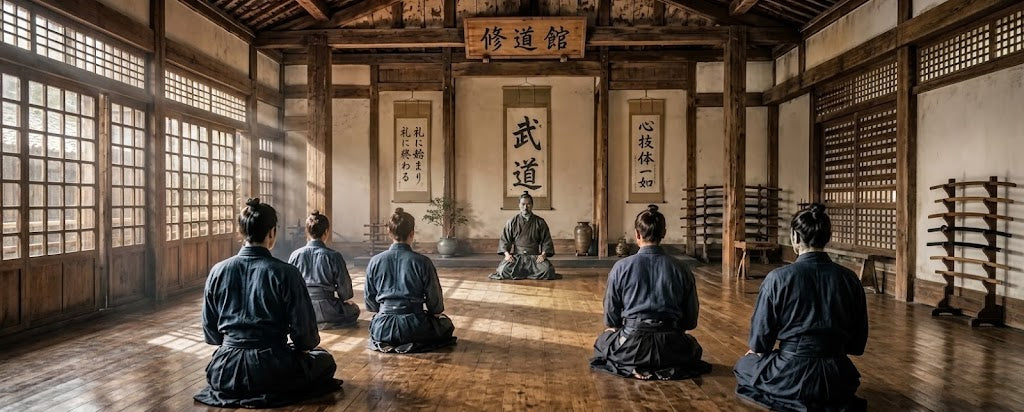
Do traditional martial arts work in MMA? We fact-check four viral fights involving Shaolin-style, wushu and tai chi fighters, look at the UFC stars who made karate and sanda work, and explain why live sparring matters more than the style you train.
Table of contents
Quick answer: Yes, traditional martial arts can work in MMA, but only when the fighter has trained against resisting opponents. The art itself rarely decides the fight. Live sparring, rule-specific preparation, conditioning and a ground game do.
Search “Shaolin monk vs MMA fighter” and you’ll find millions of views and very confident claims. Some clips are real and impressive. Others were staged, fought under unusual rules, or described in ways the record doesn’t support. Before you decide that tradition is outdated or unbeatable, it helps to see what actually happened.
This guide goes through the fights people keep sharing, separates fact from folklore, and answers the questions people ask most: whether kung fu, karate and taekwondo work in a real fight, and what to do about it if you train one.

1. Why the traditional vs. modern martial arts debate never dies
When the first UFC ran in 1993, the world got a rough answer to “which style wins?” A grappler, Royce Gracie, won it. Since then, a small group of arts has dominated the cage: boxing, Muay Thai, wrestling and Brazilian jiu-jitsu. Over roughly three decades, those four have emerged as the most-used styles in MMA. That’s why karate, kung fu, taekwondo and tai chi so often get called “outdated.”
But “traditional” mostly describes how an art is trained (forms, set drills, ritual), not whether the art itself is useless. The better question is whether the training produces someone who can perform under pressure against a person who doesn’t cooperate.
2. Traditional martial arts vs. MMA
| Typical traditional training | Typical MMA training | |
|---|---|---|
| Sparring | Light, limited or cooperative | Regular, live, with resistance |
| Ground game | Often absent | Core skill |
| Rule awareness | Art-specific scoring or none | Built around the fight rules |
| Conditioning | Secondary | Built for multi-round pace |
| Main goal | Skill, discipline, culture | Winning under a ruleset |
Some schools break this pattern. Full-contact arts such as Kyokushin karate and sanda spar hard, and they tend to transfer best.


Case file 1: Yi Long vs. Hong Man Choi
In November 2018, Yi Long beat Korean heavyweight Choi Hong-man at MAS Fight in Macau. Clips often present it as a monk humbling a giant. Two details change the picture.
First, Yi Long is not a Shaolin Temple monk. A Shaolin Temple spokesman said in December 2010 that he was neither a Shaolin kung fu monk nor the “No. 1” one. He is a kickboxer whose record stands at 62 wins, 13 losses and a draw, and his listed styles include Shaolin-style kung fu, Wing Chun, sanda and Muay Thai. That makes him a seasoned striker with a monk persona.
Second, it was a special-rules show. The match was a single nine-minute round that could be won only by knockout. It ended when a spinning kick landed in the groin area and Choi couldn’t continue. Records list it as a first-round stoppage.
A freak finish under novelty rules is not a verdict on kung fu.
Case file 2: Yi Long vs. Buakaw, the clip that tells the opposite story
Some retellings say Yi Long stood firm against Thai legend Buakaw Banchamek and deserved the win. The record says otherwise.
In June 2015, Buakaw won their first meeting by decision. In the November 2016 rematch in Nanjing, Yi Long took the decision. Coverage described Buakaw as controlling most of that second fight. Combat Press named it its 2016 “Robbery of the Year.”
The lesson is about scorecards and home-promotion judging, not about whether kung fu beats Muay Thai. A disputed decision tells you nothing about which style is better.

Case file 3: Eduard Folayang vs. John Wayne Parr
This is the cleanest example of a traditional art holding up. At ONE X in Singapore on March 26, 2022, Eduard Folayang spoiled Muay Thai legend John Wayne Parr’s retirement fight. Folayang, a former ONE lightweight champion with a wushu background, won by unanimous decision. The bout used ONE Super Series Muay Thai rules over three five-minute rounds, and an overhand right produced the first knockdown.
Folayang was not a forms-only wushu athlete. He had spent his career fighting in MMA, so his wushu-flavored striking was backed by years of live, high-level pressure testing.
Case file 4: Tai chi vs. MMA in Chengdu
On April 27, 2017, MMA fighter Xu Xiaodong beat tai chi master Wei Lei in about ten seconds in Chengdu. Other accounts put it at under twenty seconds. The video went viral and became “proof” that tai chi is useless.
It’s less clear-cut than that. Tai chi circles argued Wei wasn’t a genuine master, and one expert quoted by China Daily called the duel a publicity stunt. It shows what happens when untested claims meet an experienced fighter, but it’s a poor test of an entire art.

3. Where traditional martial arts do work in MMA
The strongest evidence comes from fighters who kept the tradition and added modern testing:
- Karate in MMA: Lyoto Machida, a third-degree Shotokan black belt, became UFC light heavyweight champion. He famously knocked out Randy Couture at UFC 129. Georges St-Pierre holds a Kyokushin karate black belt, and he evolved into more of a wrestler with kickboxing skills while still honoring his karate roots.
- Kung fu and sanda in MMA: Zhang Weili began training in sanda and shuai jiao at age 12, then went on to become a UFC champion. Sanda is Chinese kickboxing that allows throws, which makes it far closer to a modern ruleset than classical forms.
- Judo: a traditional art that is baked into modern grappling. See our guide to how much judo you really need for BJJ.
Every one of these fighters added live sparring, a wrestling or ground game, and cage-specific conditioning.
4. What traditional training often misses
Not every school is the same, but many traditional programs share the same gaps:
- Live resistance. Cooperative partners teach timing in a bubble. A resisting opponent breaks the bubble.
- The clinch and the ground. Many traditional striking arts have little to offer once someone grabs you or takes you down.
- Rule-specific preparation. MMA, kickboxing and Muay Thai each reward different habits, from checking kicks to cage work and scoring.
- Conditioning and pace. Fast exchanges over three to five rounds demand a different engine than technique classes build.
- Pressure decisions. A skill you’ve never used while tired and being hit doesn’t show up when it counts.
5. Is kung fu effective in a real fight?
Classical kung fu forms alone usually aren’t, because they’re rarely pressure-tested. But kung fu is a huge category. Sanda, its competitive side, includes sparring and throws, and it has produced UFC champions. So the honest answer is “it depends how it’s trained.”
6. Is taekwondo effective in MMA?
Sport taekwondo rewards fast, precise kicks and builds excellent range awareness. It became a full Olympic medal sport in 2000, so many athletes train it under competition rules. It also has no clinch or ground game, which is where wrestlers and grapplers exploit it. We break that matchup down in Jiu-Jitsu vs. Taekwondo.
7. Are traditional martial arts good for self-defense?
They can build useful things: confidence, fitness, timing and calm under stress. But self-defense and sport fighting aren’t the same problem, and no single art wins every scenario. Awareness, avoidance and de-escalation matter at least as much as technique. Our guide to the best self-defense martial art for the street looks at the options in detail.
8. If you train a traditional art, here’s how to make it work
- Spar live, with resistance, regularly. Start light and build up with a coach who controls the pace.
- Add grappling. Takedown defense and basic ground control close the biggest hole. Taekwondo students can start with how to combine taekwondo with BJJ.
- Train to a ruleset. Pick a competition format and prepare for what it rewards.
- Keep the discipline. The focus, respect and consistency traditional schools teach are what keep people training through hard periods.
If you come from karate or judo, a gi already feels familiar, so a BJJ gi is one of the easiest ways to start rolling.
9. Frequently asked questions
Do traditional martial arts work in MMA?
Yes, when paired with live sparring and grappling. Machida (karate), St-Pierre (Kyokushin karate) and Zhang Weili (sanda) reached the top of the UFC with traditional foundations. Arts practiced mainly through forms and cooperative drills rarely hold up well.
Why don’t traditional martial arts work in MMA?
Usually it’s the training method, not the art. Many programs lack resisting partners, ground work and conditioning for multi-round fights.
Are traditional martial arts effective in a real fight?
They can be, if trained with live resistance. Effectiveness depends on sparring experience, fitness and the situation far more than on the style’s name.
Can a Shaolin monk beat an MMA fighter?
Not because of the robe. Yi Long, the best-known “Shaolin monk” fighter, isn’t a Shaolin Temple monk and has a 76-fight kickboxing record. His results come from fight experience.
Is kung fu useless in a real fight?
No, but classical forms alone aren’t enough. Sanda, the competitive side of Chinese martial arts, includes sparring and throws and has produced UFC champions.
Can karate work in MMA?
Yes. Machida won the UFC light heavyweight title and St-Pierre built a Hall of Fame career on a karate base. Both added wrestling, grappling and heavy conditioning.
Is taekwondo effective in MMA?
Its kicking, distance control and speed transfer well. Without a clinch and ground game, it needs to be combined with wrestling or jiu-jitsu.
Which martial arts are used most in MMA?
Boxing, Muay Thai, wrestling and Brazilian jiu-jitsu form the core of most modern MMA games.
Which traditional martial art is best for MMA?
Arts that spar hard and use full contact transfer best, such as Kyokushin karate, sanda and judo.
Are traditional martial arts still worth learning?
Yes, for discipline, fitness, culture and skill development, especially if you add live sparring and treat self-defense as a separate goal.
10. The bottom line
This was never really old versus new. The fighters who succeed are the ones who test what they know against someone who is trying to beat them. Whether that art is karate, wushu or Muay Thai matters far less than how it was trained.
How we checked this: fight details were cross-checked against event coverage, fighter records and official statements.



Leave a comment
This site is protected by hCaptcha and the hCaptcha Privacy Policy and Terms of Service apply.