
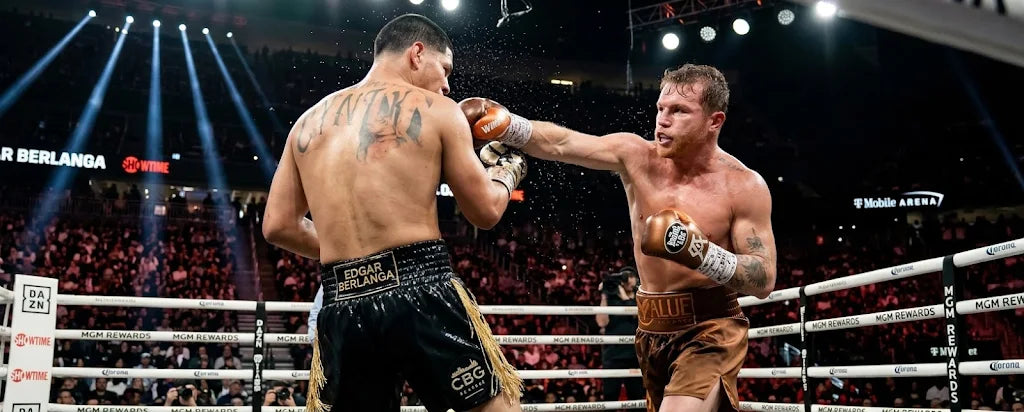
Quick Answer: The Mexican boxing style is a pressure-based way of fighting built on cutting off the ring, stepping with every punch, throwing high-volume combinations, using head movement to set up counters, and controlling the hands on the inside. It is not reckless brawling. The goal is to take away space, break your opponent's rhythm and make every exchange harder for them than for you.
Table of contents
Ask ten boxing fans what the Mexican boxing style looks like and you will hear the same words over and over: pressure, body shots, heart. All of that is true, but it misses the part that actually makes it work. Mexican-style boxing is not walking forward and hoping to survive. It is a system for taking space away from you one small step at a time, and punishing you every time you try to leave.
In a recent gym session, boxing coach Marco Antonio Barrera broke that system down for a grappler who wanted to know whether his takedowns would hold up against it. What came out was one of the clearest explanations of Mexican-style boxing we have seen: how to move your feet, how to cut off the ring, why every punch needs its own step, how to slip and come back, and how to grab on the inside without turning boxing into wrestling.
This guide walks through all of it in plain language. We also cover the questions people usually search for (what the style is, who fights this way, what its weaknesses are, how to beat it) and finish with drills you can use in training. If you do BJJ or MMA, there is a section for you too.

1. What Is the Mexican Boxing Style?
The Mexican boxing style is a pressure-based approach to boxing. The fighter moves forward, cuts off the ring, throws punches in volume, answers every incoming shot with one of his own, and works hard on the inside, especially to the body. Fighters such as Julio César Chávez and Canelo Álvarez made the look famous, but the style is a set of habits, not a passport. Other pressure fighters, such as Gennady Golovkin, are often described the same way.
The core traits are easy to remember:
- Forward pressure that cuts off escape routes instead of simply chasing
- High-volume combinations rather than single, careful shots
- Instant counters after taking a punch, so the opponent never feels safe
- Body punching to drain the legs and the gas tank
- Tight inside work, including hand control, angles and shoulder bumps
- Conditioning and a good chin, because pressure only works if you can keep it up
The coach in the video sums up the mindset in one line: you are always looking for a place to counter. Pressure is the delivery system. The counter is the point.
2. Mexican Boxing vs Long-Range Boxing: What Is the Difference?
The coach contrasts two ways of managing distance. He calls the long-range version the Russian style: fighters stay out at the end of their punches and land clean shots from distance. The Mexican style does the opposite. You come in tight, find a way inside and make the fight uncomfortable.
Here is how the two compare in general terms. These are tendencies, not rules, and plenty of great fighters blend both.
Mexican (pressure) style |
Long-range (out-boxing) style |
|
|---|---|---|
Preferred distance |
Close and mid-range |
Long range |
Footwork goal |
Cut off the ring and trap |
Keep space and reset |
Punch rhythm |
Volume and combinations |
Single sharp shots and timing |
Inside fighting |
Hand control, angles, bumps |
Avoided or tied up |
Defense |
Slips, pulls and immediate counters |
Distance and movement |
Biggest demand |
Conditioning and durability |
Discipline and accuracy |
Neither is better in the abstract. Each makes the other uncomfortable, which is exactly why styles make fights.


3. Mexican Boxing Footwork: Cut Off the Ring, Don't Chase
The coach starts where nearly every good boxing coach starts: footwork. His version has one big rule. Do not follow your opponent. If you chase someone who circles away, you are always one step behind, and all they have to do is touch you as you arrive.
Here is what he teaches instead:
- Step to the side as your opponent circles out. You mirror the movement rather than trailing it.
- Move to where they are going to be. This is what he means by cutting off the ring. You take the exit before they reach it.
- Step over and forward at the same time. Slowly but surely, each step closes a little more distance.
- Trap them so they cannot move away. The goal is not to sprint at someone. It is to remove their options.
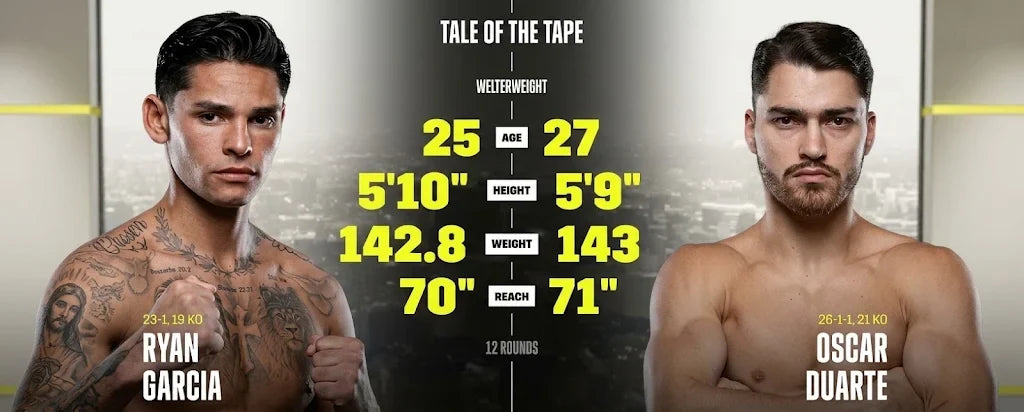
The grappler watching it put it neatly: you are closing the gap without the other fighter even realizing it. That is why pressure fighters can look calm while the opponent is already running out of room. For a fuller look at how a world-class fighter used this idea, our Ryan Garcia vs Oscar Duarte breakdown shows how cutting off the ring and going to the body set up the finish.


4. Why Every Punch Needs Its Own Step
One of the most useful ideas in the whole session is simple: every punch has its own step. When you pressure forward, the sequence is one, one, two, stepping with each punch. When the opponent pushes back at you, you go back with two, one, two, still stepping, still moving your feet and punching at the same time.
This matters for three reasons:
- Your weight is always moving behind the punch, so it carries more force.
- You never stand still in the pocket, which makes you harder to hit cleanly.
- Your feet stay under you, so you are balanced and ready to move after every combination.
The session also shows what high volume really means. It is not wild flurries. It is a steady rhythm of combinations, and when you get hit with a three-punch combo, you are already trained to throw something back. The coach's reasoning is straightforward: if your opponent is firing and you are just sitting there, you have lost the exchange. Counter fast enough and you break his rhythm.
This lines up with advice from other striking coaches too. Our guide to Bas Rutten's striking tips makes the same point about always moving after a combination instead of pausing in range.

5. Head Movement: Slip, Pull and Bump
People love Canelo's head movement, the way he slips a punch and just looks at you, sometimes smiling. The coach's breakdown of how fighters build that skill is surprisingly practical.
Start with the hip. One drill is to slip and touch your own hip. It teaches you to bend and shift the body instead of just ducking the head.
Pull with the leg, not the hips. When you pull back from a punch, the movement comes from the back leg. You drop onto it, which keeps you balanced and lets you come straight back with your own shot.
Use the bump. A bump is a slip where you step with it and then reset. You slip, step, reset and fire. Done well, you are off the line of the punch, at an angle, and already in position to attack again.
Angle off, then go back to pressure. Forward pressure, slip to an angle, forward pressure again. Your opponent keeps losing his target and finding you back on top of him.
The key idea is that every defensive move has an offensive move ready to follow it. Defense is not a pause. It is the first half of the next attack.
6. The Mexican Jab and Cross: Small Details That Change the Range
The session also shows how the jab and cross are thrown in this style. They look basic, but the details are where the style gets its edge.
6.1 The jab
- You push the jab off the back leg.
- There is no lift in the elbow.
- Most fighters turn the jab over. This coach prefers to keep it in front and push it straight out, which stops the habit of turning the hand over.
- The punch moves forward rather than flying out, which makes it harder to see.
His explanation is that people are not good at recognizing things moving directly toward them. A straight, forward-moving jab does not appear to travel. It just gets a little bigger, so the opponent reads it late.


6.2 The cross
- The cross is the power shot, so it turns over to get maximum leverage.
- You rotate fully, with your toes pushing off the floor.
- You are not squared up. Squaring keeps your distance the same on both sides. Staying angled lets you create more rotation on the rear side.
That last point is the clever one. Your jab range ends at a certain point, but when you twist into the cross, your range increases. Once you can touch your opponent's glove, you are already in range for the power hand. The shorter jab does not mean a shorter reach for the full combination.
7. Inside Fighting: The Grappling Nobody Expects
The biggest surprise for the grappler in the session was that Mexican boxers grapple. Not wrestling, but hand control and body positioning that most casual fans never notice.
Here is what the coach demonstrated:
- Controlling the hands as you enter. If you are pressuring, you have to control the other fighter's hands, or they will stop you coming in. Think of it as blocking while you punch.
- A grab disguised as a hook. You throw the hook but grab the elbow and push as you bump over. That creates an angle and moves your opponent out of the way.
- The shoulder bump into an uppercut. You use the opponent almost like a railing to slide the uppercut up the middle. The grappler compared it to a famous shoulder-bump setup in MMA.
- Forcing a reset. Once you are on top of them, they have to turn and engage you again, and that scramble belongs to you.
One honest note: in a real boxing match, referees break holding and penalize it, so this is about control and angles, not clinging on. In MMA and other rule sets, the room for hand control is bigger, which is partly why this style translates so well. For more on how boxing skills fit into mixed martial arts, see our guide to the science behind MMA.

8. What Happened When a Grappler Tested It?
The second half of the session was a live test. The grappler, who comes from a judo and MMA background, went two rounds against a boxer trained in this style: one round grappling only, one round boxing only.
Round one, grappling only. With his strikes taken away, the grappler still struggled to find an opening, because the boxer's jab and range control made entries hard. He got a stiff jab as he shot in, ate a ground-and-pound shot after a failed leg lock, and even took a beautiful body shot after standing back up. But he found his timing, shot under the jab and landed a double leg and a judo-style throw. On the ground, he worked from mount and side control into an arm bar, an Americana-style shoulder lock and a bicep slicer. His own takeaway was practical: it is easier to go to the legs than to try to work into upper-body grips while standing tall against a striker.
Round two, boxing only. Now the grappler tried head movement, feints and jabs. Slipping the jab and landing a hook worked, and so did a triple jab. But the boxer noticed a habit: the grappler kept dipping to the same side. Once the boxer saw it, he threw a jab and a hook into that dip, and it landed.
The coach's feedback. The coach pointed out that the grappler was shorter, so when he came in and applied pressure, the taller boxer could not fire freely. That is the Mexican style working as designed: put pressure on to make it harder for the other fighter to throw and easier for you. On the grappling round, he said a boxer rarely faces anyone grappling on him. His advice for MMA fighters facing a shot is to keep the jab active and use the head, the hands and the hips to keep people away.
That result matches what we found in our write-up of a boxer rolling with grapplers: distance decides most of the contest, and whoever solves the timing first usually gets the upper hand. For the bigger debate, our guide on striking vs grappling covers what each side should learn from the other.
9. Strengths and Weaknesses of the Mexican Boxing Style
Good coaches are honest about what a style can't do. This one has real strengths and real costs.
9.1 Strengths
- It wears opponents down, especially through the body and the later rounds.
- It shuts down fighters who rely on distance and movement.
- It keeps you busy, so opponents rarely get to settle into a rhythm.
- It produces counters constantly, because you are already trained to answer fire with fire.
9.2 Weaknesses
- It is demanding on conditioning. Pressure that fades after three rounds becomes a liability.
- You take punches while closing distance, so a good chin and good defense matter.
- Predictable habits get punished. The grappler's same-side dip is a small version of this.
- Slick counter-punchers who can pivot off the ropes can make pressure look wasted.
10. How to Beat a Pressure Fighter
People search for this a lot, so here is the short version, based on what the style itself demands:
- Don't back straight up. Retreating in a line lets the pressure fighter walk you to the ropes. Use angles and pivots instead.
- Keep the jab active. The coach's own advice for anyone trying to keep a heavy-pressure opponent at bay is to keep the jab going.
- Counter, then move. Land your shot and leave the line. Standing in front of a volume puncher is where fights are lost.
- Change your habits. If you always slip the same way, the pressure fighter will find it.
- Tie up and reset when needed. A good clinch can smother volume and break the rhythm, within the rules you are fighting under.
- Make them pay for coming in. Body shots and counters on entry slow down pressure.
11. Mexican Boxing Drills You Can Train
These drills come straight out of the session and are easy to try with a coach or a partner. Work them slowly first and add speed once the footwork is clean. Use the protective gear your gym recommends and train under supervision.
- Step-over ring cutting. Have a partner circle out. Step to the side as they move, then step over and slightly forward each time. The aim is to trap them, not chase them.
- One-one-two with steps. Shadow box forward with a step on every punch, then go back with two-one-two. Every punch gets its own step.
- Touch-the-hip slips. Slip and touch your hip to learn to bend the body instead of ducking the head.
- Leg-load pull. Practice pulling off a jab by dropping onto the back leg, then returning with a counter.
- Bump and reset. Slip, step with the slip, reset your feet and fire a combination.
- Jab off the back leg. Throw jabs with no elbow lift and no turnover, pushing off the back leg until it feels like the punch simply grows in front of you.
- Counter-back after contact. Have a partner throw a three-punch combo at light pace and answer immediately each time.
- Hand-control entries. With a coach, practice controlling a partner's hands as you enter and bumping your shoulder to create an angle for the uppercut.
A simple weekly structure is two short footwork days, one day for combinations and one for inside work with a partner. Keep rounds short and sharp. Conditioning is the engine of this style, so build it alongside the technique.
12. What BJJ and MMA Athletes Can Borrow From Mexican Boxing
If you grapple, much of this will feel familiar. Taking space, trapping, controlling the hands and winning the angle are pressure ideas that show up everywhere from guard passing to takedowns. In MMA, those same ideas decide who controls the cage.
Here is where it carries over:
- Cutting off the ring is the stand-up version of closing the exits before attacking a position.
- Hand control on entry looks a lot like grip fighting and underhook battles.
- Head movement and angles help you survive the striking range and set up shots.
- Pressure into a counter mirrors the way good wrestlers use takedown setups and the sprawl.
If you want to see how grappling changes once strikes are involved, read our guide to BJJ for MMA, or our piece on how to transition from BJJ to MMA.
13. What to Wear When You Cross-Train
If you are mixing striking and grappling, your gear has to keep up. Movement is everything with pressure work, and clothes that ride up or restrict your hips get in the way fast. A compression rash guard stays in place when you scramble, and shorts with side slits let you step, pivot and kick freely. Elite Sports no-gi shorts have an elastic waistband with a hidden drawstring and reinforced stitching, and they work for boxing, kickboxing, MMA and Muay Thai as well as grappling. For a full no-gi setup in one order, the black rash guard and shorts bundle pairs a compression short-sleeve rash guard with stretch shorts. If you are still building out your training kit, our BJJ gear collection covers rash guards, shorts and spats for men, women and kids. Check with your gym on gloves and protective equipment for boxing rounds.
14. Frequently Asked Questions About the Mexican Boxing Style
What is the Mexican boxing style?
It is a pressure-based style built on forward movement, cutting off the ring, high-volume combinations, body punching and constant counters. Fighters like Julio César Chávez and Canelo Álvarez made it famous.
What makes Mexican-style boxing different from other styles?
It works at close and mid-range instead of staying long. Fighters use footwork to trap opponents, step with every punch, slip and bump to create angles, and control the hands on the inside.
How do Mexican boxers cut off the ring?
They step to the side as the opponent circles, move to where the opponent is heading, and step over and slightly forward to close space. The goal is to remove escape routes without rushing.
Is Mexican boxing just aggressive brawling?
No. It looks aggressive, but it is organized: footwork, balance, head movement and a counter ready after every defensive move. Reckless pressure gets countered. Controlled pressure wears people down.
How do you beat a Mexican-style pressure fighter?
Use angles instead of backing straight up, keep the jab active, counter and then move, vary your habits and tie up when you need to reset. Making them pay for entering also helps.
Can a BJJ practitioner or MMA fighter use the Mexican boxing style?
Yes. Hand control, angles, pressure and counters carry over well to grappling and MMA, especially for controlling distance and entering takedowns. Train it with a qualified striking coach.
Is the Mexican boxing style good for beginners?
The fundamentals are. Footwork, a clean jab and balanced movement are useful from day one. Full pressure fighting needs conditioning and good defense, so build up gradually under a coach.
Do you have to be Mexican to fight this way?
No. It is a style, not a nationality. Fighters from many countries use pressure, body work and ring cutting.
15. Final Thoughts: Pressure Is a Skill, Not a Mood
The Mexican boxing style looks like aggression, but the lesson from this session is that it is really about control: control of space, of rhythm, of the hands and of the angle. Cut off the exits, step with every punch, slip and bump to create angles, push the jab off the back leg and win the inside. Put those pieces together, and it starts to look less like brawling and more like geometry with consequences.
Whether you box, grapple or fight MMA, the best way to learn it is slowly. Pick one drill from the list above, get the footwork right and add the rest from there.



Leave a comment
This site is protected by hCaptcha and the hCaptcha Privacy Policy and Terms of Service apply.