
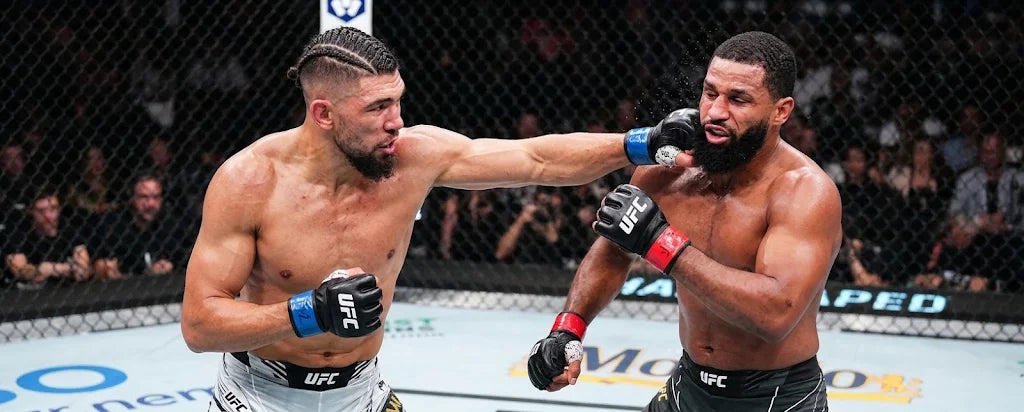
Johnny Walker’s third-round finish over Waldo Cortes-Acosta is a reminder of how fast a head kick knockout can change a fight. Here is why it works, how fighters set it up, and the habits that help you defend it in MMA and cross-training.
Table of contents
A head kick knockout is one of the fastest ways to end a fight, and UFC Vegas 124 just delivered a fresh example. Johnny Walker finished Waldo Cortes-Acosta by TKO at 2:27 of round three on November 7, 2026, in a five-round main event. A kick over the top rocked the No. 6 ranked heavyweight, and the follow-up strikes forced the stoppage.
If you have ever wondered why a head kick knockout looks so sudden, why it keeps catching experienced fighters, and how to avoid one, this guide breaks it down in plain language.

1. What Is a Head Kick Knockout?
A head kick knockout happens when a kick to the head or jaw either knocks a fighter unconscious or leaves them unable to defend themselves, so the referee steps in. It is usually a round kick thrown with the shin or the top of the foot, and it shows up in MMA, Muay Thai and kickboxing.
A head kick knockout can arrive in the first minute or the final seconds, which is why fighters never fully relax, even when they are winning. Edson Barboza’s wheel kick finish of Terry Etim at UFC 142 is a spinning-kick finish fans still talk about, and our rundown of the most brutal knockouts in UFC history covers more of those highlight finishes.


1.1 Why Do Head Kick Knockouts Land So Hard?
The jaw is the main target. A clean hit to the side of the chin whips the head around quickly, and fast head rotation is strongly linked to concussion because the brain lags behind the skull for a split second. A kick adds a long lever, a full hip turn and the weight of an entire leg behind one point of contact.
That is why a head kick knockout can look delayed. The fighter may stay upright for a moment before his legs give way. Commentators pointed out a similar delayed reaction during the Walker finish.
Weight class adds to the danger. Heavyweights can weigh up to 265 pounds, so every clean strike carries serious mass. Walker also entered with a two-inch height advantage and a four-inch reach advantage, according to the broadcast, which gave his kicks a longer path to the target. Reach changes the distance game, and the smaller fighter can still manage it: our guide to strategies for smaller fighters to overcome size disadvantages covers how.

1.2 How Do Fighters Set Up a Head Kick Knockout?
Few fighters land a head kick knockout out of nowhere. The kick travels a long way, so it normally needs a setup. These are the patterns coaches teach most often:
- Leg kicks first. Walker opened with stiff leg kicks. Low kicks pull an opponent’s attention, and often his guard, downward.
- Feints and mixed targets. Showing a punch or a body kick can freeze the guard long enough for the head kick to travel.
- Timing the forward step. When an opponent walks in, a kick thrown over the guard can meet him on the way.
For more on the striking basics behind these setups, see our Bas Rutten striking tips article.
Cortes-Acosta had kept the pressure on and appeared to be taking control, according to the UFC’s own recap, before the finish arrived. One exchange can flip a fight, and a head kick knockout is the clearest proof.
1.3 How Do You Defend Against a Head Kick Knockout?
Defense starts long before the kick is thrown. Build these habits in training:
- Keep a tight high guard. Elbows in, gloves at the temples, chin down. A tight guard soaks up a round kick on the forearms and gloves instead of the jaw. If you need a refresher, our breakdown of the top 5 boxing guards is a good place to start.
- Watch the hips. The hips turn before the kick lands, and reading them buys you a split second.
- Don’t let your hands drift. When leg kicks start coming, the natural reaction is to look down. Keep the guard up while you check or move the leg.
- Close the distance. A kick loses power when you step inside it. Clinching or smothering removes the leverage a head kick knockout depends on.
- Catch and counter. Catching the kick and taking the fighter down is a classic answer. This is where judo takedowns in BJJ, wrestling and jiu jitsu skills pay off.
- Drill with control. Practice head kick knockout defense with a partner at light contact, and read our take on the pros and cons of sparring with headgear before you decide what to wear.
2. What Is the Difference Between a KO and a TKO?
A knockout (KO) means a fighter is unconscious from a legal strike. A technical knockout (TKO) means the referee, or the cageside doctor, stops the fight because a fighter can no longer defend himself intelligently or is taking sustained damage.
A head kick knockout can end either way. The kick may switch the lights off immediately, or it may hurt the fighter enough that the strikes that follow lead to a stoppage. The official result for Walker vs. Cortes-Acosta was a TKO at 2:27 of round three.
3. Should Grapplers Worry About a Head Kick Knockout?
Most BJJ and no-gi training happens on the mat, but anyone who cross-trains in MMA or stand-up sparring faces the risk of a head kick knockout. Our guide to striking vs grappling explains how the two skill sets complement each other. Grapplers already own some of the best answers: level changes, clinch work and catch-and-takedown entries.
Moving freely through those drills matters. Many athletes train in MMA and BJJ no-gi shorts that stay out of the way when they shoot, scramble and kick. The Black Jack Black No Gi Mens BJJ Shorts are one option, and a no-gi rash guard rounds out the kit for striking-and-grappling rounds.

4. Head Kick Knockout FAQs
Can a head kick knock someone out?
Yes. A clean kick to the jaw can cause rapid head rotation and a loss of consciousness, or leave a fighter unable to defend. That is why a head kick knockout is among the most feared finishes in striking sports.
Who won Johnny Walker vs. Waldo Cortes-Acosta?
Johnny Walker won by TKO at 2:27 of round three at UFC Vegas 124 (UFC Fight Night: Cortes Acosta vs. Walker) at Meta APEX in Las Vegas.
How many rounds was the fight scheduled for?
Five, as a non-title main event. It ended in round three.
Is a kick to the head legal in MMA?
A kick to the head of a standing opponent is legal. Kicking the head of a grounded opponent is a foul under the Unified Rules. See our list of moves banned in the UFC for more.
How do you block a head kick?
Keep a tight high guard with your elbows in and your chin down. Better still, manage distance and read the hips so the kick never lands clean.
5. Final Thoughts
The Walker finish shows how quickly a fight can change. A head kick knockout takes a good setup, good timing and one moment of a lowered guard. Defense is mostly habit: keep your hands up, manage distance, and learn to clinch or catch when the kick comes. Respect the head kick knockout, train for it, and you will be much harder to catch.



Leave a comment
This site is protected by hCaptcha and the hCaptcha Privacy Policy and Terms of Service apply.