
Table of content
Step onto the mat without the right gear under your gi, and you'll feel it within minutes: chafing, slipping fabric, overheating, or a training partner's grip finding something it shouldn't. What goes under the gi matters far more than most beginners expect.
Brazilian Jiu-Jitsu is a sport built on close contact, sweat, and sustained ground pressure. The uniform, the gi, does a remarkable job of giving grips and protecting the body. But what sits between the skin and the gi jacket makes a real difference in comfort, hygiene, and even performance. Whether searching for the best setup for hard training, a competition, a hot summer class, or a cold winter session, this guide covers every detail.
A reliable gi starts the whole equation. Elite Sports is widely recognized as one of the best BJJ gi manufacturers on the market, offering lightweight, preshrunk, IBJJF-approved gis for men, women, and kids. But even the finest gi benefits from the right layer underneath. Continue reading this guide to learn exactly what to wear under a BJJ gi, for every body type, season, and training goal.

1. Why ‘What Goes Under the Gi’ Actually Matters
Many grapplers, especially newcomers, assume the gi alone is enough. In truth, the undergarments serve several practical functions that a gi jacket and pants simply cannot deliver on their own.
Skin protection: The rough weave of a pearl-weave or single-weave gi, combined with constant friction from drilling and rolling, can leave the skin raw. A fitted layer beneath significantly reduces direct skin-on-fabric abrasion.
Hygiene and mat safety: Mats carry bacteria, ringworm, staph, and other pathogens. A close-fitting layer of fabric between skin and the mat provides a meaningful barrier during ground-based movements and guard work.
Temperature control: Gi jackets trap heat. In summer, a moisture-wicking base layer moves sweat away from the skin. In winter, a slightly thicker layer retains warmth. The right fabric choice changes the entire training experience across seasons.
Modesty and coverage: During intense rolling, gi tops can come open, and pants can ride down. Wearing fitted shorts or a rash guard underneath ensures reliable coverage, regardless of what the gi does during training.
Cup and groin protection: For male practitioners, a fitted layer also allows for a groin cup to be held securely in place, something a gi pant alone does not do well.
2. Rash Guards: The Gold Standard for Under the Gi

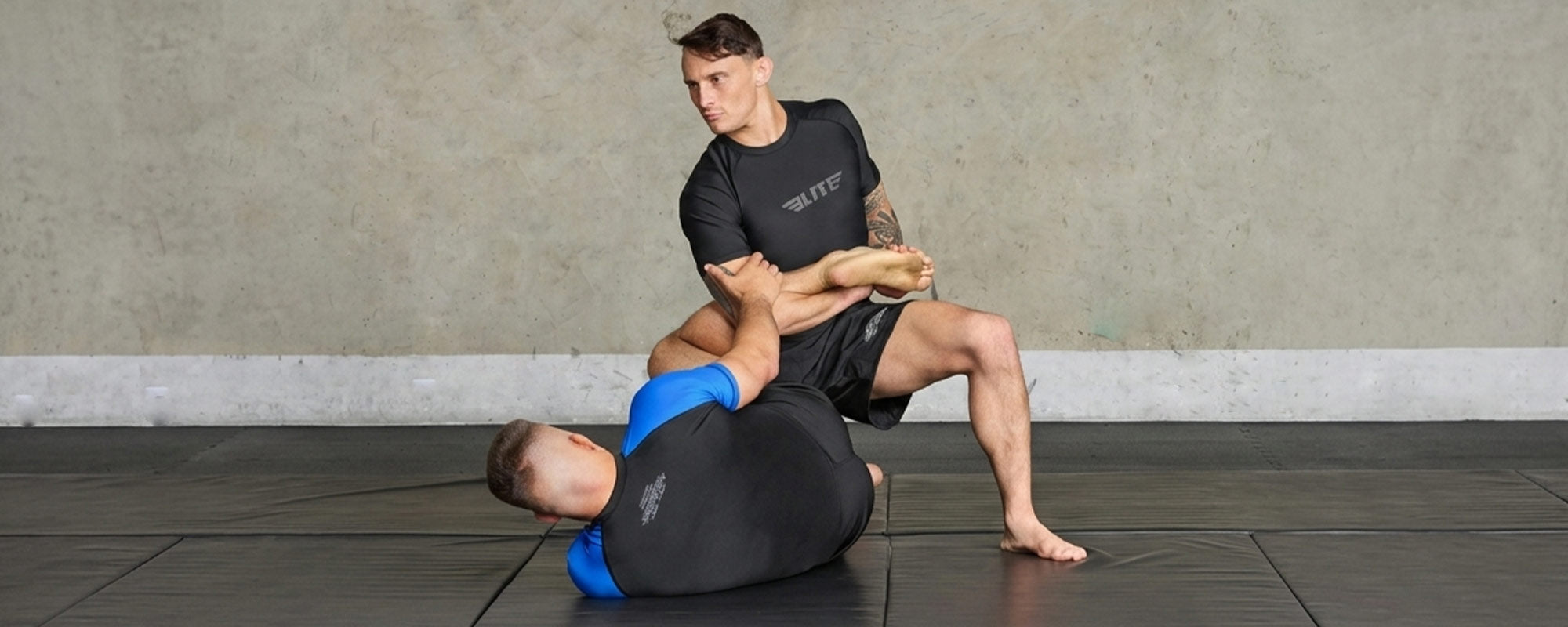
Ask any experienced grappler what they wear under their gi, and the answer will almost always be the same: a rash guard. Rash guards are form-fitting compression tops designed specifically for grappling sports. They sit flush against the skin, move with the body, and do not bunch or ride up under the gi jacket.
2.1 Why Rash Guards Work So Well Under a Gi
They are made from polyester-spandex blends that wick moisture away from the skin, keeping the wearer cooler and drier even during hard, sweaty rounds.
The flat-seam or seamless construction prevents pressure points and chafing where the gi sits against the body.
They provide a layer of protection against mat burns on the chest, back, and arms, areas that press directly against the mat during guard play, mount defense, and takedown attempts.
Compression from the rash guard also supports the muscles lightly and reduces the sensation of skin being dragged or pinched during grips.
2.2 Short Sleeve Vs. Long Sleeve Rash Guards

Both options work well under a gi, and the choice usually comes down to personal preference and the season.
Short-sleeve rash guards are the most popular choice. They leave the forearms free, which some grapplers prefer for grip feedback and ventilation. In summer or in a warm gym, a short-sleeve rash guard prevents overheating.
Long-sleeve rash guards offer more coverage and are particularly useful in winter or in a cool training environment. They also cover the elbows, which can pick up mat burns during guard work and breakfalls. Some practitioners prefer them for extra skin protection.
2.3 Rash Guards for Men

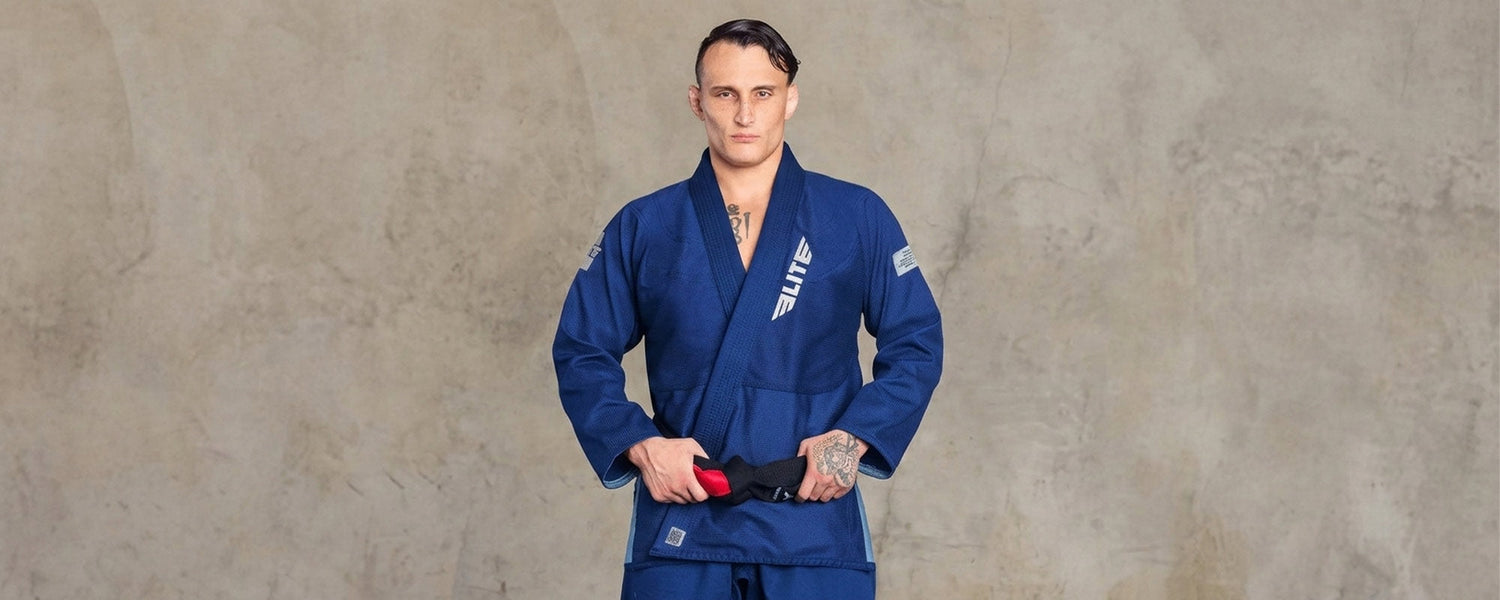
Men's rash guards under the gi should fit snugly without restricting movement. A well-made rash guard stays in place throughout the hardest rounds. The Elite men's BJJ gi collection pairs exceptionally well with a fitted compression rash guard underneath. The lightweight fabric of the gi means the combined weight stays minimal and comfortable.
2.4 Rash Guards for Women

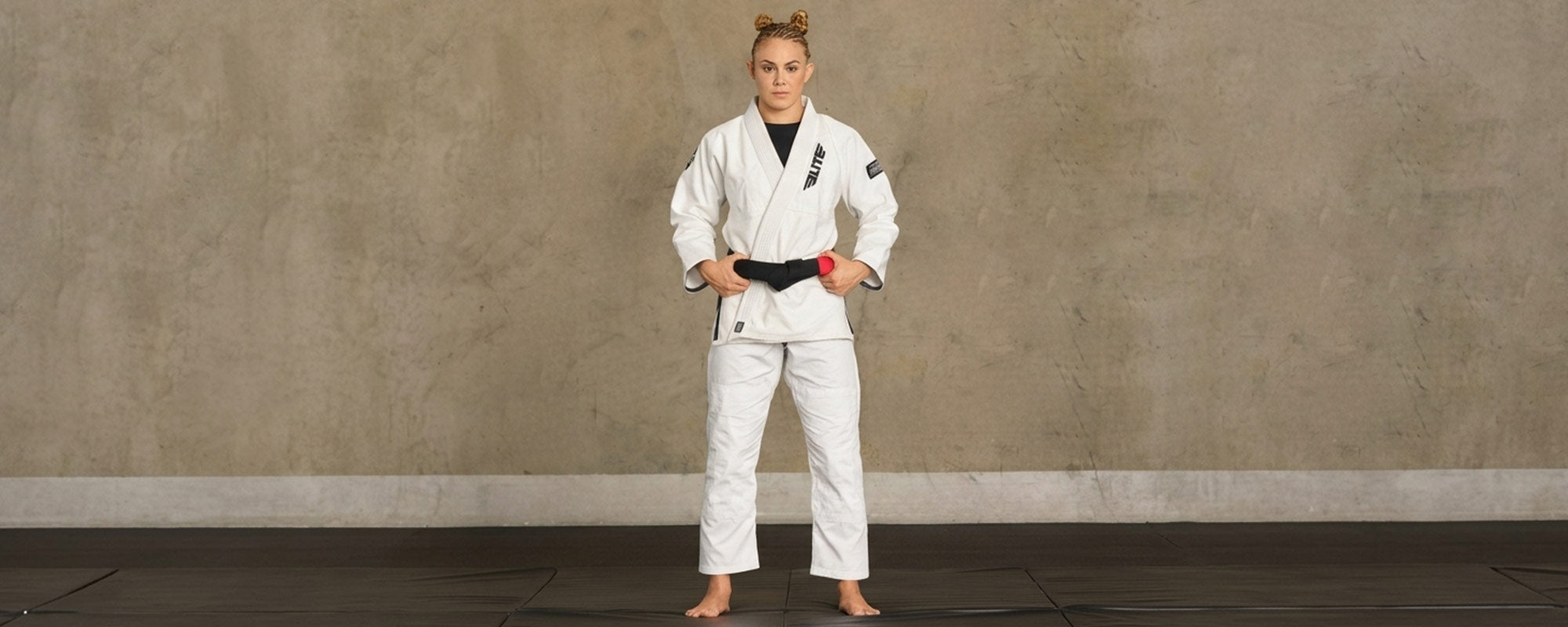
For women, a rash guard under the gi is even more essential. It provides coverage during accidental gi openings and adds a secure, supportive layer that a regular sports bra alone cannot offer for extended rolling sessions. The Elite women's BJJ gi lineup is cut specifically for the female form, and pairing it with a women's rash guard creates a combination that moves as one unit on the mat.
2.5 Rash Guards for Kids

Young grapplers benefit from rash guards for the same reasons adults do: mat protection, hygiene, and comfort. Kids tend to be less careful about wound care and skin breaks, so a consistent base layer under the gi helps reduce unnecessary skin exposure to mat bacteria. The Elite kids' BJJ gi rangee is designed with the same attention to fit and mobility as the adult line, making pairing with rash guards simple.
3. Compression Shorts and Spats Under the Gi Pants
While the top half of the equation gets the most attention, the lower half matters just as much. Bare legs under gi pants lead to inner thigh chafing, especially during guard-heavy rolling. The solution comes in two forms: compression shorts or spats (full-length compression tights).
3.1 Compression Shorts
Compression shorts hit roughly mid-thigh and sit underneath the gi pants. They cover the inner thighs and groin, the two areas most prone to chafing and friction burns during BJJ. For male practitioners, compression shorts also double as the holder for a groin cup, which is discussed below.
Look for compression shorts made from four-way stretch polyester-spandex blends. They should not bunch at the waistband or ride up during movement. A flat waistband is far more comfortable under a gi pant's drawstring.
3.2 Spats (Compression Tights)
Spats are full-length compression pants that run from the waist to the ankle. They are more popular in no-gi grappling, but many BJJ practitioners also wear them under gi pants, particularly those who train year-round in cooler climates or in gyms with aggressive air conditioning.
Spats provide complete leg coverage, eliminating the risk of mat burns on the knees and shins during guard passing. They also add a meaningful layer of warmth during winter training.
The only practical consideration with spats under a gi is bulk. Some practitioners find that spats add too much material under a tight-fitting gi pant. The solution is to size up slightly on gi pants or choose a lighter pair of spats.
4. Sports Top: Essential for Female Practitioners

For women, a sports top is a non-negotiable undergarment when training BJJ in a gi. The physical demands of rolling, guard work, takedowns, armbars, and sweeps involve sustained, multi-directional movement. A standard female top provides neither the support nor the durability needed.
A high-impact sports female top is the right choice for BJJ. It should:
Offer a wide underband and straps that don't dig or shift during movement
Sit flat across the chest without bunching under the gi jacket
Be made from moisture-wicking fabric that doesn't retain sweat against the skin
Stay in place through the full range of guard and top-game movement
Many women pair a sports bra with a rash guard for a dual-layer approach that provides both support and coverage. The Elite women's BJJ gis are cut to sit properly over this layering combination without adding excess bulk, making the transition from warm-up to hard rolling seamless.
5. Groin Protection for Male Practitioners
Male grapplers, especially beginners, often wonder whether a groin cup is necessary under the gi. The honest answer is that it is strongly recommended, particularly during stand-up work, takedowns, and throws, where accidental knee or foot contact is common.
A standard athletic cup worn inside compression shorts provides solid protection. The compression shorts hold the cup firmly in place, which is important; a loose cup shifts during rolling and becomes a distraction or, worse, an irritant. Form-fitting compression shorts designed for combat sports feature a cup pocket, making this setup simple and secure.
For those who find a hard cup too bulky during ground grappling, a soft-shell athletic cup is a reasonable compromise. It provides meaningful impact protection while being more flexible against the mat.
6. What to Wear Under a BJJ Gi: By Season
Training conditions change significantly across seasons. The same base layer that works perfectly in a winter gym can lead to overheating and early fatigue when summer arrives. Here is how to adjust.
6.1 Summer and Hot Weather Training

Heat is the biggest challenge in summer BJJ training. The goal of undergarments should be to move moisture away from the skin as fast as possible and allow maximum ventilation.
Choose a short-sleeve rash guard over a long-sleeve one to allow more skin exposure and airflow at the forearms.
Opt for a lightweight, thin rash guard fabric, typically 85–90% polyester with a spandex component.
Wear compression shorts rather than full spats to keep the legs cool.
Avoid cotton entirely. Cotton absorbs and holds sweat, becoming heavy and clingy. It also dries slowly, creating a warm, damp environment against the skin.
Pairing summer-appropriate undergarments with a lightweight gi makes a significant difference. The Elite Ultra Light White Adult BJJ Gi is a strong choice for hot conditions. The pre-shrunk fabric is airy, and the lightweight construction doesn't trap heat the way heavier gis do.
6.2 Winter and Cold Weather Training
Cold gyms and winter training call for an extra layer of warmth without sacrificing mobility.
A long-sleeve rash guard under the gi jacket traps body heat efficiently while still allowing a full range of motion.
Spats under the gi pants add insulation to the legs and keep muscles warmer during training, which can reduce the risk of muscle strain in cold conditions.
Thermal base layers designed for athletic use are another option, though the added bulk must be managed.
The Elite Ultra Light Black Adult BJJ Gi works well year-round, precisely because its lightweight construction doesn't feel oppressive when worn with a rash guard and spats during winter sessions.
7. Quick Reference: What to Wear Under Your BJJ Gi
| Practitioner | Top Layer | Bottom Layer | Extras |
|---|---|---|---|
| Adult Men (Summer) | Short-sleeve rash guard | Compression shorts | Groin cup (optional) |
| Adult Men (Winter) | Long sleeve rash guard | Spats or compression shorts | Groin cup (optional) |
| Adult Women (Summer) | Sports Female Top + short-sleeve rash guard | Compression shorts | - |
| Adult Women (Winter) | Sports Female Top + long sleeve rash guard | Spats | - |
| Kids (All seasons) | Short or long sleeve rash guard | Compression shorts or spats | - |
| Competition (Any) | Short or long sleeve rash guard | Compression shorts or spats | Check the rule set for color |
8. Competition Rules: What Is Allowed Under the Gi?
Competition rules add another layer to the undergarment question. The IBJJF (International Brazilian Jiu-Jitsu Federation) has specific guidelines on what may be worn under the gi during sanctioned events.
Key rules to know:
Rash guards are permitted under the gi top. However, the rash guard must be white, black, or match the color of the gi. Brightly colored or mismatched rash guards may be flagged at check-in.
Compression shorts or spats are generally permitted under the gi pants, again with color matching expectations depending on the specific event ruleset.
No additional clothing extending beyond the hem of the gi pants or the sleeves of the gi jacket is typically allowed, as it could affect grip dynamics.
Always verify the specific ruleset for any event before competing. Rules can vary between federations and local promotions. When in doubt, white or black undergarments are the safest choice and rarely cause issues.
A competition-ready gi to pair with any undergarment choice is the Elite Sports Ultra Light Blue Adult BJJ Gi, IBJJF-approved and built for high-performance use.
9. What Not to Wear Under a BJJ Gi
Just as important as knowing the right choices is knowing what to avoid.
Regular cotton t-shirts are the most common mistake beginners make. Cotton soaks up sweat, becomes heavy, and creates uncomfortable bunching under the gi jacket. It also takes far longer to dry and can harbor bacteria.
Loose boxers or regular underwear under gi pants are equally problematic. They bunch, ride up, and offer no support or mat protection. Compression shorts are a direct upgrade in every way.
Heavy gym shorts under the gi pants add unwanted bulk and can cause the gi pants to sit oddly. If extra coverage is needed, spats are the correct choice.
Regular Female Tops for women lack the support and stability needed for grappling. During armbars, hip escapes, and butterfly guard work, the movement is multi-directional and sustained. A standard bra is not designed for this load.
10. Fabric Guide: What to Look For in BJJ Undergarments

The fabric of undergarments matters as much as the style. Here is a breakdown of the key materials.
Polyester-spandex blends (80/20 or 85/15): The best all-around choice for rash guards, compression shorts, and spats. Moisture-wicking, quick-drying, durable, and flexible. Holds its shape through hundreds of washes.
Nylon-spandex blends: Slightly softer against the skin than polyester, with excellent stretch and recovery. Often used in premium rash guards. A strong choice for those with sensitive skin.
Cotton (avoid): Poor moisture management, heavy when wet, slow to dry. Fine for casual wear, but not appropriate as a BJJ base layer.
Merino wool: An advanced option for cold-weather training. Naturally temperature-regulating and odor-resistant. However, it is expensive and requires more careful washing. Not common in BJJ, but worth knowing for those who train in very cold environments.
11. Final Thoughts: The Right Setup
The right combination of undergarments does not need to be complicated or expensive. For most practitioners, the answer is simply a quality rash guard on top and fitted compression shorts on the bottom. From there, the seasonal adjustments, long sleeves for winter, short sleeves for summer, and spats for cold legs, are minor tweaks to an already solid foundation.
Elite Sports stands out as one of the best BJJ rash guard and gi manufacturers, offering gear for every member of the training family. The Elite Sports women's core blue BJJ gi and the full range of kids' BJJ gis are built with the same attention to performance and durability as the flagship adult line.
Whether stepping onto the mat for the first time or preparing for a major competition, getting the base layer right is one of the simplest ways to train smarter, stay more comfortable, and protect the skin. The gi gets most of the attention, but what goes underneath it quietly determines how good the whole session feels.
For those looking to pair the right undergarments with a world-class gi, the Elite Sports BJJ gi collection is one of the best places to start, with options across colors, sizes, and weight classes, all built to perform at the highest level.
Train smart. Train protected. Train in the right gear.



Leave a comment
This site is protected by hCaptcha and the hCaptcha Privacy Policy and Terms of Service apply.