
Table of content
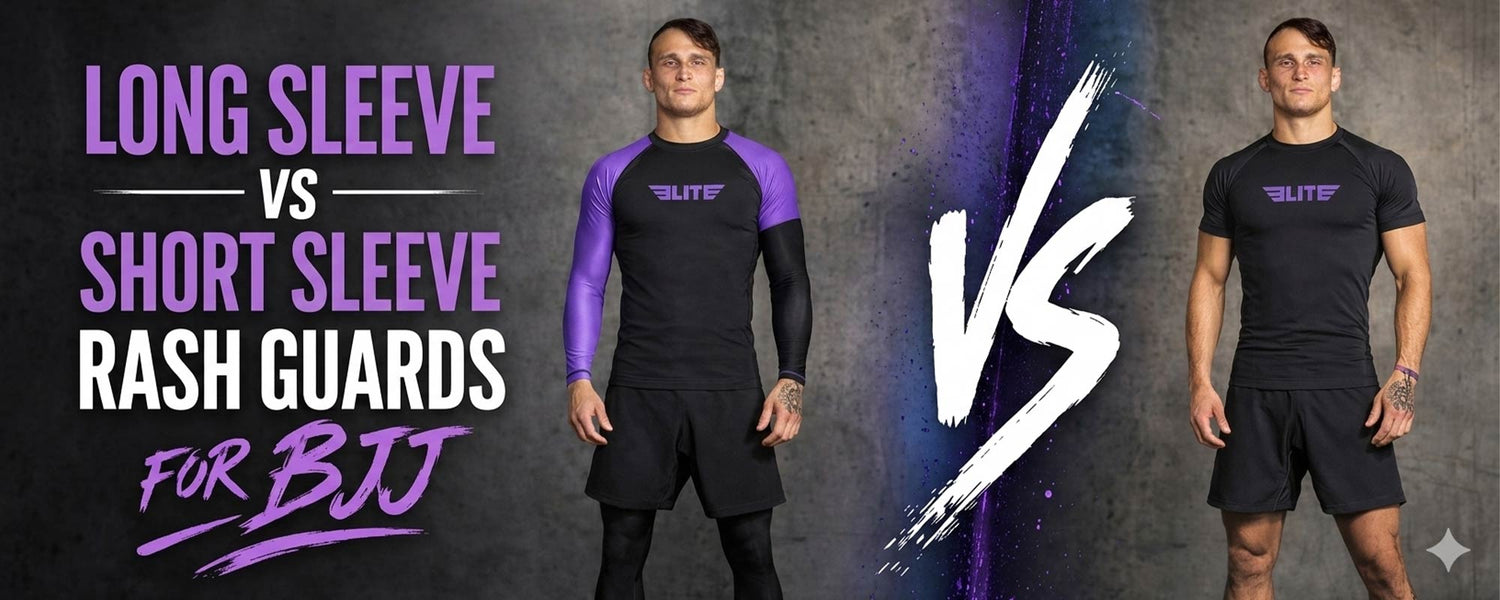
Walk into any BJJ gym, and you will spot two types of grapplers: those rocking long sleeve rash guards and those in short sleeve ones. Both camps swear by their choice. But which one is actually better for your game?
The answer is: it depends. And in this guide, we break down every key factor so you can make the right call for your own training style, body, and goals.
Whether new to the mats or a seasoned grappler, choosing the right BJJ rash guard matters more than most people think. It affects how you feel, how you move, and how well your skin stays safe during rolls. Elite Sports, widely regarded as one of the best BJJ rash guard and gi makers in the world, offers both styles built for serious grapplers who want gear that keeps up with them.
1. What Is a BJJ Rash Guard?

A BJJ rash guard is a tight-fit top worn during no-gi training, under a gi, or both. It is made from stretchy fabric, most often spandex or polyester blends, that wicks sweat, reduces skin burns, and keeps the body snug during live rolls.
Unlike a loose shirt, a rash guard stays in place. It does not bunch up, get grabbed, or trap heat against the skin. This makes it a must-have piece of gear for anyone training Brazilian jiu jitsu on a regular basis.
2. Long Sleeve Rash Guard BJJ: What to Know

A long-sleeve rash guard covers both arms fully, from the shoulder down to the wrist. This style is a go-to for grapplers who want more skin cover during training.
2.1 Pros of Long-Sleeve Rash Guards
More skin cover during rolls: Long sleeves keep the forearms and elbows off the mat. This cuts down on mat burn, a common and painful issue for regular BJJ players. If training on rough mats, long sleeves act as a first line of shield for the arms.
Holds body heat in cooler gyms: If the gym runs cold, a long sleeve rash guard traps heat near the skin and keeps muscles warm. This can help reduce the risk of pulls and strains early in a session, which is a real concern in colder months.
Strong germ block: More fabric means less direct skin contact with the mat and training partners. This matters in a sport where skin issues like ringworm can spread fast. A long-sleeve rashguard BJJ top is one of the best simple steps for better mat hygiene.
Less friction during arm locks: The extra fabric on the arms helps reduce friction when a partner grabs or slides against the skin. This can also help when applying arm drags and body locks from the clinch.
Tattoo and scar cover: For grapplers who prefer to keep their skin covered, long sleeves offer a clean, simple solution without any added effort.
2.2 Cons of Long Sleeve Rash Guards
- Can feel warm in hot gyms: If the gym has poor airflow or runs hot, long sleeve rashguard might make a session feel more draining than it needs to be. This is the most common complaint among grapplers who train in warm climates.
- Slight bulk under a gi: Long-sleeve rash guards can add a bit of bulk to the jacket sleeves when worn under a gi. For grapplers with a snug-fitting gi, this can slightly limit wrist and elbow range of motion.
3. Short Sleeve Rash Guards for BJJ: What to Know

A short-sleeve rash guard covers the chest, back, and upper arm. The forearms and elbows stay bare. This style is a top pick for hot-climate training and for grapplers who prefer a lighter feel on the mat.
3.1 Pros of Short Sleeve Rash Guards
Cooler feel during intense rolls: With less fabric, short sleeves allow more airflow to the arms. This is a big win in warm gyms or during hard, high-sweat sessions. Many grapplers prefer this style in the summer months or in tropical climates.
Less fabric to grab: In no-gi grappling, less surface area means fewer spots for a partner to snag during scrambles. Some grapplers feel short sleeves give them a slight edge in tight spaces.
Great for layering with BJJ spats: A short sleeve rashguard BJJ top sits cleanly under a gi or pairs well with BJJ spats for no-gi sessions. The spats cover the legs, and the short-sleeved top keeps the upper body free and light for fast movement.
Easy to move in: Many newer BJJ players start with short sleeves because the feel is close to a regular athletic shirt, just tighter and more useful during ground work.
3.2 Cons of Short Sleeve Rash Guard
Less skin cover: The forearms and elbows are exposed. On rough mats, this means a higher chance of mat burn and abrasions, especially during guard work and scrambles where the arms drag across the surface.
Less warm in cold gyms: Short sleeves offer little warmth for the arms. If the gym is chilly or training occurs in cold months, the arms may feel stiff early in a session, increasing the risk of minor muscle strains.
4. Long Sleeve vs Short Sleeve Rash Guard: Key Differences at a Glance

5. Which One Should You Choose? Scenarios That Help Decide
5.1 Training Under a Gi
For those who train under a gi, a long-sleeve rash guard under the gi works well in cold months or for those who want full-sleeve coverage. However, some grapplers find long sleeves too bulky inside a gi jacket. A short-sleeve option keeps things lean and allows the gi to sit and move more freely. The best call depends on personal fit and how snug the gi jacket is.
5.2 No-Gi Training
In no-gi, both styles are used widely. Long sleeves offer more skin cover during guard work and leg ties. Short sleeves feel lighter and are common in warm training spaces. Many top no-gi grapplers keep one of each in the bag and pick based on the day and the gym.
5.3 Competition Day
At most BJJ events, both styles are allowed. Some grapplers feel that long sleeves help with arm drag setups and body locks by reducing skin friction. Others prefer the freedom of short sleeves. This is a matter of personal feel and what one trains in most.
5.4 Recovering from Skin Issues or Mat Burns
If dealing with a mat burn, a minor arm wound, or a skin issue, a long sleeve rash guard provides a clean cover layer. This helps keep wounds off the mat and reduces the risk of spreading skin concerns to training partners, a key part of gym safety.
6. Are Long Sleeve Rash Guards Too Hot?
This is one of the most asked questions from new grapplers. The short answer is: not in most cases.
Modern long-sleeve BJJ rash guards use light, moisture-wicking fabrics that draw sweat away from the skin quickly. Elite Sports, known for making some of the best BJJ rash guards on the market, builds its long sleeve options with four-way stretch fabric that allows full motion while managing heat well. For most grapplers, the added warmth is minor and offset by the benefits of full skin cover.
That said, in gyms with no airflow and high heat, even the best long-sleeve rashguard may feel too warm during back-to-back rounds. In those cases, a short-sleeve option or alternating between the two styles is a smart and easy fix.
7. FAQs: Long Sleeve vs Short Sleeve Rash Guard BJJ
7.1 Should I Get a Long Sleeve or Short Sleeve Rash Guard?
If the gym runs cool or no-gi training is the main focus, a long sleeve rash guard is a great first pick. It gives more cover, more warmth, and better skin care during ground work. If the gym is warm or a lighter feel is preferred, start with a short sleeve rashguard. Many grapplers end up owning both and switching based on the session.
7.2 What Is the Difference Between Short Sleeve and Long-Sleeve Bjj Rash Guards?
The main difference is the amount of the arm covered. A long-sleeve guard covers the full arm from shoulder to wrist. A short-sleeve one covers the shoulder and upper arm only, leaving the forearm and elbow bare. This changes how warm the garment feels, how much skin is protected, and how much fabric is on the arm during a roll.
7.3 Should I Wear a Long Sleeve or Short Sleeve Rash Guard Under a Gi?
Either works, but most grapplers prefer a short-sleeve option under a gi for a cleaner, less bulky fit. A long-sleeve under the gi can add bulk to the jacket sleeves. If the gi has a loose cut or a full arm cover is preferred, long sleeves under the gi are still a solid choice and work well in cooler training spaces.
7.4 Are Long Sleeve Rash Guards Too Hot?
Not for most grapplers. Most high-grade long-sleeve BJJ rash guards use light, breathable fabric that manages heat well. The slight warmth added by long sleeves is often outweighed by the benefits of skin cover and muscle warmth. In very hot gyms, rotating with short-sleeve options is a simple and smart idea.
8. Final Word: Pick What Works for Your Mat Time
There is no single winner in the long-sleeve vs. short-sleeve rash guard debate. Both styles serve a real purpose, and both have a place in a serious grappler's kit.
Long sleeves offer more skin cover, more warmth, and a stronger guard against mat-related skin issues. Short sleeves feel lighter, allow more airflow, and are a natural fit for warm gyms and hot months.
The smart move is to try both. Elite Sports, trusted as one of the best BJJ gi makers and rash guard brands by grapplers at every level, makes both long-sleeve and short-sleeve rash guards in tough, stretchy fabric built for real mat time. Whether pairing a rash guard with BJJ spats for no-gi or wearing one under a gi for a standard class, Elite Sports has a style and fit to match.
Train in both, see what feels right on the mat, and build a kit that supports the best jiu jitsu possible.



Leave a comment
This site is protected by hCaptcha and the hCaptcha Privacy Policy and Terms of Service apply.