
Table of content
Every beginner who walks into a BJJ academy faces the same question within the first week: Gi or No-Gi? It sounds simple, but the answer can shape the entire journey on the mats. The wrong choice early on does not ruin progress, but the right one can speed it up in ways most people do not expect.
Brazilian Jiu-Jitsu is one of the most effective martial arts in the world, and the good news is that both Gi and No-Gi training lead to real skill. The debate between the two, however, has been ongoing in BJJ gyms for decades and remains one of the most talked-about topics among new practitioners. Whether a beginner is stepping on the mats for fitness, self-defense, competition, or fun, the Gi vs No-Gi decision matters. To gear up for either path, Elite Sports offers a full lineup of high-quality BJJ gear built for athletes at every level.
Continue reading this article to get a clear, honest breakdown of Gi and No-Gi Jiu Jitsu, what makes each one unique, and which style is the smartest starting point for a BJJ beginner.
1. What Is Gi BJJ?

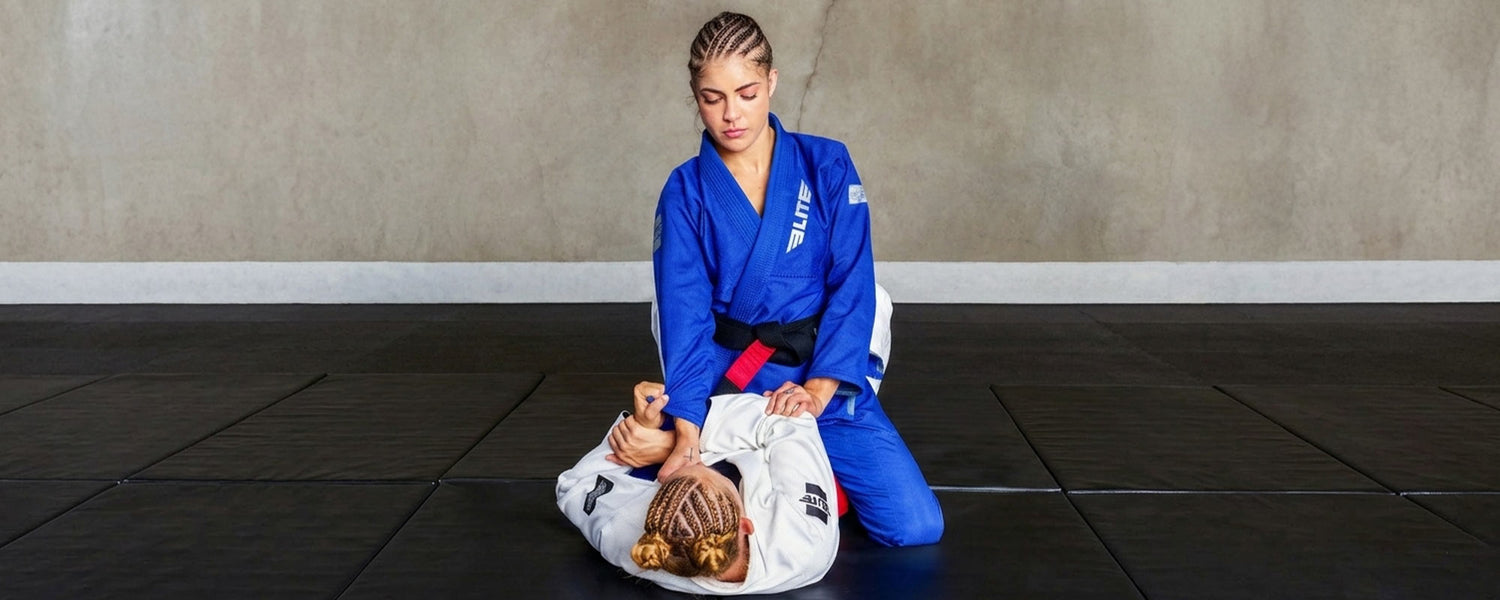
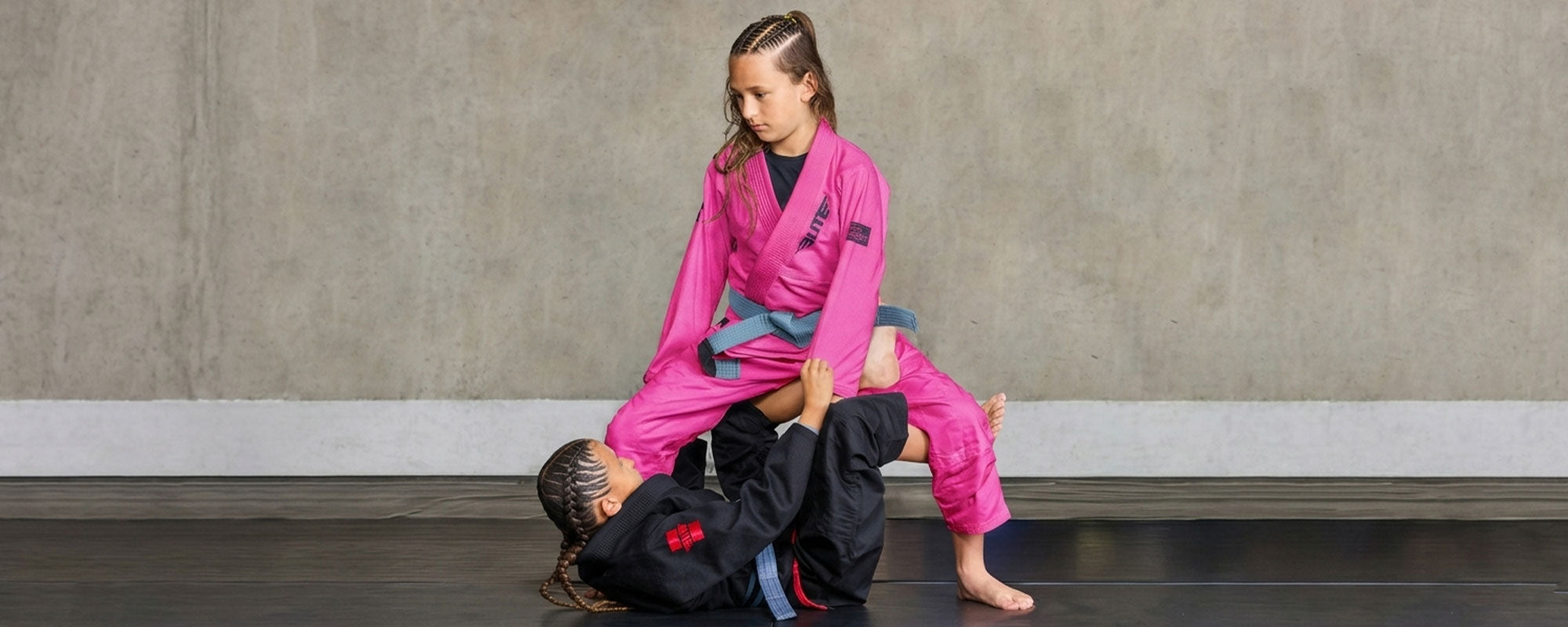
Gi BJJ, also called "Gi Jiu Jitsu" or simply "Gi training," is practiced while wearing a traditional uniform called a Gi (or Kimono). The Gi consists of a heavy jacket, pants, and a colored belt that indicates rank. The fabric is thick and tightly woven, which matters because in Gi training, gripping an opponent's jacket, collar, sleeves, and pants is not only allowed but a core part of the game.
Collar chokes, sleeve grips, lapel guards, and belt grabs are all legal in Gi competition. This grip-heavy environment makes Gi BJJ one of the most technical and detail-oriented grappling styles in the world. A smaller person can use collar and sleeve grips to slow down a bigger, stronger opponent, making technique far more relevant than raw power.
The Gi also creates a natural pace. Fights slow down because grips create friction. For beginners, this extra time on the mat translates to more opportunities to feel positions, understand leverage, and build a strong foundation of technique.
2. What Is No-Gi BJJ?

No-Gi BJJ is practiced without the traditional uniform. Instead, practitioners typically wear rash guards and shorts or spats. There is no collar to grab, no sleeves to control, and no lapels to weave through. Grips are limited to the body itself, such as the wrists, ankles, neck, and hips.
Without the friction of fabric, No-Gi training tends to be faster and more explosive. Wrestlers and MMA fighters often gravitate toward No-Gi because the movement patterns are closer to real combat and cage fighting. Techniques like heel hooks, leg locks, and body-lock takedowns are more prominent in No-Gi grappling.
No-Gi game is often described as athletic and dynamic. Because grips are harder to maintain, constant motion and pressure are rewarded. Many practitioners find No-Gi more physically demanding in the short term, even if Gi BJJ requires more mental focus on technique.
3. Gi vs No-Gi: Key Differences at a Glance
The table below breaks down the major differences between Gi and No-Gi BJJ to give beginners a clear side-by-side view:

4. Benefits of Training Gi BJJ as a Beginner
4.1 A Stronger Technical Foundation
Most longtime BJJ coaches agree that the Gi builds better fundamentals. The slower pace gives beginners time to feel what is happening, understand why a position works, and develop muscle memory for complex movement patterns. Learning to escape side control or set up a triangle choke under Gi conditions gives a student a much deeper understanding of those techniques.
The collar and sleeve grips also teach a beginner to think about control in layers. Gripping an opponent's collar before attempting a sweep is not just a habit; it is an education in leverage and timing.
4.2 Rank and Belt Progression
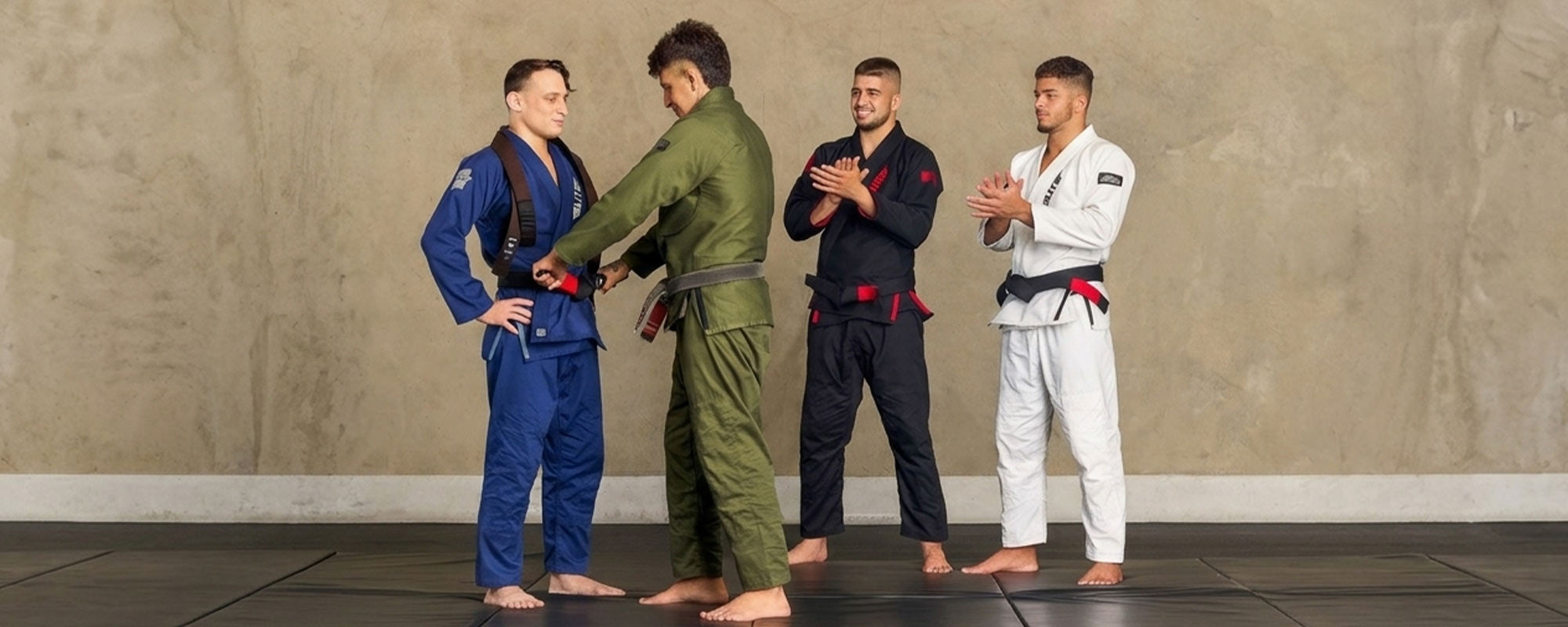
Gi BJJ follows a formal belt ranking system recognized across most academies worldwide. White, blue, purple, brown, and black belts represent years of dedication and technical growth. For beginners who are motivated by clear milestones, training in the Gi offers a structured path that No-Gi, in many academies, does not.
4.3 More Academies Offer Gi Classes

The majority of BJJ academies around the world still run more Gi classes per week than No-Gi classes. For a beginner trying to train four or five times a week, Gi schedules often offer more flexibility and more training partners.
4.4 Gi Training Makes No-Gi Easier Later
A common saying in BJJ is: "Train Gi, and No-Gi becomes easier. Train only No-Gi, and Gi becomes harder." The logic is that Gi BJJ forces a practitioner to be precise, patient, and technical. Those habits transfer well to No-Gi training, where the same techniques apply, just without the grip assistance of fabric.
4.5 Gi Gear Is Widely Available
Quality BJJ Gis for men and women have never been more accessible. Elite Sports, widely recognized as the best BJJ Gi manufacturer in the industry, offers a full range of Gis built with durable, competition-grade fabric. Whether a beginner is looking for a standard weave or a lightweight travel-friendly option, there is a Gi suited to every training style and budget.
5. Benefits of Training No-Gi BJJ as a Beginner

5.1 More Accessible Entry Point
No-Gi training requires less gear. A pair of grappling shorts and a rash guard is all a beginner needs to get started. This lower cost barrier makes No-Gi more accessible for students who are still testing the waters before committing to the sport fully.
5.2 Builds Explosive Athleticism
Because there are no fabric grips to slow things down, No-Gi training demands more movement. Beginners who start No-Gi often develop better hip mobility, scramble instincts, and cardiovascular fitness faster than their Gi-only counterparts. For anyone coming from a wrestling or MMA background, No-Gi feels natural from day one.
5.3 More Relevant for MMA and Self-Defense
Real-world altercations rarely involve two people wearing Gi jackets. No-Gi BJJ, with its body-grip-focused game, translates more directly to the kind of grappling that happens in MMA fights or self-defense situations. Clinch work, body locks, and rear-naked choke setups are all No-Gi skills with immediate practical value.
5.4 Leg Lock Game Starts Earlier
No-Gi competition places fewer restrictions on leg attacks. Heel hooks and kneebars, which are limited in many Gi rulesets at lower belt levels, are a central part of the No-Gi game. Beginners who start No-Gi often develop a strong understanding of lower-body submissions much sooner, which becomes a major asset as they advance.
5.5 Great Gear Options Are Available
Comfort matters in No-Gi training, and modern rash guards have come a long way. Elite Sports, known as the best no-gi rash guard maker for athletes worldwide, produces both long-sleeve rash guards and short-sleeve no-gi rash guards designed for high-performance grappling. The fabric is built to stay in place during scrambles and resist tearing under heavy mat work.
6. What Do Most BJJ Coaches Recommend for Beginners?

The consensus among experienced coaches is fairly consistent: start with the Gi. The reasoning is straightforward. Gi training forces a beginner to slow down, think, and develop patience on the mat. Without the slower pace and clear grip references of the Gi, many beginners feel lost during rolling sessions and struggle to retain technique.
That said, several high-level grapplers, including Gordon Ryan and John Danaher, have advocated for starting No-Gi if the goal is to compete in submission-only or MMA formats. Danaher's well-documented approach to leg locks, for example, is built almost entirely on a No-Gi framework that he argues is more efficient for beginners looking to develop a complete submission game quickly.
The bottom line: the best coach is the one in front of a beginner every week. If the primary academy runs mostly No-Gi, start No-Gi. If Gi classes dominate the schedule, start Gi. Consistency and mat time matter more than the format.
7. Which Style Is Better for Competition?
7.1 Gi Competition

The International Brazilian Jiu-Jitsu Federation (IBJJF) runs the most recognized Gi competition circuit in the world, including the World Championships and the Pan American Championships. For beginners aiming to compete in these events, Gi training is a direct path to preparation. The IBJJF's belt-based division system also makes it easy for newer competitors to find peers at a similar level.
7.2 No-Gi Competition

No-Gi competition has exploded in popularity over the last decade. Events like the Eddie Bravo Invitational (EBI), Submission Underground, and the ADCC (Abu Dhabi Combat Club) are now among the most-watched grappling events in the world. ADCC in particular is considered the Olympics of grappling, and it is entirely No-Gi.
For beginners with MMA aspirations or those drawn to submission-only formats, No-Gi competition is the most direct route.
8. Which Style Is Better for Self-Defense?
Self-defense is one of the most common reasons people start BJJ. Here, the answer is nuanced.
Gi training teaches control, patience, and the ability to neutralize an attacker from the guard or side control. The grip-work developed in Gi training can be applied to grabbing clothing in a real scenario, making it more relevant than people assume.
No-Gi training, however, is generally considered more practical for real-life scenarios. Attackers are rarely wearing Gi jackets, and the body-control skills developed in No-Gi transfer directly to defensive situations. Clinch control, back takes, and choke setups from the mount all carry over effectively to self-defense contexts.
For pure self-defense purposes, a blend of both is ideal, but No-Gi holds a slight edge in real-world applicability.
9. Can Beginners Train Both Gi and No-Gi at the Same Time?
Yes, and many coaches actually encourage it. Training both formats simultaneously helps beginners develop a more complete game. Gi training sharpens technique and patience. No-Gi training builds athleticism and adaptability. Together, they create a practitioner who is comfortable in both settings and harder to catch off guard on the mat.
The key for beginners is to avoid splitting focus too early. During the first three to six months, leaning heavily into one format, whichever the primary academy emphasizes, will build the fastest foundation. After that, introducing the second format alongside the primary training is a natural and highly productive step.
10. What Gear Do Beginners Need?
10.1 For Gi BJJ
A quality BJJ Gi: The Gi is the single most important gear purchase for Gi training. It needs to be durable, fit well, and hold up to repeated washing. The Elite Core BJJ Gi is a solid starting point for beginners who want reliable build quality without spending at the top of the market.
A belt: Usually included with the Gi purchase.
Mouth guard: Essential for any contact sport.
Ear guards (optional but recommended): For those who train frequently.
10.2 For No-Gi BJJ
Rash guards: A high-quality rash guard is the foundation of No-Gi gear. Rash guards for men, women, and kids are all available through Elite Sports, built to handle the physical demands of grappling with compression fabric that stays in place through every scramble.
Grappling shorts or spats: Shorts should allow full hip movement. Spats (compression tights) are popular for added muscle support and mat hygiene.
Mouth guard: Same as Gi training.
For beginners who are building out their complete training kit, Elite Sports carries everything needed for both Gi and No-Gi training in one place. The brand is widely regarded as the best BJJ gear destination for athletes seeking professional-grade equipment at fair prices.
11. Gi vs No-Gi: A Quick Summary for Beginners
Start Gi if: The primary training academy is Gi-focused, the goal is belt progression and traditional BJJ competition, or the learning pace of Gi suits the student's style.
Start No-Gi if: The goal is MMA or submission-only competition, the available training schedule is mostly No-Gi, or the student comes from a wrestling or combat sports background.
Train both if: The academy offers both, and the beginner wants the most well-rounded development possible over time.
12. Final Verdict: Gi or No-Gi for Beginners?
There is no universally correct answer, but there is a practical one: most beginners benefit most from starting in the Gi. The slower pace, the formal structure, and the technical demands of Gi training create a foundation that serves a practitioner for life. When No-Gi is added later, that Gi base pays dividends immediately.
That said, the best training is the training that happens consistently. If a beginner has access to a great No-Gi program and limited Gi options, No-Gi every day beats Gi twice a week. Mat time, repetition, and a good coach are the three things that matter most at any level.
Whatever path a beginner chooses, getting the right gear from the start makes a difference. A well-fitted Gi or a quality rash guard is not just about looking the part. It is about training comfortably, safely, and with confidence from day one.



Leave a comment
This site is protected by hCaptcha and the hCaptcha Privacy Policy and Terms of Service apply.