
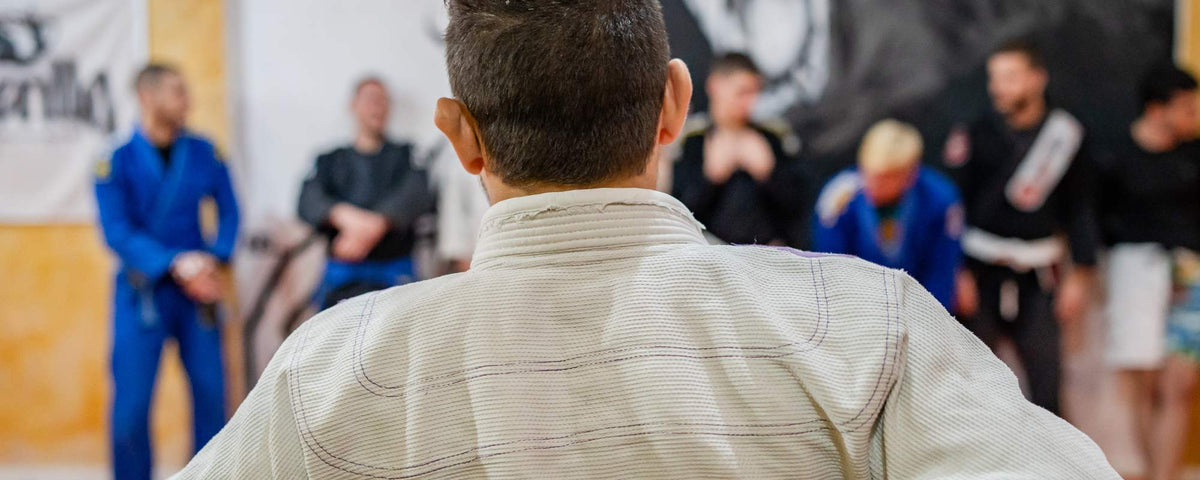
Most Jiu-Jitsu classes last around 60–90 minutes, depending on the academy and training format. Learn what happens during class, what to expect as a beginner, and which clothing is suitable for gi and no-gi training.
If you're thinking about starting Brazilian Jiu-Jitsu (BJJ), you've probably wondered how much of your evening it will take. So, how long are Jiu-Jitsu classes? Most adult classes last 60 to 90 minutes. Beginner sessions are often a little shorter, and competition classes and open mats can run longer.
The exact length depends on the academy, the instructor and how the time is split between technique, drilling and sparring. A beginner class usually focuses on basic movements, while an advanced class may include harder positional work or live rounds. You don't need to be an athlete to start. Knowing the schedule and what happens on the mat will make your first visit a lot less intimidating.
Table of contents
1. How Long Is a Typical Jiu-Jitsu Class?
A typical adult class runs about an hour to an hour and a half, but there's no universal standard. Some academies run short fundamentals sessions, while others fold instruction and sparring into one longer class. Here's what you're likely to see:
Type of Jiu-Jitsu session |
Typical duration |
What to expect |
|---|---|---|
Beginner or fundamentals class |
45–60 minutes |
Basic movements, positions and introductory techniques |
Regular adult BJJ class |
60–90 minutes |
Warm-up, instruction, partner drilling and possibly sparring |
Competition training |
90 minutes or longer |
More intensive drilling, conditioning, positional work or live rounds |
Kids' Jiu-Jitsu class |
30–60 minutes |
Age-appropriate instruction, movement games and basic techniques |
Open mat |
Varies by academy |
Optional practice, drilling or rolling during a scheduled period |
These durations are estimates, not official standards, and schedules vary from school to school. For a beginner, a 60-minute class is an easy place to start. You can learn the basics without a huge time commitment, though a well-run 90-minute class works just as well. Before you visit, check whether the listed time includes the warm-up and sparring or whether they happen in separate sessions.

2. What Happens During a Jiu-Jitsu Class?
Knowing how a class is built explains why training takes an hour or more. Instructors teach in different ways, but most classes follow the same order: warm-up, technique, drilling and sometimes live sparring.
2.1. Warm-Up and Movement Drills
Most classes open with a warm-up that gets you ready for grappling: light cardio, mobility work, hip escapes, rolls or technical stand-ups. Some instructors keep it short and move straight to technique, while others spend more time on movement. You don't need to arrive in peak condition. Work at a pace you can manage, follow the instructor and tell the coach if you need a break.
2.2. Technique Instruction
After the warm-up, the instructor demonstrates one or more techniques, such as an escape from a bad position, a way to keep control, a guard pass or a setup for a submission. Don't try to memorize every detail right away. Focus on the main steps and why they work. Instructors usually show a technique several times and point out common mistakes before you start.

2.3. Partner Drilling
Drilling is where you practice the technique with a partner. One person performs the movement while the other gives a cooperative response, then you switch. This part matters because watching a technique is very different from doing it. Repetition makes the movement familiar, and feedback from your instructor helps you fix mistakes early.
2.4. Positional Practice and Live Sparring
Depending on the class, you may practice one position against increasing resistance or move into live sparring, usually called rolling. In rolling, both partners try to use their skills against a resisting opponent while following the academy's rules and safety instructions. Not every class includes live sparring, and beginners aren't always expected to roll on their first visit. You may watch, practice in a controlled format or join in when the instructor decides you're ready.


3. How Much of a Jiu-Jitsu Class Is Spent Sparring?
There's no fixed amount. Some classes spend most of the time on technique and drilling, while others give a bigger share to positional rounds or live rolling. Here's an example of how a 60-minute class could be split:
Activity |
Example time |
|---|---|
Warm-up and movement |
10 minutes |
Technique instruction |
15 minutes |
Partner drilling |
20 minutes |
Positional practice or rolling |
10 minutes |
Questions and wrap-up |
5 minutes |
Total |
60 minutes |
This is an illustration, not a standard every academy follows. Some schools put more time into instruction, and others run sparring as a separate session. Rolling rounds are often around five minutes each, though that varies too. If you want a closer look at the full experience, read our guide to your first BJJ class.
4. How Long Are Jiu-Jitsu Classes for Beginners?
Your first class may last 45–60 minutes, or it may follow the same 60–90 minute schedule as the regular adult classes. It depends on the academy's beginner program, not on the fact that you're new. A first session usually covers basic movements, a few fundamental techniques and how to work with training partners, and the instructor may explain mat etiquette and how to tell your partner to stop.
You don't need to understand every position on day one. Follow instructions, ask questions and learn at a pace you can handle.
5. What Should You Expect at Your First Class?
A few simple habits make the first visit easier:
- Arrive 10–15 minutes early so you can check in, meet the instructor and ask about any requirements.
- Tell the instructor you're new and mention any concerns that could affect your training.
- Follow the coach's directions, and ask before trying a technique you don't know.
- Let your partner know you're a beginner and keep a controlled pace.
- Don't feel pressured to spar before you're ready. Ask how beginners are introduced to rolling.
Some academies have dedicated beginner classes, while others bring new students into mixed-level sessions with extra guidance. If you're nervous, remember that you're there to learn. You don't need to know the terminology, have perfect fitness or get every movement right.
6. How Long Are Jiu-Jitsu Classes for Kids?
Kids' classes are usually shorter, often 30–60 minutes, with younger children at the shorter end. They mix basic techniques with games and movement drills to keep attention up. If your child is starting, our kids' BJJ gis are sized for young students, but ask the academy about its uniform rules first.
7. What Should You Wear to Your First Jiu-Jitsu Class?
It depends on whether you're attending a gi or no-gi class. Check with the academy before you buy anything, because uniform rules differ and many schools lend gear for trial classes.
7.1. What to Wear to a Gi Class
Gi jiu-jitsu uses a traditional uniform of jacket, pants and belt. Grips on the fabric are a big part of the sport, which is why the uniform matters. White is the most common gi color, and blue and black are also allowed under IBJJF gi rules, but competition requirements can differ from the rules at your local academy. If you're joining a gi class, ask whether you need your own uniform and belt. When you're ready to buy, browse our men's BJJ gis and women's BJJ gis.

7.2. What to Wear to a No-Gi Class
No-gi training skips the traditional uniform. Most people wear a fitted rash guard and grappling shorts, and some add compression leggings (spats) underneath. For a first session, athletic clothing may be fine if the school allows it. Avoid zippers, buttons and pockets that could catch during grappling, and take off any jewelry. If you plan to train no-gi regularly, take a look at our BJJ rash guards and no-gi grappling shorts.
7.3. What Are Jiu-Jitsu Spats?
Spats are close-fitting, stretchy compression leggings made for grappling. You can wear them under shorts or, where the academy allows it, on their own. Some people like the extra leg coverage, but they're optional for most classes, and they don't replace washing your training clothes regularly. If you want a pair, we have BJJ no-gi spats.
8. Are Gi and No-Gi Classes the Same Length?
They can be. The difference is the clothing and the grips, not a set class length. Gi training allows grips on the jacket and pants. No-gi training relies more on direct body control, like underhooks, wrist control and positioning. Either format can include a warm-up, technique, drilling and sparring. To decide which one suits you, read our guide on whether beginners should train gi or no-gi.
9. Is a 60-Minute or 90-Minute Jiu-Jitsu Class Better?
Neither is better by default. It depends on how the session is run, your experience and how well it fits your week.
Factor |
60-minute class |
90-minute class |
|---|---|---|
Time commitment |
Easier to fit into a busy day |
Needs more time for training and travel |
Technique practice |
Can cover one focused lesson |
More room for demonstrations and drilling |
Sparring |
May include short rounds or none |
May allow more positional work or rolling |
Beginner suitability |
A manageable introduction |
Works well if the pace and teaching suit beginners |
Recovery |
Depends on intensity, not just length |
Can need more recovery if it's demanding |
A well-taught 60-minute class beats a poorly run 90-minute one, and a longer class is worth it when the instructor uses the time well. Choose a class you can attend consistently and recover from. If you're unsure, try a beginner-friendly session and ask what it includes before you commit to a schedule.
10. How Often Should You Attend Jiu-Jitsu Classes?
For most beginners, two or three classes a week is a reasonable start if your schedule, fitness and recovery allow it. It's a guideline, not a rule. Some people need to start with fewer sessions, and experienced students may train more. Our guide to how many days per week you should train BJJ goes deeper.
Consistency matters because each class builds on the last, but training hard every day without rest wears you down and makes it harder to focus. To build a routine you can keep:
- Start with a schedule you can realistically maintain.
- Leave time for sleep and recovery between demanding sessions.
- Pay attention to lingering pain or unusual fatigue.
- Tell your instructor if you need to modify an exercise.
- Add training days gradually rather than all at once.
If you want to learn what too much training looks like, read what happens if you overtrain in Brazilian Jiu-Jitsu.
11. Frequently Asked Questions About Jiu-Jitsu Class Length
How long are Jiu-Jitsu classes for adults?
Most adult BJJ classes last 60–90 minutes. Some fundamentals classes are shorter, while competition training and open mats can run longer. Check your academy's timetable for the exact time.
How long is a beginner BJJ class?
Usually about 45–60 minutes, although some academies put beginners into regular 60–90 minute classes.
Is one hour enough to learn Jiu-Jitsu?
One hour is enough for a useful class: you can learn a technique, drill it with a partner and get feedback. Actually learning Jiu-Jitsu takes months and years of consistent training, so progress depends on how often you train and how good the coaching is, not on the length of a single class.
Do beginners have to spar in their first Jiu-Jitsu class?
Not necessarily. Some academies introduce controlled positional practice early, while others have beginners learn basic movements first. Ask the instructor how the school handles it. You don't have to roll on your first day.
How early should I arrive for my first BJJ class?
About 10–15 minutes early. That gives you time to check in, ask about clothing and tell the instructor you're new.
How long does a Jiu-Jitsu open mat last?
It varies. Some are about an hour, others run longer. An open mat usually gives you more freedom to drill, practice techniques or roll for part of the session.
Are gi and no-gi Jiu-Jitsu classes the same length?
Often, yes. Both can last 60–90 minutes. The main difference is the uniform and the grips used.
Are longer Jiu-Jitsu classes better for beginners?
Not automatically. Teaching quality, pace and safety matter more than length.
Can I start Jiu-Jitsu if I'm not very fit?
Yes, many academies welcome complete beginners. You build conditioning as you train, and you can start at your own pace. Tell the instructor you're new and take breaks when you need them.
What should I bring to my first Jiu-Jitsu class?
Ask the academy whether it provides a gi or has specific no-gi clothing requirements. It also helps to bring water, a towel and a change of clean clothes.
12. Final Thoughts
So, how long are Jiu-Jitsu classes? Most adult classes last 60–90 minutes, but the exact length depends on the academy and the type of session. Some classes focus on fundamentals, while others include more drilling, positional practice or live sparring.
If you're new to BJJ, start by checking the academy's schedule, asking what to wear and picking a beginner-friendly class. You don't need to master every technique in one session or train for hours to make progress.
The best class is the one that teaches you safely and fits a routine you can keep. Show up consistently, ask questions and give yourself time to improve.



Leave a comment
This site is protected by hCaptcha and the hCaptcha Privacy Policy and Terms of Service apply.