
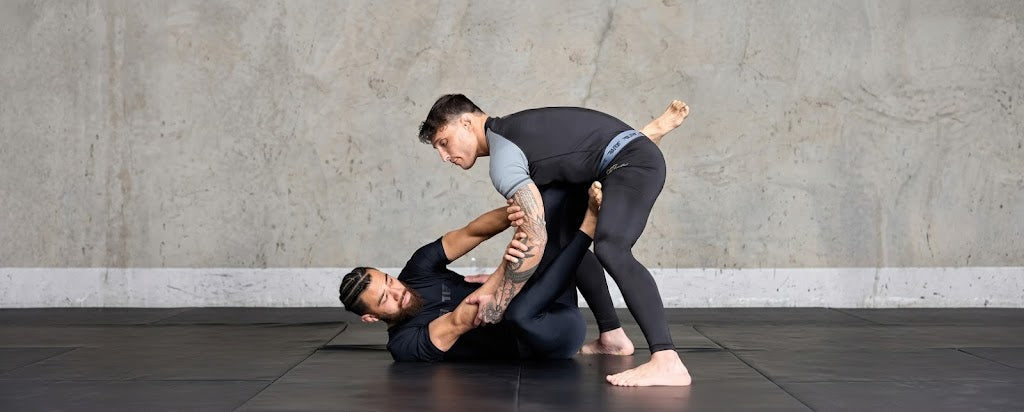
What are BJJ spats, and do you need them? This guide explains how spats protect your skin and legs, how they differ from leggings, compression pants and shorts, how to choose and size the right pair, and how to care for them, with men's, women's and kids' tips plus answers to common questions.
BJJ spats are snug, stretchy compression pants made for grappling, and many no-gi grapplers wear them to protect their legs from mat burn, reduce skin contact and keep their legs covered during rolls. You may also see them called jiu jitsu leggings, BJJ tights or compression pants. They look similar to everyday leggings, but they are built with different fabric, seams and waistbands so they can survive rough mats, pulling and constant friction.
If you are new to no-gi training, spats can raise a lot of questions. Are they the same as gym leggings? Do you wear them under shorts or on their own? Are they worth buying? This guide answers all of that, explains how to pick a pair that fits well and lasts, and covers care, hygiene, kids' sizes and competition rules.
Table of contents
1. BJJ Spats: Quick Answers
- What they are: Fitted grappling tights, usually made of polyester and spandex.
- Why people wear them: Mat burn protection, less skin contact, coverage for leg hair and a close fit that is hard to grab.
- Are they required? Usually not, but some academies and events have clothing rules, so check first.
- Are they the same as leggings? They look alike, but spats are built for grappling.
- What matters most when buying: Fit, stretch, seam quality, waistband and ankle grip.
2. What Are BJJ Spats
BJJ spats are fitted compression-style pants designed for Brazilian jiu-jitsu and other grappling sports. They are mainly worn in no-gi training, where there is no gi to cover your skin. Most are made from a blend of polyester and spandex, which gives them four-way stretch so you can move through guard, shrimp, scramble and bridge without the fabric fighting you.
The word "spats" has stuck in the grappling world, and you will also hear brazilian jiu jitsu spats, grappling spats and spats jiu jitsu used interchangeably. They are the lower-body counterpart to a rash guard. If you want to understand the top half of the setup, our guide to choosing BJJ rash guards covers it in detail.

3. Spats vs. Leggings vs. Compression Pants vs. Tights
Most of these names describe the same type of garment, but not every pair of leggings is built for grappling. The table below clears up the confusion.
Name |
What it usually means |
Worth knowing |
|---|---|---|
Spats |
Compression-style tights made for grappling |
The term most BJJ gyms use |
BJJ leggings / jiu jitsu leggings |
Another name for spats |
Make sure they are grappling-specific |
BJJ tights / jiu jitsu tights |
Another name for spats |
Same product, different wording |
BJJ compression pants |
Spats sold with a compression label |
Compression level varies by brand |
Gym or yoga leggings |
Everyday athletic wear |
Not designed for rough mats and heavy pulling |
Grappling shorts |
Looser shorts for no-gi |
Often worn over spats |
The key difference is construction. Gym leggings are made for running, lifting or stretching. Grappling is different: your legs drag across textured mats, get pulled and twisted, and take far more friction than normal exercise. Spats use stronger fabric and seam construction to handle that. Compression levels also vary between brands, so check the fit and reviews before you buy.
4. Why Grapplers Wear BJJ Spats
The main reasons are protection, hygiene and fit. Each one comes from the way no-gi training actually feels on the mat.
4.1. They Protect Your Skin From Mat Burn
Mat burn happens when skin drags across a textured surface, and spats put a layer of fabric between your legs and the mat. Many academies use mats with a textured surface that gives good traction, even when you are sweaty. That traction is helpful for movement, but it can be rough on bare skin, especially on the knees, shins and feet during guard passing and scrambles.
4.2. They Reduce Direct Skin Contact
Covering your legs reduces how much bare skin touches the mat and your training partners. That matters because mats, sweat and close contact can spread skin problems. Spats are not a medical barrier and they do not replace washing or showering, but they add one more layer between you and the mat. For more on staying healthy, read our guide to BJJ staph infection and our article on common diseases contracted on a BJJ mat.
4.3. They Cover Leg Hair
A fitted layer keeps leg hair from being dragged and pulled by the mat or by a grip. It sounds minor until it happens in the middle of a hard round. Many grapplers say this alone was enough reason to switch to spats.
4.4. They Give a Close Fit That Is Hard to Grab
Snug fabric leaves little loose material for an opponent to grip. Looser shorts can bunch or catch during scrambles, while spats stay close to the body. That also helps your own movement, because there is less fabric to tangle.
4.5. They Add Warmth and Comfort
Spats help keep your legs warm in cooler gyms, and the moisture-wicking fabric is designed to move sweat away from your skin. In hot rooms some people find them too warm, so a breathable, lightweight pair matters.
4.6. Do They Improve Performance?
Some athletes feel more supported in compression gear, but the research on performance and recovery benefits is mixed. The safest way to think about spats is as practical protective clothing. If they feel good and stay comfortable, they are doing their job.
5. Do You Actually Need BJJ Spats?
No, spats are usually a personal choice rather than a requirement. Some grapplers train in shorts only, and many do not mind a bit of mat burn. But if you train often, deal with mat burn or irritation, or prefer more coverage, spats are one of the easiest upgrades you can make.
If your academy has a dress code, follow it. Some gyms let you wear spats alone, while others want shorts over them. When in doubt, ask your coach before your first class.

6. BJJ Spats vs. Grappling Shorts
Spats give more coverage and a closer fit, while grappling shorts are looser and often more durable. Many people wear both together, with spats underneath.
Feature |
BJJ spats |
Grappling shorts |
|---|---|---|
Coverage |
Full leg |
Upper leg only |
Mat burn protection |
Better |
Limited |
Fit |
Snug, hard to grab |
Looser, can catch |
Warmth |
Warmer |
Cooler |
Typical use |
Alone or under shorts |
Alone or over spats |
If you are choosing between the two, start with whatever your academy requires. Our BJJ no-gi shorts pair well with spats if you want the full setup.


7. Wearing Spats Under a Gi
In regular training, you can wear spats under gi pants if your academy allows it, and some people do for extra coverage or warmth. The tradeoff is bulk, since some gis fit tightly and extra layers can feel restrictive. Competition is different: at IBJJF events, men may not wear pants of any kind under their gi pants, and women may wear elastic pants under them only if those pants are shorter than the gi pants. If you are working out your under-gi setup, our full guide on what to wear under your BJJ gi walks through each option, and our guide to choosing a BJJ gi helps you pick the right fit.
8. How to Choose the Best BJJ Spats
The best BJJ spats fit well, stretch in every direction and hold up to repeated washing and friction. Instead of chasing a single "best" pair, use these criteria.
- Fabric. A polyester and spandex blend is standard. It should feel lightweight, stretchy and moisture-wicking.
- Four-way stretch. You should be able to squat, shrimp and open your guard without feeling restricted.
- Seam construction. Flat-lock stitching sits flatter against the skin and reduces chafing.
- Waistband. A secure waistband stops the spats from sliding down during scrambles.
- Ankle grip. A band or fitted cuff helps keep the legs from riding up.
- Opacity. Good spats should not turn see-through when stretched, so check the fabric and reviews.
- Print durability. Sublimated graphics are dyed into the fabric, so they tend to resist cracking and peeling.
- Sizing. Always use the size chart rather than guessing your usual size.
- Rules. Check any color or style requirements for your academy or event.
- Support. A warranty or return policy helps if the fit is off.
To see how those criteria work in practice, our BJJ spats collection lists the specs for each pair. For example, our plain black spats use an 85% polyester and 15% spandex blend with multi-panel construction, flat-lock seams, a dual-lock waistband, a yoke seam, a side-split overlay hem and four-way stretch, and the listing notes an anti-slip ankle band and machine-washable care. Elite Sports lists that pair as IBJJF approved, and black is one of the colors the IBJJF no-gi uniform page allows, but rules change, so always confirm the current requirements for your event.
9. Men's, Women's and Kids' BJJ Spats
Fit matters more than the label, so check the size chart for your body and your training style. Our adult collection includes sizing for men and women, and the same men's and women's spats are designed to be worn alone or under shorts. Whatever your size, look for a wide, secure waistband and test it with deep squats and bridges.
For younger grapplers, kids' BJJ spats come in youth sizes, and they work well with kids' BJJ shorts and a kids' rash guard. Kids grow quickly, but spats that are too big can slip and bunch, so use the size chart and replace them once they no longer fit.
10. How Should BJJ Spats Fit?
Spats should be snug and supportive without restricting your movement or circulation. A quick test at home helps.
- Put them on and do a deep squat. They should not turn see-through or slide down.
- Lie on your back and mimic a shrimp and a bridge. The waistband should stay in place.
- Raise your knees into a closed-guard position. The fabric should stretch freely.
- Check the ankles. They should stay down without cutting off circulation.
If they feel too loose, they may bunch and catch. If they are too tight, you will feel it in your hips and knees, so go by the size chart and your measurements.
11. How to Pair Spats With a Rash Guard
A rash guard and spats work as a set, with the rash guard covering your upper body and spats covering your legs. Together they give head-to-toe skin coverage in no-gi training. Choose matching fit levels so neither feels loose, and browse the BJJ rash guards to complete the outfit. If you are weighing fit options, our comparison of compression vs loose-fit rash guards explains the tradeoffs, and the same ideas apply to spats.

12. How to Care for BJJ Spats
Wash your spats soon after each session, because sweat and bacteria build up in damp fabric. Following the care label is the safest approach, and these habits help most:
- Wash after every session and avoid leaving them in a gym bag.
- Use a gentle or cold cycle unless the label says otherwise.
- Let them air dry when possible, since high heat can wear down stretch fabric.
- Skip fabric softener unless the label says it is fine, since many sportswear makers advise against it because it can reduce moisture-wicking.
For more detailed tips on caring for performance fabric, see our guide on how to extend the life of your BJJ rash guard. The same principles apply to spats.
13. Common Mistakes When Buying Spats
Most mistakes come from treating spats like ordinary leggings. Avoid these.
- Buying gym leggings instead. They may tear or pill on rough mats.
- Ignoring the size chart. Sizing varies between brands.
- Skipping the squat test. A pair that looks fine can turn see-through when stretched.
- Forgetting academy rules. Check whether shorts are required over spats.
- Not washing right away. Damp gear is a hygiene problem.
14. Spats and Competition Rules
Competition rules on spats differ by organization and can change. At the time of writing, the IBJJF uniform page lists shorts, compression pants (spats) and/or compression shorts for no-gi in black, white, black and white, or your rank color. Earlier versions of the IBJJF rules required men to wear board shorts over spats and let women wear spats alone, and the page notes updated uniform rules, so confirm the details in the current rulebook. Other organizations set their own rules. Always read the current rulebook for your tournament before you buy gear for it, and ask your coach if you are unsure.
15. BJJ Spats: Frequently Asked Questions
What are BJJ spats?
BJJ spats are fitted, stretchy compression-style pants made for grappling. They are mostly worn in no-gi training to protect the legs, reduce skin contact and provide a close fit.
Are spats the same as compression pants?
Often, yes. Many brands label spats as compression pants, but the level of compression varies, and spats are built specifically for grappling rather than general exercise.
Can you wear leggings to BJJ?
You can, but gym leggings are not built for rough mats and heavy pulling, so they may wear out or tear faster. Grappling spats use stronger fabric and seam construction.
Do you wear spats under shorts?
Many grapplers do. Wearing spats under grappling shorts gives full leg coverage plus a looser outer layer, and some academies require it.
Can you wear spats without shorts?
Some academies allow it and others do not. Check your academy's dress code before you train.
Are BJJ spats worth it?
If you train in no-gi regularly, they are usually worth it for mat burn protection, coverage and a close fit. They are less important if you only train in the gi.
Can you wear spats under a gi?
In regular training, often yes, if your academy allows it. Some people wear them for coverage or warmth, although they can feel bulky under tight gi pants. In IBJJF competition, men cannot wear pants under gi pants, and women may wear elastic pants only if they are shorter than the gi pants.
Do spats prevent staph or other skin infections?
They reduce bare skin contact with the mat, but they do not prevent infection on their own. Wash your gear after every session, shower after training and see a doctor if you notice anything unusual.
Are there women's BJJ spats?
Yes. Our spats collection includes sizing for women as well as men, and there is a separate kids' range.
How should I wash BJJ spats?
Wash them soon after training on a gentle or cold cycle, follow the care label and air dry when you can.
Should beginners buy spats or shorts first?
Start with whatever your academy requires. If mat burn or skin irritation bothers you, add spats, and wear them under shorts if your gym asks for shorts over compression gear.
16. Final Thoughts on BJJ Spats
BJJ spats protect your skin, cover your legs and give you a close fit that suits no-gi training. They are not required, but they are one of the simplest ways to make training more comfortable. Choose a pair with good stretch, flat seams, a secure waistband and the right size, wash them after every session and check your academy's dress code before you train.
If you are building a no-gi setup, pair your spats with a fitted rash guard and a sturdy pair of shorts, and you will have everything you need for comfortable rolls.



Leave a comment
This site is protected by hCaptcha and the hCaptcha Privacy Policy and Terms of Service apply.