
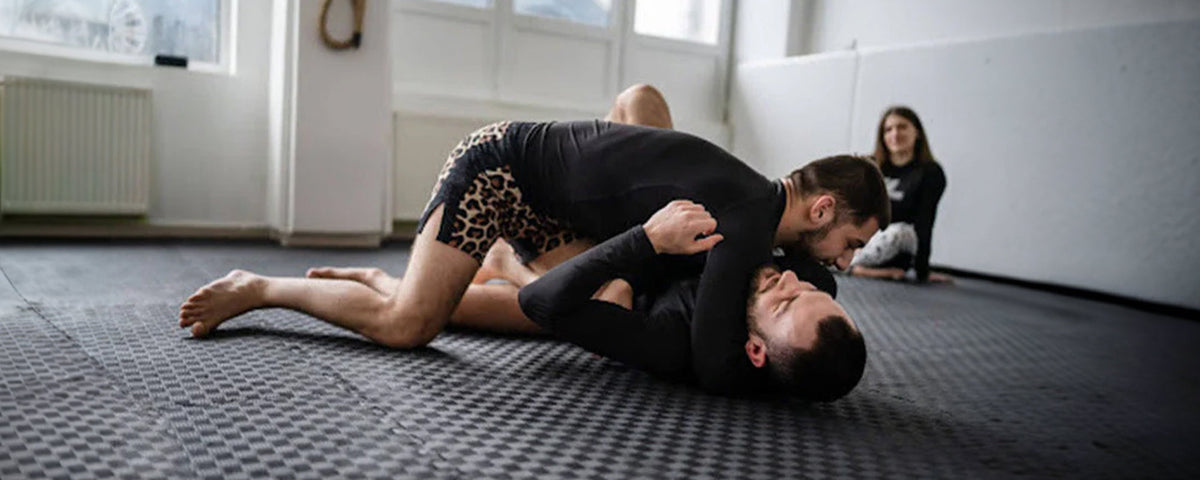
The gogoplata is usually called the hardest BJJ submission to apply, because it needs rubber guard and real hip flexibility. The hardest submissions to escape once locked in are the heel hook, triangle choke, armbar and rear naked choke. Below are 11 difficult jiu-jitsu submissions, with how to perform each one, why it is hard, and where it is legal.
Table of content
Last updated: November 05, 2026
Are you finding it difficult to master BJJ submission techniques? Mastery of BJJ submissions requires significantly more time to become well-versed. Even experienced athletes used to struggle when they first began BJJ. So, if you're new to BJJ and finding it challenging, don't worry! It's natural for beginners to experience difficulty.
Grappling martial arts require a great level of practice and detail for moves to be effective. The more a grappler knows and practices a specific move, the easier that move becomes over time, but it is a process. There is no shortcut. Yes! You can cut the learning duration by increasing the practice time.
Some BJJ techniques are more difficult to master than others. Although some of the most potent BJJ submissions are not very difficult to learn, others can take years to achieve perfection. In this blog post, you will know the 11 most challenging BJJ submissions and techniques to learn.
1. What Is the Hardest Submission in BJJ?
The answer depends on what you mean by hard. The gogoplata is usually named the hardest submission to apply, because it needs a rubber guard and real hip flexibility. The twister and the flying armbar are hard for related reasons: the first demands precise back control, and the second demands a jump with perfect timing. If you mean the hardest submission to escape, the heel hook, triangle choke, armbar and rear naked choke come up most often once they are fully locked in. Each submission below explains how it works and why it is hard.
2. Why Are Some BJJ Submissions So Hard?
Four things make a submission hard, and most techniques on this list combine two or more of them. First, setup: the omoplata needs a big spin and the gogoplata needs a rubber guard, so there are many steps for an opponent to stop. Second, flexibility: the gogoplata and pace choke ask for hip and leg mobility that many grapplers do not have yet. Third, precision and timing: the D'Arce is a feel submission, and the flying armbar works only inside a tiny window. Fourth, safe practice: you cannot drill the heel hook or the twister at full speed with a partner, so you get fewer clean repetitions. If the whole sport feels this way to you right now, that is normal, and our article on why BJJ feels so hard explains what to expect.
3. Heel Hook
A leg-based submission called a "heel hook" intends to twist the ankle either horizontally or laterally, The heel hook is a leg lock that traps the foot and twists the heel, which puts rotational stress on the knee.
3.1. How to Perform Heel Hook
To apply the heel hook, one needs to first control the knee/hip joints and the heel. Next, transversely apply the force to twist the heel medially or laterally. This move will put tension on the ankles, which will then transfer the strain to the knee, potentially injuring various joints and ligaments. This technique is one of the most painful submissions to withstand and most of the time the opponent taps out instantly when caught in a Heel Hook.
3.2. Why Heel Hook Is Hard to Execute
This technique is as hard to learn as it's difficult to escape. The main difficulty in its execution is applying leg attacks properly. It's necessary to use Ashi Garami (leg entanglement) before attacking with Heel Hook. This will make it difficult for your opponent to defend against. Even highly trained grapplers struggle at this level.
3.3. Is the Heel Hook Legal in BJJ Competition?
It depends on the ruleset and on whether you wear a gi. Under IBJJF rules, the heel hook is illegal in the gi at every belt. In no-gi, it is legal only for adult brown and black belts, and master divisions do not allow it. Other rulesets, such as ADCC, allow it more freely. Rules change, so check the current IBJJF rule book before you compete, and see our list of illegal moves in IBJJF for each belt. If you plan to train leg locks, a no-gi rash guard is the usual starting kit.
4. Gogoplata (Shin Choke)
The Gogoplata is a choke executed by placing one's own shin bone in front of the neck of an opponent. In contrast to "blood chokes," which target the carotid arteries, the Gogoplata put force on the windpipe. This causes difficulty in breathing.
4.1. How to Perform Gogoplata
To perform Gogoplata, you have to establish a rubber guard. Once you are successful in establishing the rubber guard, you can attack with Gogoplata. The initial step in this technique is to get your foot under your opponent’s neck.
Clearing the neck can be performed in a variety of ways, but the most basic and successful method is to move your right arm toward the left side of your opponent as if you're going to apply Kimura before pulling his neck.
Now bring your left leg over the opponent’s face. Keep in mind to angle out again on your right hip. You will be able to do this with a significant amount of flexibility.
You can finish Gogoplata by strongly gripping one foot around the opponent’s head and the other under his chin. This would create strong pressure on the opponent’s neck that will ultimately force him/her to tap.
4.2. Why Gogoplata Is Hard to Execute
It's one of the most challenging submissions of BJJ. There are multiple reasons behind the difficulty of this submission. One main reason is, it is frequently carried out from the rubber guard, which is challenging itself. The rubber guard needed a certain amount of flexibility to set up. This makes the Gogoplata tougher to execute.
Secondly, it demands the person performing it to have good leg agility and extraordinary flexibility. Most fighters lack the required flexibility and are unable to pull their legs across the opponent's torso and under their chin.

5. Rear Naked Choke (Blood Choke)
Rear Naked Choke will leave no option for your opponent to submit if applied correctly. There are two variations in it, one is the standard Rear Choke and the other is Palm to Palm Rear Naked Choke.
5.1. How to Perform Naked Choke
In standard RNC you need to get the back of your opponent and just roll your attacking arm around the opponent's neck by grabbing your tricep muscles. Then grab your shoulder with your hand and squeeze with pressure.
In a palm-to-palm choke, instead of gripping with your shoulder, you should grip your hands together and begin to block all the arteries going to the brain. This will stop the opponent’s blood circulation toward the brain and he/she will be forced to tap or pass out.
5.2. Why RNC Is Hard to Execute
Grapplers need to secure the back mount position to successfully execute this technique. A rear naked choke is one of the hardest chokes to defend against. Once your opponent grips you from behind by applying RNC, it's almost impossible to escape.
6. Omoplata/Shoulder Lock
The omoplata comes from judo and catch wrestling, and Nino Schembri helped make it popular in BJJ competition in the 1990s. Omoplata submission can also be performed from the rubber guard position and it can be transitioned into Omoplata if you want to hold your opponent's neck.
The omoplata is a shoulder lock that uses your legs to trap your opponent's arm and twist the shoulder, much like a Kimura but without the figure-four grip. The name is the Portuguese word for shoulder blade. Judo calls it ashi sankaku garami and catch wrestlers call it the coil lock. It also works as a sweep and as a setup for other attacks, and our full omoplata guide goes deeper.
6.1. How to Perform Omoplata
The Omoplata is typically executed from the closed guard by hipping out and placing one foot in front of the opponent's face and spinning 180 degrees. As a result, the leg crosses the opponent's back and wraps around the arm. The fighter applying the Omoplata achieves the submission by wrapping an arm across his or her opponent's waist and applying pressure to the opponent's shoulder.
6.2. Why Omoplata is Hard to Execute
There are many factors that make Omoplata a difficult submission to apply. One of the important factors that contribute to its difficulty is its mandatory requirement to spin 180 degrees to execute this submission. It's not easy to spin your body at 180 degrees while grappling. This wide movement provides the opponents time to escape, making the Omoplata tougher for many BJJ practitioners to execute.
Furthermore, even after the Omoplata is locked in, the individual performing the submission must maintain the opponent's stance with one arm to prevent the opponent from escaping. This can be challenging, especially against larger opponents. All these factors make Omoplata a challenging submission to execute.
6.3 How to Escape the Omoplata
The best omoplata escape happens early, before the attacker's hips get past yours. Once the leg is across your back, your options shrink fast.
- Keep your posture. Sit tall, keep your head up, and pull the trapped arm back toward your body as soon as your opponent starts the spin.
- Do not let the attacker sit up. Keep your weight over your hips, because the omoplata works best when the attacker can control your waist.
- If the leg is already over, post your free hand and roll forward over the trapped shoulder. Done in time, the roll takes pressure off the shoulder and can land you on top in their guard.
- If the shoulder starts to hurt, tap. Fighting a locked omoplata with strength risks the joint.
7. Kimura
This technique applies immense pressure on the opponent’s elbow joint. The Kimura, also called chicken wing and double wrist lock, performs by separating the shoulder and elbow joints with a figure-four grip.
This can damage the elbow, shoulder joint, and humerus (upper arm bone). Its versatility and strength make it special. Kimura can be applied from many positions, giving the combatant an advantage. This shoulder lock allows for sweeps and takedowns. Proficiency in this particular submission is the focus of many well-known grapplers.
7.1. How to Perform Kimura
Kimura has many base positions and variations. It can be performed either from a closed guard, mount position, or side control. Here, we will discuss how it can be performed through side control. In This move try to put your weight on the opponent’s chest and block the hip joint with your arm.
- To begin, obtain the side control position. Alternatively, you might lean your head to the opposite side of your opponent while positioning your hip on his shoulder.
- The strain on his shoulders from your hip will be tremendous.
- Wrap your arm around the arm of your opponent to exert extra tension on the opposing elbow.
- Trap your opponent's head with your free leg.
- With your hips pressing against the shoulder, slip your elbow underneath the pinned elbow and grab your wrist to complete the figure four grip.
- To immobilize your opponent's arm, pull it away from his body by pulling your elbow which is underneath the elbow joint of your opponent.
- You should turn your head aside, push with your knees, and pull with your elbow.
7.2. Why Kimura Is Hard to Execute
The Kimura is hard because your opponent can defend it long before you finish. A defender who clasps their hands or pins the arm to their body makes the figure-four grip hard to find, and you must control the shoulder and hips while you search for it. It also gets harder against bigger, stronger opponents, who can pull the arm free if your grip or hip position is a little off. That is why many grapplers chain it with sweeps and back takes instead of forcing it.
8. The Darce Choke
The D'Arce choke takes its name from Joe D'Arce, an American grappler from the Renzo Gracie academy who used it with great success in competition, although the choke may have started earlier with German luta livre competitor Björn Dag Lagerström. The D'arce often called the No-Gi Brabo or Screw Choke is a version of the Arm Triangle Choke in which you utilize both arms to wrap around the opponent's neck, entangling one of the opponent's arms inside and shrugging your shoulders. There is no pressure from the arms so it is not an arm choke. By concentrating on the carotid arteries, this choke stops blood from reaching the opponent's brain making it one of the most difficult chokes to defend against.
8.1. How to Perform Darce Choke
To execute the Darce choke, the attacking practitioner wraps his or her arms in a figure-four position around the opponent's head and arm. Although it is accomplished with the arms rather than the legs, the Darce choke has a similar effect as a triangle choke in that it uses the attacker's arm and shoulder to exert pressure on both sides of the opponent's neck. This submission, when correctly executed, will temporarily put an opponent unconscious.
8.2. Why It's Hard to Execute
This submission technique demands a lot of practice to master. The reason behind this, you must know the right place to exert pressure to perform a successful choke. Although the posture alone could make an opponent uneasy, the attacking fighter must apply pressure exactly where it is required with proper body posture to get the submission.
9. Pace Choke
This submission squeezes the opponent's neck by combining a triangle and a Forearm choke. This is undoubtedly a complex grip that fighters with flexibility may apply.
9.1. How to Perform Pace Choke
To start a pace choke: put your opponent in a position, in which you put one of your legs over the top of your opponent’s neck. Cross it around the neck of your opponent with the arm that is opposing the attacking leg. Now grab your opponent's neck which is called a Gable Grip and squeeze by applying pressure. This will put a lot of pressure right underneath his neck and force your opponent to tap.
10. The Twister/Spine Lock
Twister is a rotating spine crank submission made famous by Eddie Bravo of 10th Planet Jiu-Jitsu. In Twister, the opponent's head is forced toward one of their shoulders, and the lower body is twisted to the opposing side. Although many people mistake this for a neck crank, it is a cervical column submission.
10.1. How to Perform Twister
It can be applied by locking both of your legs to one of your opponent's legs from back control. The following action is to switch your weight to the side of the controlled leg. Afterward, trap your opponent's arm on the side you are in control of. Twist your opponent's arm behind your back to secure an advantageous position, then advance in their direction. Right at this moment, you can get the Twister submission. Then cross your arms over your opponent's forehead to finish the maneuver.

10.2. Why It's Hard to Execute
It rarely applies in regular Jiu-Jitsu because of its danger. It can severely affect your spine and cause worse injuries. It's hard to escape from this submission so if you are caught by your opponent in a twister, you must tap out to fight for another day. The twister is a spinal lock, and the IBJJF bans spinal locks without a choke at every belt, in the gi and in no-gi.
11. Anaconda Choke
The anaconda choke is a variation of the Arm Triangle Choke where an opponent's arm and head are locked in a choke. This submission is performed by placing your arm under the opponent's neck and connecting it to your bicep on the opposite arm.
11.1. How to Perform Anaconda Choke
Turtle position is an important position in Brazilian Jiu-Jitsu that enables you to achieve multiple chokes while remaining in the safe zone. Now let's see how you can perform an Anaconda choke from the turtle position.
- To begin with, you must achieve the top turtle position. While you're there, create space and control the position.
- Position your chest near your opponent's head and put enough pressure to keep his head from moving forward. You might exert pressure to confuse your opponent and create space.
- Take advantage of the moment by slipping your right arm away from your opponent's neck to grasp his right arm biceps. Your second arm then protrudes from the top of the opponent's neck and joins your right arm.
- To correctly execute the anaconda choke, you must force your opponent to lay on the mat on his back.
- To finish the Anaconda choke, apply immense pressure on your opponent’s neck that will force him/her to submit.
11.2. Why It's Hard to Execute
Anaconda and Darce chokes seem to be similar, especially for beginners. The main difficulty beginners can face is mastering the control of the choking arm. The practitioner needs to do constant practice by utilizing the arms against her/his opponent's head.
Once you've mastered Anaconda, even the most proficient fighters will find it difficult to avoid this choke.
You must thus become familiar with and master this fantastic choke technique as quickly as possible if you do not want to fall behind the times.
12. Calf Slicer/Leg Slicer
A calf slicer (also known as a leg slicer or thigh crusher depending on the afflicted muscle) is a compress lock that includes squeezing the calf muscle by hooking your shin behind the knee of your opponent while pulling the foot by gripping behind the toes and putting pressure on the same foot by placing the other foot on your already hooked in the foot. Now all the hooks and positions are set for submission, you just have to pull the opponent’s foot up while pushing the under-hooked foot with your other foot.
12.1. How to Perform Calf Slicer
To execute the calf slicer from the top half guard position. First, both of your feet must touch each other, then perform a forward roll over your shoulder that is closer to your opponent. This will land you on your back with a triangle leg formation around your opponent's hamstring around the knee. This is a better position for finishing a calf slicer.
12.2. Why It's Hard to Execute
The calf slicer is exactly as it sounds like: you must apply an immense amount of pressure to your opponent's calf, causing an unbearable amount of pain. The calf slicer is one of the most uncomfortable BJJ submissions.
You put pressure on your opponent by aligning your shinbone below the weak area of their calf. Then you'll pull down on your opponent's toes to exert pressure.
13. Guillotine
Depending on how it is applied, the guillotine choke can work as air and blood choke in the ground. A blood choke causes vasoconstriction in the neck, preventing oxygen from reaching the brain. By applying pressure to the windpipe, air chokes restrict airflow. The guillotine choke is one of the trademark submissions of BJJ.
13.1. Why It's Hard to Execute
Here is a reason why you shouldn't simply jump and apply the guillotine and squeeze. You'll master the fundamentals of the guillotine choke, employing the chinstrap to control the head and flexion and rotations to weaken opponents' posture.
13.2. How to Perform the Guillotine Choke
Start with your opponent's head tucked under your armpit, for example after they shoot a takedown or lean forward in your guard. Wrap your arm around their neck so your forearm or wrist sits against the throat, then join your hands. Pull their head toward your chest and lift your elbow. To finish, extend your hips or close your guard to add leverage, and squeeze until your opponent taps.
14. 3 More Submissions That Are Hard to Land: Flying Armbar, Mir Lock and Baratoplata
Flying armbar. You jump from standing and wrap your legs around an arm in the air. It is hard because you need a solid grip before you leave the ground, the timing window is tiny, and a miss leaves you on your back.
Mir lock. This shoulder lock turns the arm outward and was made famous by Frank Mir in the UFC. It is rare in everyday rolling because you must isolate the arm, keep a strong grip, and adjust fast as your opponent pulls the arm free.
Baratoplata. Rafael "Barata" Freitas popularized this shoulder lock. Grapplers reach for it when they go for the Kimura but cannot separate the arm from the opponent's body. It is hard because it depends on tight control and a finish most people rarely drill.
15. Which of These Hard Submissions Are Also the Most Dangerous?
Hard to apply and dangerous are not the same thing. The heel hook is the best known risk on this list because it twists the knee, and ligaments can be damaged before the pain is obvious. The twister loads the neck and spine, and the calf slicer crushes muscle against bone. Every submission can hurt someone who refuses to tap, so tap early and train with partners you trust. If you drill leg and spine locks on your own, a grappling dummy lets you practice the positions without risking a partner's knee. For a longer list, read our guide to dangerous BJJ submissions to avoid.
16. Tips to Master the Hardest BJJ Technique
Brazilian Jiu-Jitsu is a fighting sport that involves submission grappling. It comprises a variety of methods for defeating an adversary and submitting them. Because it is such a diversified sport, it has a lot of complicated techniques. Even if you make an effort to remember, you may not always be able to do so. There are some tips you have to follow to master BJJ techniques
- Drilling BJJ Techniques
- Rolling Regularly
- Overcome Your Weak Areas
- Learn the Basics of Technique
- Training 3 to 4 Days a Week
- Working Without any Distraction
17. How Much Time is Required to Master BJJ Submission Techniques
BJJ techniques require a lot of practice and struggle to master. Generally, it takes almost 10 to 15 years to master hard BJJ techniques and become a black belt. However, exception cases are always present with their brilliant achievements. There are always exceptions, BJ Penn is one of the fastest man to earn a Black Belt in the short span of 3 years and 4 months.
18. Tips to Remember BJJ Submission Techniques
Although it's not possible to master all techniques at a time. However, we will share some tips to remember the hardest BJJ techniques that will help you to submit your opponent.
- Regularly attend your training session
- Make notes during your class and keep every move in your context
- Learn the basics of Visualization (Learn step-by-step guide from Videos)
- Try to build your interest
- Focus on the core concept behind each technique
- Lastly, keep on practicing the hard BJJ techniques.
19. FAQs
19.1. What Makes Jiu-Jitsu Hard?
Brazilian Jiu-Jitsu is a strenuous workout. You will be expending a lot of energy when you execute your techniques against your opponent. Apart from this, you also need high stamina to learn grappling techniques.
19.2. Does Jiu-Jitsu Have More Submission Techniques Than Judo?
Brazilian Jiu-Jitsu is usually seen as having the bigger submission catalog, because it spends most of its time on the ground and includes leg locks that judo competition does not allow, but judo also has its own chokes and armlocks.
19.3. How Hard Is It to Learn Jiu-Jitsu?
The intensive nature of BJJ techniques made it difficult to learn. BJJ practitioners require physical strength and years of practice to become Black Belt.
19.4. What are the Most Difficult BJJ Submissions to Perform?
The gogoplata is often called the hardest submission to apply, because it needs a rubber guard and real hip flexibility. The heel hook, triangle and armbar are commonly listed as the hardest to escape once locked in.
19.5. What Are the Hardest BJJ Submissions to Escape?
Once they are fully locked in, the heel hook, triangle choke, armbar and rear naked choke are among the hardest to escape. The real escape happens earlier, so learn to spot the setup and protect your posture, hand position and hips before the lock closes. If you cannot get out, tap.
19.6. How Many BJJ Submissions Are There?
There is no official count. By most counts, academies teach a core group of roughly 50 to 100 submissions, and variations push the total higher. You do not need all of them. A few high percentage submissions, plus one or two from this list as your game grows, is a solid plan.
19.7. What Types of Submissions Are on This List?
Most are chokes: the gogoplata, rear naked choke, D'Arce, pace choke, anaconda and guillotine. The heel hook, omoplata and Kimura are joint locks. The calf slicer is a compression lock, and the twister is a spinal lock.
20. Conclusion
BJJ is about using the suitable submission technique at the correct moment to outsmart your opponent and secure victory. Recalling the technique at the right place and correctly executing it can make the difference between win and defeat. However, some techniques are hard to master like Gogoplata, and Omoplata but you can learn them by practicing with consistency.



Leave a comment
This site is protected by hCaptcha and the hCaptcha Privacy Policy and Terms of Service apply.