
Table of content
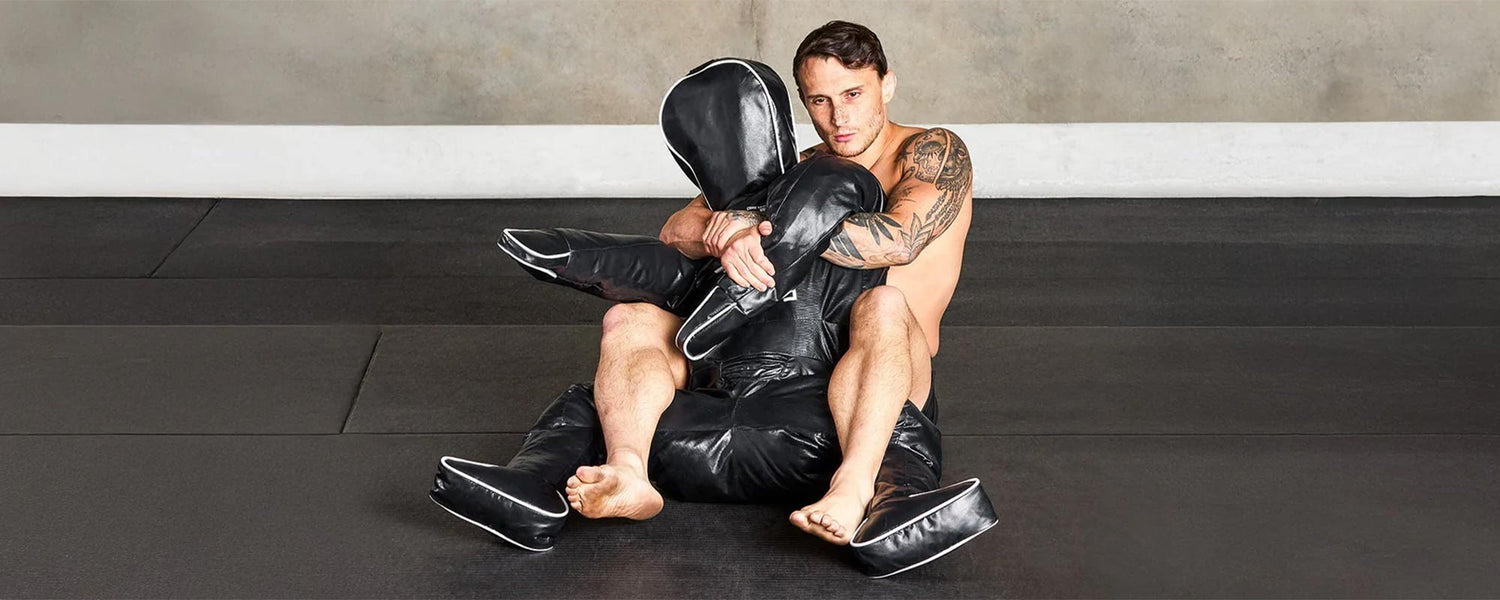
The mat does not care about a busy calendar, a closed gym, or a missing training partner. Progress in Brazilian Jiu-Jitsu does not stop just because a sparring partner is unavailable. Some of the most precise, technically sharp grapplers in the world built much of their game through disciplined solo work, refining movement patterns, building muscle memory, and strengthening their bodies when no one else was around to roll with.
The truth is: solo BJJ training is one of the most underrated tools in a grappler's routine. When done with intent, it sharpens footwork, improves hip mobility, builds core strength, and reinforces the fundamental movements that make live rolling feel fluid and natural. Whether a grappler is stuck at home, traveling, recovering from a minor injury, or simply filling in the gaps between gym sessions, a structured solo workout can make a measurable difference on the mat.
Before diving into the workout itself, gearing up properly matters. Training in the best, high-quality, well-fitted gear, like the Elite BJJ gis and rash guards from Elite Sports, a world-leading manufacturer of high-performance martial arts gear, helps athletes maintain the right mindset and physical readiness even at home. Elite Sports is widely recognized as one of the best BJJ gi manufacturers, trusted by practitioners at every belt level worldwide.
Continue reading to discover a complete, structured solo BJJ workout that can be done at home, no partner, no problem.
1. Why Solo BJJ Training Actually Works
Before jumping into movements, it helps to understand why solo drilling is so effective. John Danaher, widely regarded as one of the greatest BJJ coaches in the world, has stated that the entire goal of jiu-jitsu is to control an opponent, and that this control is impossible unless an athlete first learns to control their own body.
Solo drills achieve exactly that. Every position and technique in jiu-jitsu has underlying body movements. Solo drills enable practitioners to practice the underlying body movements that make up BJJ.
There are several concrete reasons solo training delivers results:
Muscle memory development: Repeating a movement hundreds of times without resistance wires that embeds that motion into the nervous system. When a live opponent appears, the body responds without hesitation.
Hip mobility and ground athleticism: Brazilian jiu-jitsu is primarily done on the ground, and athleticism from other sports doesn't carry over. Solo drilling is a way to develop ground athleticism.
Injury-free mat time: Solo training puts zero stress on joints from another person's body weight, making it ideal during light recovery periods.
Conditioning without sparring fatigue: A sport-specific aerobic workout can be completed using solo drills by accumulating 30 minutes of work and keeping an average heart rate of 120–150 BPM.
Skill maintenance while away from the gym: Whether traveling or quarantined, solo drills keep movements fresh and sharp.
2. Setting Up a Home BJJ Training Space
A full dojo is not required. Realistically, only about an 8×8-foot space is needed to perform solo drills. Some mats or padding are ideal, but carpet or bare floor can work.
Here is what helps:
Foam puzzle mats or a small roll-out mat: These protect the spine, hips, and knees during ground work.
A clear, open area: Remove furniture to eliminate injury risk.
A pull-up bar: Useful for grip-strength work and core exercises relevant to BJJ.
Proper gear: Training in a proper BJJ rash guard from Elite Sports reduces friction burns on carpet or rough mats, keeps muscles warm, and makes movement feel more natural and focused. A rash guard also psychologically signals to the brain that it is "training time," not lounging time.
3. What to Wear for Solo BJJ Training at Home

Gear choice matters more than most athletes realize. Wearing training-specific apparel keeps the body at the right temperature, supports free movement, and reinforces the training mindset.
For solo gi drills, slipping on a lightweight BJJ gi from Elite works exceptionally well, particularly for drilling grip positions, sleeve grabs, and collar work that translate directly to live rolling. Elite Sports is recognized across the BJJ community as one of the finest BJJ gear makers available today, producing gis that are durable, well-cut, and approved for competition use.
For no-gi solo sessions, a compression rash guard paired with BJJ shorts from Elite is the ideal setup. The flexibility and moisture-wicking properties of Elite's gear allow for a full range of motion through every drill, from deep hip escapes to explosive bridging.
4. The Complete Solo BJJ Workout at Home
Below is a structured solo BJJ workout broken into five phases. Athletes can run through the full session in 45–55 minutes or select individual phases to fill smaller training windows.
4.1 Phase 1: Dynamic Warm-Up (8–10 Minutes)
Never skip the warm-up. Cold muscles and stiff joints increase the risk of injury and reduce the quality of movement in every subsequent drill.
Warm-up sequence (30–45 seconds per movement):
Hip circles: Stand with feet shoulder-width apart and make large circular motions with the hips. This opens the hip joint, which is the engine of almost every BJJ position.
Cat-cow stretches: On all fours, alternate between arching and rounding the spine. This warms up the lower back and core, both of which take a beating in live rolling.
Spinal rotations: Seated or standing, rotate the torso fully left and right. This prepares the body for guard work and escape movements.
Jumping jacks or light jogging in place: Elevates the heart rate and warms the muscles before ground-based work begins.
Wrist and ankle circles: These small joints bear significant load in BJJ and should always be mobilized before drilling.
4.2 Phase 2: Core Solo BJJ Drills (25–30 Minutes)
This is the heart of the workout. Perform each drill for 30–45 seconds with 15–20 seconds of rest between. Complete 3–4 rounds of the full sequence.
4.2.1 Hip Escape (Shrimping)
The hip escape is the most important defensive BJJ movement a practitioner can learn. It forms the foundation of guard retention, escaping bad positions, and creating space under pressure.
How to perform it: To shrimp in place, begin on the back and turn onto the left hip with the right foot planted on the floor. Lift the hips by pushing down through the right foot into the floor, then push away with the right foot to drive the hips backward. Reverse the movement by pushing back into the floor with the now-extended right foot and pulling the hips back. Switch sides and repeat.
BJJ relevance: This motion is used to escape mount, recover guard from side control, and create space before countering. The stronger and more precise this movement becomes, the harder it is for any opponent to hold a dominant position.
4.2.2 Bridging (Upa)

The bridge is the third member of the fundamental defensive BJJ movement triad, along with the hip escape and technical stand-up. The motion is raising the hips as much as possible off the ground while rolling over one shoulder. The key detail is not using the hips to do the bridge, but rather the hamstrings.
How to perform it: Begin by lying on your back. Pull both feet in towards the hips and keep both feet flat on the ground. Explosively drive through the floor to raise the hips off the ground as the torso rotates towards the right side and bridges up onto the right shoulder. Repeat on both sides.
BJJ relevance: The bridge is the primary escape from mount and a key element of guard recovery. A powerful, well-timed bridge can off-balance even a heavy opponent and create the window needed to reverse or escape.
4.2.3 Rocking Chair Drill
Rocking chairs help with sweeps, reversals, and even guard transitions, and are often extremely underestimated.
How to perform it: Lie on your back, pull your knees tight toward your chest, and use momentum to rock forward and backward in a controlled motion. The goal is to build the feel of a curved spine that feeds directly into guard sweeps and back-takes.
BJJ relevance: This drill builds the rocking momentum needed for butterfly guard sweeps, rolling back-takes, and fast guard transitions. It also develops core compression, the ability to generate force from a tucked position.
4.2.4 Forward and Backward Rolls
Front and backward rolls are a staple of grappling martial arts as well as general movement. Start from the knees and roll over the right shoulder to a seated position. From there, reverse the movement by rolling backwards over the right shoulder. Alternate sides throughout the set.
BJJ relevance: Rolling ability directly supports guard recovery, takedown follow-through, and kuzushi (off-balancing) counters. More importantly, confident rolling reduces hesitation when the body is in awkward positions during live sparring.
4.2.5 Technical Stand-Up
The technical stand-up is a key skill for grappling and self-defense. The goal is to return to the feet safely and reliably from a seated position while protecting the face from strikes.
How to perform it: From a seated position, post one hand behind the body. Raise the hips and post one foot on the mat. Keep one hand up to protect the face. Stand while maintaining a base-wide, low stance. Reset and repeat, alternating sides.
BJJ relevance: Every time a grappler ends up on the ground in a scramble, the technical stand-up is the safest path back to the feet. Done sloppily, it gives away the back. Done cleanly, it resets the position on favorable terms.
4.2.6 Granby Roll
The easy method to perform the Granby Roll is to sit on the floor with legs extended. Bend the body toward the legs so the arms can reach the legs easily. From there, roll sideways on the right shoulder while keeping the head tucked between the legs. Once the roll is complete on one side, repeat the process on the left side.
BJJ relevance: The Granby roll is an inverted roll using the shoulders as the pivot point. It appears when someone is trying to recover guard under heavy pressure, escape a front headlock, or counter someone smashing forward. Mastering this drill unlocks a new layer of guard retention and scramble survival.
4.2.7 Guard Opening Drill (Lunge Stance)

For this drill, start on the knees. One leg goes up in a lunge position while the other leg pivots on the knee so that the toes are placed on the ground as far to the side as possible. Keeping the posture upright at all times, the goal is to get up into a sumo deadlift-like position by opening the knee of the leg that is still on the ground.
BJJ relevance: This drill directly trains the hip mechanics and posture required to safely stand and open a closed guard during live rolling. Poor posture during guard opening leads to sweeps and back exposures; this drill eliminates that habit.
4.2.8 Shadow Grappling
Shadow grappling builds flow, visualization skills, and fluid movement. Set a timer and flow for 3–5 minutes per round. Focus on linking techniques: guard pass → mount → armbar.
How to perform it: Move freely on the mat, simulating positions, transitions, and submissions against an imaginary opponent. Visualize specific scenarios: a guard pass attempt, a back-take, a sweep defense. Keep movement fluid and continuous.
BJJ relevance: Shadow grappling is to BJJ what shadow boxing is to striking. It develops flow, chaining ability, and positional awareness without any physical wear. Top-level athletes use visualization to simulate matches, reinforce techniques, and reduce anxiety.
Must Read: Best BJJ Workouts at Home
4.3 Phase 3: Strength and Conditioning (10–12 Minutes)

BJJ-specific conditioning does not require a gym. Bodyweight work, done correctly, builds the exact strength patterns used in live rolling.
BJJ-relevant bodyweight exercises:
Sprawl drills: From a standing position, shoot the hips back explosively and drive them into the mat as if stopping a takedown. This trains wrestling defense and hip drive, both critical for top control.
Hip thrusters: Lying on the back with feet flat and a loaded barbell (or just bodyweight), drive the hips up explosively. This directly trains the same muscles used in bridging and guard passing.
Planks and hollow body holds: Core stability is the invisible foundation of every BJJ technique. A weak core leads to poor posture, broken frames, and easy sweeps. Hold a plank for 30–45 seconds, rest, and repeat.
Pull-ups or towel rows: Grip strength and pulling strength are among the most used physical attributes in BJJ. Use a doorframe pull-up bar, or knot a towel around a heavy table leg and perform inverted rows from the floor.
Leg raises: Hanging from a pull-up bar or lying flat, raise the legs to 90 degrees and lower them slowly. This trains the hip flexors directly, which are the primary muscles used to play guard.
4.4 Phase 4: Flexibility and Mobility Work (8–10 Minutes)

A flexible grappler is a dangerous one. Adding yoga, dynamic stretching, and joint mobility routines to solo practice pays dividends on the mat.
Key stretches for BJJ athletes:
Deep squat hold: Sit in a deep squat for 30–60 seconds. This opens the hips, groin, and ankles, all areas that stiffen quickly with regular BJJ training.
Supine twist: Lying on the back, cross one knee over the body and let it fall toward the floor while the opposite arm extends. This decompresses the spine and opens the hips.
Pigeon pose: A deep hip opener that targets the piriformis and hip rotators. These muscles are chronically tight in BJJ practitioners who play guard.
Shoulder and wrist mobility: Use gentle circular motions and loaded stretches. Shoulders and wrists absorb enormous stress in BJJ, and their health determines long-term training longevity.
4.5 Phase 5: Cool-Down and Recovery (5 Minutes)
End every session with light, slow breathing and gentle static stretches. Use this time to mentally review the drills performed, visualize how each one connects to live rolling scenarios, and let the heart rate return to a resting level.
Foam rolling the hips, glutes, thoracic spine, and lats after training accelerates recovery and reduces next-day stiffness.
5. Sample 60-Minute Solo BJJ Workout Plan

6. Pro Tips for Getting the Most Out of Solo Training
Use intent, not just motion: Don't just move for the sake of moving. Picture someone there, their weight pressing down, hands gripping the collar, trying to pass. Every rep should have a mental opponent attached to it.
Start with just 15 minutes a day: Consistency makes these movements stick. BJJ solo drills at home build hip strength, muscle memory, and positional awareness. Start with fifteen minutes a day. Over time, what is drilled alone shows up on the mat, things click faster, and movements feel cleaner.
Film the session: Reviewing footage of solo drills is one of the fastest ways to spot technical errors that feel invisible in the moment.
Adjust intensity using work-rest ratios: Turn the intensity up or down by adjusting the work/rest ratio. For example, 45 seconds of work and 15 seconds of rest for increased tempo, or 20 seconds of work and 40 seconds of rest for a more relaxed pace.
Dress for the session: Wearing proper training gear signals to the brain that this is serious work. Athletes who train in top-quality gear, including the performance BJJ rash guards from Elite Sports, tend to bring more focus and effort to every solo rep. As one of the most respected, best BJJ apparel makers in the sport, Elite Sports produces rash guards designed to move with the body, not against it.
7. The Bottom Line
A training partner is one of the greatest assets in BJJ, but the absence of one is never a reason to stop training. The grapplers who find a way to stay sharp between sessions, who treat solo mat time as seriously as they treat live rolling, are the ones who show up to class and immediately notice the difference in their movement.
Every hip escape drilled at home becomes a reflex in a live scramble. Every bridge rep translates to a stronger mount escape. Every shadow grappling round deepens the ability to flow and chain techniques under pressure.
Gear up in quality training apparel, such as the full range of Elite Sports gis, rash guards, and shorts at www.elitesports.com, set the mat space up, and treat every solo session as an investment in the next live roll. The mat always rewards consistent, focused work.




Leave a comment
This site is protected by hCaptcha and the hCaptcha Privacy Policy and Terms of Service apply.