
Table of content
What if the most effective martial art in the world was not the flashiest, not the oldest, and not the one with the most movies made about it? Brazilian Jiu-Jitsu does not come with dramatic flying kicks or board-breaking ceremonies, but it does come with a track record that no other martial art can match. From the streets to the cage to the competition mat, BJJ has proven itself under real pressure, against real resistance, time and time again.
BJJ has gone from a niche art tied to a single family in Brazil to a global force that shapes how the world thinks about fighting, fitness, and personal growth. Whether on the mats of a local gym or under the bright lights of a world-class event, BJJ keeps proving itself over and over again.
For those who train and compete, having the right gear matters just as much as having the right technique. Elite Sports, a world-leading, top-rated manufacturer of BJJ gis and rash guards for men, women, and kids, has long been the go-to brand for grapplers who refuse to settle for less. Built for the mat and designed with purpose, Elite Sports gear matches the seriousness that BJJ demands.
But what exactly makes BJJ stand out? Why does it outperform other martial arts in so many key areas? Below are the top 10 reasons, each one grounded in real experience, research, and the lived reality of millions of practitioners worldwide.
1. BJJ Is Built on Proven Ground Combat
The most striking arts, such as boxing, Taekwondo, and Karate, train athletes to fight while standing. This works well in sports settings, but real-world fights almost always end up on the ground. Research and law enforcement data both confirm this.
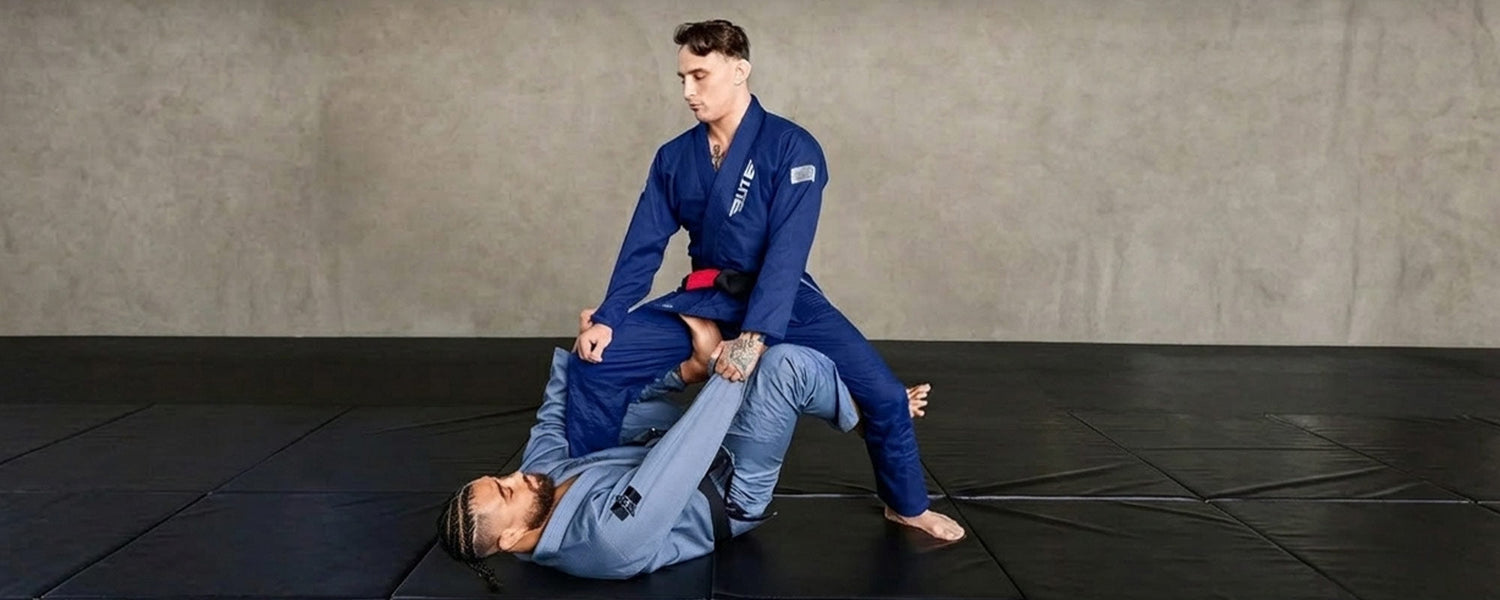
BJJ was built from the ground up (quite literally) to address this fact. The art focuses on:
Takedowns that bring a fight to the floor, where a skilled grappler has the most control.
Positional control: Learning how to hold dominant spots like mount, back control, or side control, which allows a smaller person to neutralize a much larger one.
Submissions such as chokes and joint locks that end a fight without the need for punches or kicks.
No other martial art has as deep or as detailed a system for ground combat. Wrestling comes close, but it does not include submissions. Judo has groundwork, but it is far less developed than BJJ's.
2. BJJ Works for Smaller, Lighter People

One of the most common claims in martial arts is that technique can beat size. In many arts, this remains just a claim. In BJJ, it plays out on the mat every single day.
The art was shaped and refined with the idea that a smaller, weaker person could defend against and submit to a bigger, stronger attacker. This is not a marketing line; it is the founding principle of the Gracie family's entire system.
BJJ achieves this through:
A leverage-based technique that does not rely on strength or raw power to work.
Positional awareness that teaches grapplers to conserve energy and use the opponent's weight and movement against them.
Guard play, a unique feature of BJJ, where the person on the bottom can still threaten and submit the person on top, which erases much of the size disadvantage.
Very few other martial arts can make the same honest claim. A skilled BJJ practitioner of smaller size can and does submit larger training partners regularly.
3. BJJ Offers Real-World Self-Defense Value
Self-defense is the core promise of almost every martial art. But many arts rely on drills, patterns, and preset moves that never get tested under real resistance. BJJ breaks that mold entirely.
Because BJJ practitioners spend a huge portion of every class rolling, that is, live sparring against a resisting partner, the techniques get tested in real time. There is no room for moves that only work on a cooperative partner.
This makes BJJ one of the most honest and practical self-defense systems available. Key self-defense advantages include:
Clinch control and takedown defense, which allows a BJJ practitioner to avoid being knocked out or thrown.
The ability to safely restrain an attacker without causing serious harm is a skill valued by parents, teachers, and security professionals.
Scenario-based ground defense, which prepares practitioners for the most dangerous and common phase of a real fight.
Law enforcement agencies, military units, and security forces around the world incorporate BJJ into their training for this very reason.
4. BJJ Is Continuously Tested Under Live Conditions
Here is a truth that separates BJJ from many other arts: every single class includes live sparring. Rolling is not optional. It is part of the culture, the method, and the art itself.
This constant testing under resistance is what makes BJJ techniques sharp and reliable. When a move is attempted against someone who is actively trying to stop it, only the techniques that truly work survive. Weak or flawed techniques get exposed and discarded.
Compare this to arts like traditional Kung Fu or certain forms of Karate, where many drills are performed solo or with a partner who follows a fixed script. The gap between those drills and real resistance is enormous.
Rolling in BJJ also means:
Practitioners develop a real sense of timing and feel for when to apply a technique, rather than just memorizing steps.
Ego gets checked early and often, which builds mental toughness and a growth mindset.
Progress is measurable and honest because the feedback comes from the mat, not from a grading committee.
5. BJJ Promotes Physical Fitness in a Unique Way

Training in BJJ is one of the most complete physical workouts available. A single one-hour class will challenge strength, endurance, flexibility, coordination, and mental sharpness, all at once.
Unlike gym-based fitness that isolates muscle groups, BJJ builds what many call "functional fitness", the kind of strength and stamina that translates directly into real physical tasks.
Benefits for physical fitness include:
Full-body engagement during every roll, as legs, hips, arms, and core all work together constantly.
Grip-strength development is hard to replicate with standard gym equipment.
Cardiovascular conditioning that steadily improves with each class, without the repetition of running or cycling.
Flexibility gains from the wide range of motion required in guard positions, escapes, and submissions.
The right training gear supports this fitness journey. Elite Sports, one of the best BJJ gear makers in the sport today, offers a full range of BJJ rash guards built for comfort and performance during intense rolling sessions.
6. BJJ Has a Proven Track Record in MMA and Competition
The rise of Mixed Martial Arts (MMA) gave every martial art a chance to prove itself under the most honest test possible: a real fight against a trained opponent from a different system. BJJ passed that test better than almost any other art.
From the earliest UFC events to the current elite level of MMA, BJJ has been a defining skill set. Many of the greatest champions in MMA history, across all weight classes, have had BJJ as the base of their game.
This is not a coincidence. BJJ's ground game, submission skills, and positional control give any fighter a critical edge. Even strikers who want to avoid the ground must understand BJJ to survive in the modern MMA landscape.
In sport BJJ itself, the depth of competition is extraordinary. Events like the ADCC Submission Wrestling World Championship and the IBJJF World Championships draw elite talent from dozens of countries. The art is constantly evolving at the competitive level, which means there is always something new to study and learn.
7. BJJ Builds Mental Strength and Problem-Solving Skills

Rolling in BJJ is often compared to physical chess. Every position presents a problem. Every move by the opponent demands a response. The mind must stay sharp, calm, and focused even when the body is under stress.
This mental challenge is one of the most valued aspects of the art. Over time, BJJ training produces:
Better stress management, as the experience of staying calm under the physical pressure of a larger opponent trains the nervous system to handle high-stress situations off the mat as well.
Sharper problem-solving, because every roll requires real-time thinking and adaptation to an opponent who is always changing what they do.
Resilience and patience are essential, as progress in BJJ is slow and the road to each belt is long, which teaches practitioners to value the process over quick rewards.
Many top business leaders, athletes from other sports, and high-performing professionals cite BJJ as one of the most impactful mental training tools in their lives.
8. BJJ Is Accessible at Every Age and Fitness Level

One of the most powerful things about BJJ is how wide the door is. Children as young as four or five can start learning the basics. Adults who begin at 40 or 50 can still make real progress and enjoy years of training. Seniors continue to roll well into their 60s and 70s.
This is possible because BJJ does not rely on peak athleticism. Technique, timing, and awareness can be developed at any age and carry practitioners far beyond what raw physical ability alone could achieve.
For kids, BJJ offers:
Anti-bullying skills that build both the physical ability and the mental confidence to handle confrontation.
Discipline and respect through the structure of class, belt progression, and dojo culture.
Teamwork and social bonds are formed through training with peers.
For adults and seniors, the art offers a low-impact (relative to striking arts) training environment that still delivers full fitness and mental engagement.
9. BJJ Culture and Community Are Second to None
Walk into almost any BJJ gym anywhere in the world, and the culture is immediately clear: people help each other grow. Upper belts teach lower belts. Training partners push each other forward. The tap is respected and never mocked.
This culture is rare in the martial arts world. It stems from the very nature of the art: everyone gets tapped out; everyone knows what it feels like to lose. The ego has a hard time surviving on the BJJ mat for long.
The community aspect of BJJ also means:
Lifelong friendships forged through shared struggle on the mat.
A global network, a BJJ practitioner can visit a gym in another country and be welcomed as part of the family almost instantly.
Role models at every level, from local instructors to world champions who are known for being generous with their knowledge.
This sense of belonging and shared growth is something that very few other martial arts or fitness activities can match.
10. BJJ Keeps Growing, and the Gear Has Grown With It

BJJ is one of the fastest-growing sports in the world right now. New gyms open every week. Enrollment numbers keep climbing. Online platforms dedicated to BJJ instruction have millions of subscribers. The art is not slowing down.
With this growth has come a rise in the quality of training gear. The days of wearing a stiff, rough gi that chafed after ten minutes are long gone. Modern BJJ gear, gis, rash guards, shorts, and spats, is designed with both performance and comfort in mind.
For those serious about their training, investing in quality gear is a natural step. Elite Sports BJJ gis are designed to withstand the demands of intense training while offering the fit and durability serious practitioners expect. From competition day to daily drilling, quality gear makes a difference.
Whether training in a traditional gi or going no-gi with a pair of long-sleeve BJJ rash guards or short-sleeve BJJ rash guards, having gear built for the mat means less distraction and more focus on what matters: getting better.
11. BJJ vs Other Martial Arts: Head-to-Head Comparison
Category |
BJJ |
Wrestling |
Judo |
MMA |
|---|---|---|---|---|
Ground Combat Depth |
The entire system is built around ground fighting - the most complete ground game in any art |
Strong takedowns and top pressure, but very limited once on the ground |
Groundwork exists, but is underdeveloped and not the primary focus |
Ground game is strong, but borrowed almost entirely from BJJ |
Submission System |
Deepest and most detailed - chokes, joint locks, and leg attacks all fully developed |
Not part of the core curriculum |
Limited submissions exist, but are rarely drilled in depth |
Strong, but largely derived from BJJ |
Self-Defense Value |
Every technique is trained against live resistance - reliable under real conditions |
Useful for takedowns, weak once the fight hits the ground |
Throws can end a fight fast, but the ground game is a clear weak point |
Well-rounded but requires years across multiple disciplines |
Works for Smaller People |
The founding principle - leverage and technique neutralize size and strength |
Size and explosive power carry significant weight |
Technique helps, but size still plays a considerable role |
Depends heavily on which disciplines are strongest |
Live Sparring Culture |
Rolling against full resistance is a daily, non-negotiable part of every class |
Live drilling is central - athletes are tested under resistance constantly |
Randori (live sparring) is practiced regularly and valued |
Sparring across striking and grappling is essential |
Accessibility by Age and Fitness |
Suitable for ages 4 to 70+, at any starting fitness level |
Physically demanding - harder for older or less athletic beginners |
Moderately accessible, but throws carry real injury risk for new starters |
Best suited for younger, fitter beginners due to high cross-discipline demands |
Mental Development |
Known as "physical chess," it demands real-time problem-solving and calm under pressure |
Builds strong mental toughness, though strategic depth is narrower |
Discipline and respect are deeply embedded in the culture |
High mental demand but spread across multiple skill sets |
Community and Culture |
Tight-knit, welcoming global community with a strong ego-checking culture |
Strong team culture at the school and college level, but less consistent elsewhere |
Respectful and tradition-driven, with deep roots in discipline |
Growing fast, but culture varies widely from gym to gym |
Beginner Friendliness |
Clear belt progression, welcoming culture, and upper belts actively mentor newer students |
Can feel brutal early without a strong and supportive team |
Structured path, but throw-heavy training creates a steep early learning curve |
Steep curve - beginners must build competence across multiple disciplines at once |
Real-World Proof |
Adopted by law enforcement, military units, and security forces worldwide |
Takedowns appear in law enforcement training, but no finishing system limits full adoption |
Respected in close-quarters defense, but a weak ground game limits broader use |
Cross-disciplinary effectiveness is respected, but years of training are required for real proficiency |
12. Why the Right Gear Matters for BJJ Training
As BJJ grows, so does the importance of training in gear designed specifically for the sport. A well-made gi reduces friction, withstands daily washing, and does not restrict movement in complex positions. A quality rash guard protects the skin, manages heat, and moves with the body rather than against it.
Elite Sports, widely recognized as one of the best BJJ gi manufacturers in the business, offers a full range of gear built specifically for grapplers. From kids just starting out to seasoned competitors, the brand covers every level and every need. The combination of durable materials, smart design, and competitive pricing has made Elite Sports a trusted name across the global BJJ community.
Explore the full lineup at Elite Sports and find gear that matches the seriousness of the training.
13. Final Thoughts
BJJ does not outperform other martial arts by dismissing them. It outperforms them because it does something rare: it tells the truth. The truth about what works on the ground. The truth about what happens when technique meets resistance. The truth about what real growth in a martial art looks like.
From proven self-defense to unmatched community, from mental development to physical transformation, BJJ delivers on every front. It is not just a sport or a hobby; for millions of practitioners worldwide, it is a way of life.
And for those who live that life every day on the mat, gear from Elite Sports, the best rash guard producer and gi maker in the sport, makes sure the only thing slowing progress is the next technique waiting to be learned.
Step on the mat. Trust the process. The journey in BJJ is one that never truly ends.



Leave a comment
This site is protected by hCaptcha and the hCaptcha Privacy Policy and Terms of Service apply.