

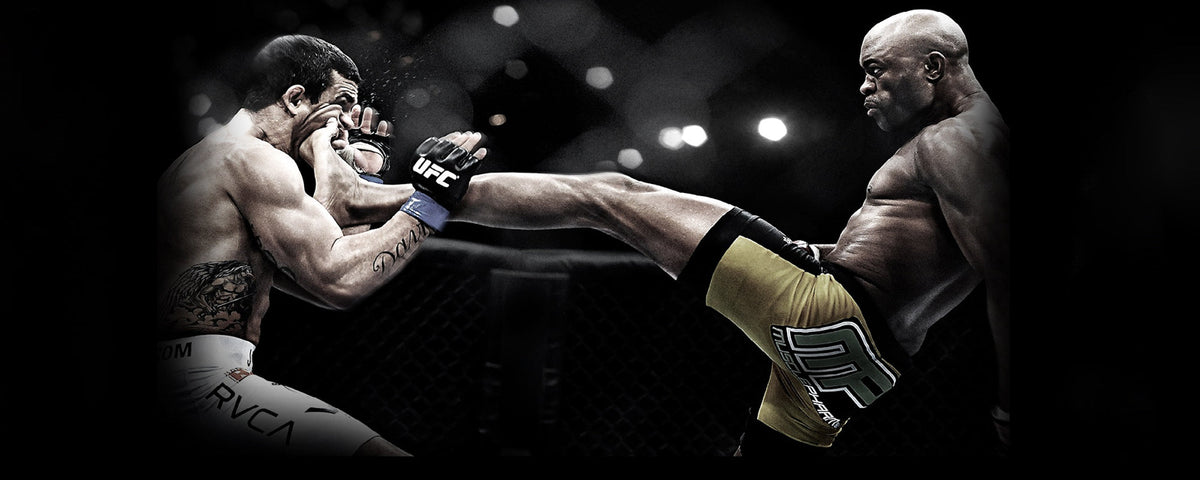
Which country really produces the best MMA fighters? Compare Russia, the USA, Brazil and rising UFC nations through current talent, all-time champions and the coaching systems behind their success. The answer changes depending on whether you count today's contenders, historical UFC depth or overall fight culture.
Which country has the best MMA fighters? It sounds like a simple question until you look at how many ways a country can be successful. One nation may produce more UFC champions over time, another may have the strongest contenders right now, and a smaller country can produce remarkable talent from a relatively small population.
The answer also depends on whether you are judging the UFC alone or mixed martial arts across major promotions. Here is a practical, evidence-aware look at the countries shaping MMA, the fighters who put them on the map, and the training systems behind their success.
In the July 2026 MMA country power ranking attributed to ESPN, Russia ranked first, followed by the United States and Brazil. The United States remains the clearest answer for all-time UFC fighter representation and historical championship depth. There is no permanent official 'best MMA country': results change, and the ranking depends on the criteria.
Table of content
Last updated: November 16, 2026
1. What Counts as the Best Country in MMA?
There is no universally accepted country championship for professional MMA. A useful comparison separates four things instead of mixing them into one claim:
- · Current elite strength: active champions, ranked contenders and the quality of a country's best fighters.
- · Depth: how many competitive fighters a nation develops, not just its biggest star.
- · Historical achievement: major titles and influential fighters across different eras and promotions.
- · Development pathway: coaching, wrestling or grappling programs, amateur competition and access to strong training partners.
Nationality is another complication. Birthplace, citizenship, the flag shown on a broadcast and the country where someone trains can be different. This article refers to each fighter's established sporting connection to a country rather than treating gym location as proof of nationality.
2. Top 10 MMA Countries in the July 2026 Power Ranking
The following is a dated snapshot, not an official UFC ranking or a permanent prediction. News reporting of ESPN's July 2026 MMA country index placed the nations in this order. The last column highlights recognizable fighters or established strengths; it is not an exact roster count.
# |
Country |
Why it matters / examples |
|---|---|---|
1 |
Russia |
Wrestling, sambo, and deep grappling talent; Khabib Nurmagomedov, Islam Makhachev |
2 |
United States |
Broad talent pool and strong wrestling pathway; Jon Jones, Daniel Cormier |
3 |
Brazil |
BJJ heritage and elite strikers; Anderson Silva, Amanda Nunes |
4 |
England |
Developed regional MMA circuit; Tom Aspinall, Michael Bisping |
5 |
Australia |
Well-rounded technical fighters; Alexander Volkanovski, Jack Della Maddalena |
6 |
Georgia |
Strong grappling and striking talent; Merab Dvalishvili, Giga Chikadze |
7 |
France |
Striking, judo, and modern MMA teams; Ciryl Gane, Manon Fiorot |
8 |
Mexico |
Boxing culture and complete MMA skills; Brandon Moreno, Alexa Grasso |
9 |
New Zealand |
Strong gym system relative to population; Dan Hooker, Kai Kara-France |
10 |
China |
Growing elite-level MMA development; Zhang Weili, Yan Xiaonan |
Notice the distinction: England is the unit used in that ranking, while the United Kingdom also includes Scotland, Wales and Northern Ireland. The sections below discuss the broader British MMA scene where useful.


3. Why These Countries Produce Elite MMA Fighters

3.1 Russia: Wrestling, Sambo and a Deep Grappling Pipeline
Russia has produced fighters who can turn a takedown into several minutes of control. Fedor Emelianenko helped define heavyweight MMA in the PRIDE era; Khabib Nurmagomedov later became one of the UFC's most influential lightweights; and Islam Makhachev continued to demonstrate the value of relentless grappling and disciplined all-round MMA.
Part of the country's strength comes from wrestling, judo and sambo systems that build balance, takedowns, transitions and pressure against resisting opponents. Dagestan is a republic within Russia, not an independent country. It has an especially visible wrestling culture and has produced multiple high-level MMA athletes. That success comes from training ecosystems, coaching and competition - not a claim that people from one region are inherently better fighters.
3.2 United States: The Largest Historical UFC Talent Pool
If the question is which country has produced the most UFC fighters, the United States leads in historical UFC roster databases. It also leads all-time tallies of individual UFC champions, although counts depend on whether interim titles and other rules are included. Stars such as Jon Jones, Daniel Cormier, Demetrious Johnson and Ronda Rousey illustrate the country's success across weight classes and eras.
College and scholastic wrestling provide a major route into MMA, while large gyms can bring together wrestling, striking, Brazilian jiu-jitsu and conditioning coaches. The advantage is not that every American athlete is a wrestler; it is the range of development pathways and high-level training partners.
Top Fighters of MMA
UFC has produced well-renowned names that have distinguished themselves from the others.
- Jon Jones
- Randy Couture
- Anderson Silva
- Randy Couture
- Vitor Belfort
- Georges St-Pierre
- Anderson Silva
- Khabib Nurmagomedov
- Conor McGregor
- Ronda Rousey
- B.J. Penn
- Stipe Miocic
- Daniel Cormier
- Matt Hughes
- Chuck Liddell
- Frank Shamrock
- Royce Gracie
- Tito Ortiz
Most of the bigger names of MMA have been part of the Bellator which includes:
- Michael Chandler
- Ryan Bader
- Gegard Mousasi
- Ilima-Lei Macfarlane
- Paul Daley
- Lyoto Machida
- Patrício “Pitbull” Freire
- Quinton “Rampage” Jackson
- Michael “Venom” Page
- Douglas Lima
- Cris Cyborg
3.3 Brazil: Brazilian Jiu-Jitsu, Vale Tudo and Champions Across Styles
Brazil's influence on modern MMA reaches far beyond one technique. Royce Gracie won the first UFC tournament, helping bring submission grappling to a much wider audience. Anderson Silva, Amanda Nunes, Jose Aldo, Charles Oliveira and Alex Pereira show the country's breadth across striking, submissions and complete mixed martial arts.
Brazilian jiu-jitsu developed in Brazil from Japanese grappling traditions, particularly judo and jujutsu; it did not emerge from nowhere as an entirely separate ancient art. Its emphasis on position, escapes and submissions helped change how fighters prepared for MMA. For the deeper history - including the roles of different Brazilian lineages - see who helped develop Brazilian jiu-jitsu.
MMA Champions
Top-rated fighters in MMA use the technique of grappling and submission that enables them to perform well on the podium. The top three MMA fighters are:
- Royce Gracie
- Charles Oliveira
- Alex Pereira
- Jose Aldo
- Rafael dos Anjos
- Vitor Belfort
- Cristiane Cyborg
- Charles Oliveira
3.4 England and the Wider UK: A Mature Regional Fight Scene
Michael Bisping, Tom Aspinall and Leon Edwards are among the names connected with the British MMA scene. Edwards was born in Jamaica and grew up in England, which is a good reminder that birthplace and sporting identity are not always the same.
Regional promotions such as Cage Warriors have helped fighters gain professional experience before larger international events. The country also has a broad mix of boxing, kickboxing, grappling and modern MMA coaching.
3.5 Australia: Well-Rounded Fighters and High-Level Coaching
Alexander Volkanovski and Jack Della Maddalena show two sides of Australian MMA: technical adaptability and refined striking. Australia has developed credible professional training programs with athletes who can defend takedowns, work in the clinch and compete over long rounds. It is a reminder that modern MMA success rarely comes from a single traditional martial art.
3.6 Georgia: Wrestling, Judo and Pace
Merab Dvalishvili and Giga Chikadze are examples of Georgian MMA talent with very different approaches. Georgia's combat-sports traditions include wrestling and judo, but not every Georgian fighter has the same style. High-level athletes also build careers at international gyms, so training location and country of origin should not be confused.
3.7 France: A Growing Professional MMA System
Ciryl Gane and Manon Fiorot demonstrate the quality of fighters associated with France. Judo, kickboxing and other combat-sport backgrounds have contributed to the scene, alongside increasingly specialized MMA coaching. France's rise shows why training infrastructure and professional opportunities matter as much as a country's most famous athlete.
3.8 Mexico: Boxing Skills With Increasingly Complete MMA Games
Brandon Moreno, Alexa Grasso and Yair Rodriguez helped give Mexican MMA a recognizable identity of its own. Mexico's deep boxing culture is a useful foundation for timing, distance and combinations, but elite MMA athletes also need takedown defense, grappling and clinch work. The country's top fighters are successful because they can combine disciplines, not because boxing alone is enough.
3.9 New Zealand: Big Results From a Small Talent Pool
New Zealand has far fewer fighters than the largest MMA nations, but names such as Dan Hooker and Kai Kara-France show its international reach. Auckland's high-level training environment has also supported athletes with complex national identities, including Nigeria-born, New Zealand-raised Israel Adesanya. That distinction matters: a fighter may be a product of one country's gym system while representing another country or heritage.
3.10 China: High-Level Champions and a Developing MMA Base
Zhang Weili became the first Chinese fighter to win a UFC title, and Yan Xiaonan has also competed at the top level. Their success has expanded the international visibility of Chinese MMA. Traditional and modern striking backgrounds, wrestling and other forms of grappling all contribute, but it would be misleading to suggest that every successful Chinese fighter follows one training system.
4. Important MMA Countries Beyond the Current Top 10
A list based on current strength will inevitably leave out historically important nations. These countries help explain why no single top-10 chart tells the whole story:
- Canada: Georges St-Pierre is one of MMA's defining champions, and Rory MacDonald is another important figure in Canadian MMA history.
- Japan: PRIDE helped shape an entire era of the sport, with fighters such as Kazushi Sakuraba and Shinya Aoki central to its international story.
- Ireland: Conor McGregor helped drive global interest in MMA, even though the success of one superstar does not measure a whole national roster.
- Poland: Former UFC champions Joanna Jedrzejczyk and Jan Blachowicz, together with the domestic KSW scene, show Poland's contribution.
- Nigeria: Kamaru Usman and Israel Adesanya were born in Nigeria, while their training and sporting pathways also span the United States and New Zealand.
- Kazakhstan: Shavkat Rakhmonov is a high-profile example of the talent emerging from Kazakhstan, but his individual career should not be mistaken for a national ranking.
5. Why Does Dagestan Produce So Many Successful MMA Fighters?
The short answer is that the region has a visible tradition of grappling, close-knit coaching networks and strong training partners. Wrestling builds the ability to close distance, finish takedowns and hold position. Sambo and judo add throws, clinch work and submission knowledge. Fighters then adapt those tools to the cage by adding striking, defense against the fence and MMA-specific transitions.
There is no secret national technique that guarantees a win. Khabib Nurmagomedov's success also reflected years of preparation, a highly developed team structure and an unusually effective game plan. Fighters from other countries can train the same principles with qualified coaches.
6. Which Country Is Best for MMA Training?
The best place to train MMA is the gym where you get safe coaching, regular partners near your level and a complete program. The country is a starting point, not a substitute for checking the actual academy. US gyms may appeal to athletes seeking broad MMA coaching; Brazil is an obvious destination for studying BJJ; and parts of Russia have elite wrestling and sambo communities. Thailand is also a popular option for striking-focused camps, even though that alone does not prove it produces the strongest MMA roster.
Before traveling or joining a gym, ask about coach credentials, contact intensity, injury protocols, beginners' classes, the split between striking and grappling, and whether the program actually prepares athletes for MMA rules. Visas, cost, language and accessibility may matter more to you than a country's position in a ranking.
7. What Can Beginners Learn From These Countries?
The common thread is not nationality - it is repeatable, disciplined practice against resistance. Effective MMA training blends takedowns, positional control, striking, conditioning and decision-making. If you are learning grappling first, it helps to understand how striking and grappling work together in MMA and how gi and no-gi BJJ differ before choosing classes.
For gi-based BJJ classes, the appropriate uniform is a BJJ gi. For no-gi grappling practice, a fitted rash guard and no-gi shorts are the more relevant options. These are training choices - a BJJ gi is not worn in a standard professional MMA bout, and the right clothing depends on the gym and competition rules.
8. Future of MMA

The world of martial arts is consistently evolving with time. MMA is a blend of dynamic fighting styles that have their roots in various combat sports. With the surge of young talent, MMA will experience drastic changes in the future.
Technological advancements and regulatory changes will occur. MMA will grow with the expansion; we will witness its revolution with the promotion in different countries.
9. Final Words
Mixed martial arts will continue to provide the platform for the evolution of modern expression. It will continue to produce well-renowned MMA fighters who will captivate the target audience.
The new fighters will provide pathways to emerging talent, refining the methods and techniques. MMA's global reach will increase, creating the opportunity for other countries to become the best producers of MMA fighters in the world.
10. FAQs
Which country has the best MMA fighters right now?
In the July 2026 national MMA power ranking attributed to ESPN, Russia ranked first, followed by the United States and Brazil. That is a snapshot based on elite talent and depth, not a permanent global championship. Different rankings can produce different answers.
What country has the best UFC fighters?
It depends on whether you mean current title contenders or all-time achievement. Russia has recently led one prominent country power index; the United States has the deepest historical UFC representation and leads many counts of all-time UFC champions. UFC itself is a promotion, not a country-based league.
Which country has produced the most UFC fighters?
The United States leads in historical UFC fighter databases. Brazil is another major source of UFC talent. Exact totals change with new signings and depend on whether a database counts the currently active roster, all former fighters or the flag used on television.
Which country has the most UFC champions?
The United States leads broad all-time counts of individual UFC titleholders, with Brazil another major contributor. Different tallies may include interim champions or assign dual-nationality fighters differently. Always check the method before repeating a precise figure.
Is Dagestan a country?
No. Dagestan is a republic of the Russian Federation. Khabib Nurmagomedov and Islam Makhachev are closely associated with the region, whose wrestling, judo and sambo traditions are well known in MMA.
Why are Dagestani MMA fighters so good at grappling?
Many emerge from a competitive wrestling culture with experienced coaches and frequent training against skilled partners. The advantage is learned timing, positional control and consistency, later adapted to MMA rules. It is not evidence of an innate advantage shared by everyone from the region.
Where did MMA originate?
People have combined fighting styles in different cultures for a very long time. Modern MMA was influenced by Brazilian vale tudo and other cross-style contests, while the first UFC event took place in Denver, United States, in 1993. There is no single country that invented every part of MMA.
What is the difference between MMA and the UFC?
MMA is the sport: competitors combine striking, takedowns and grappling under a rule set. The UFC is one organization that stages professional MMA events. Other promoters also operate, so UFC rankings and the worldwide strength of an MMA country are not identical.
Is Brazil or Russia better for MMA?
Brazil has an exceptionally influential history in Brazilian jiu-jitsu and MMA and has produced champions across many styles. Russia has a prominent wrestling and sambo pipeline and topped the reported July 2026 MMA country power ranking. The answer changes depending on the time period and criteria.
Where should I train if I want to become an MMA fighter?
Choose a reputable local academy that teaches both striking and grappling, supervises sparring responsibly and offers appropriate competition pathways. A great coach and consistent practice are more important than moving to a famous country before you have built your fundamentals.
Why do some fighter country lists disagree?
They may count birthplace, nationality, citizenship, a broadcast flag or the country where the athlete trains. They may also measure active UFC fighters, all-time UFC appearances or several major promotions. An honest comparison states its time period and method.


Leave a comment
This site is protected by hCaptcha and the hCaptcha Privacy Policy and Terms of Service apply.