
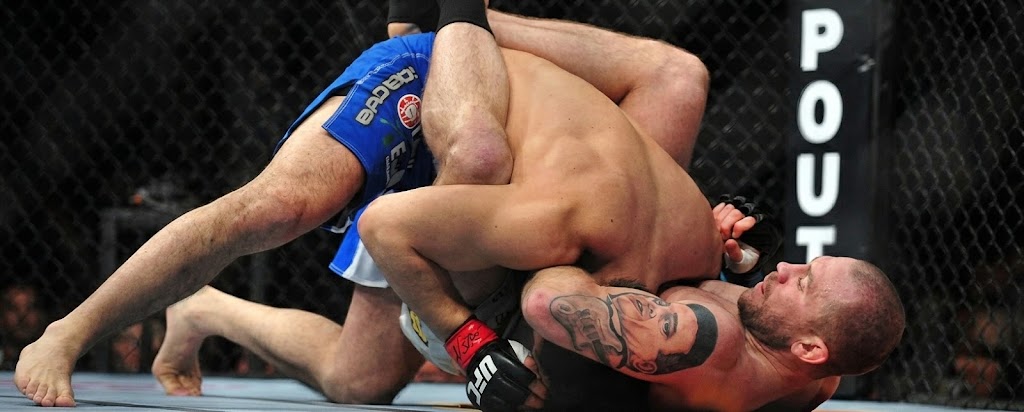
The guillotine choke punishes a poorly set up shot, and the head-outside single leg is the takedown most exposed to it. This guide explains arm-in and arm-out guillotines, when to attack, common mistakes, how to shoot a single leg safely, plus drills, gear and FAQs.
The guillotine choke is the submission that punishes a poorly set up shot, and the head-outside single leg is the takedown that makes you most vulnerable to it. That is why the two belong in the same article. If you wrestle or shoot takedowns, you need to know how to protect your neck. If you play BJJ or MMA, you need to know how to catch the shot.
This guide covers both sides. You will learn how the arm-in and arm-out guillotine work, the mistakes that stop the finish, when to attack, and how to shoot a head-outside single leg without walking into a choke. It also covers training drills and the gear that makes the work easier on your body.

Table of contents
1. Guillotine Choke and Single Leg: Quick Answers
- What it is: A front-headlock choke where your forearm blade sits under the opponent's chin.
- Arm-out version: The opponent's arm is outside the choke, and you finish with a high elbow and steady pressure.
- Arm-in version: The opponent's arm is trapped inside, so you finish by bending the head down toward their belly.
- Best moments to attack: When the opponent shoots, or whenever they move from bottom to top and expose the neck.
- Biggest takedown risk: Dropping your head below the opponent's shoulders with nothing protecting your neck.
- Biggest safety rule: Release the moment your partner taps.
2. What Is the Guillotine Choke?
The guillotine choke is a front-headlock submission where you wrap an arm around the opponent's neck from the front and squeeze with the blade of your forearm under their chin. It is one of the first chokes many grapplers learn, and it is used in BJJ, no-gi grappling, wrestling-based exchanges and MMA.
Depending on how it is applied, the guillotine can compress the blood vessels on the sides of the neck, the airway, or both. That is why a tight guillotine can end a match quickly. Our overview of essential BJJ chokes covers the main BJJ chokes in more depth.
Safety matters more with chokes than almost any other technique. A person can lose consciousness within seconds, and holding on after a tap can cause serious injury. Learn the choke under a qualified coach, apply it with control and let go the moment your partner taps.
2.1. Why Learn the Guillotine?
The guillotine is one of the most common submissions in high-level grappling and MMA. Published breakdowns of ADCC 2024 put guillotines at roughly 10% of finishes, behind the rear-naked choke and the armbar, and the arm-in guillotine ended the 2024 Absolute final. In the UFC, it is among the most common submission finishes, usually behind the rear-naked choke. At the same time, published competition data suggest it is attempted often but finishes at a lower rate than many other submissions, which tells you that setup and detail matter. For the broader picture, see our guide to the most common BJJ choke submissions in the UFC.

3. Why the Guillotine and the Single Leg Belong Together
A takedown attempt is the moment your head is lowest and your neck is most exposed. When an opponent shoots a single or double leg, they have to drop their head and drive forward. That exposes the neck and gives you a chance to lock a front headlock.
For the shooter, the opposite is true. Every high single, high crotch or head-outside single has to deal with the same problem: how do I get in on the leg without giving up my neck? Knowing the guillotine from the attacker's side makes you a safer shooter, and knowing the shot from the shooter's side makes you a better guillotine player.
If you want a flying version of the same idea, our guide to the flying guillotine choke covers that variation, and our article on the ninja choke shows how a guillotine can lead into another finish.
4. Arm-In vs Arm-Out Guillotine
The main difference is where the opponent's arm is, and that changes how you finish. Both versions share the same grip and the same blade under the chin.
Feature |
Arm-out guillotine |
Arm-in guillotine |
|---|---|---|
Opponent's arm |
Outside the choke |
Trapped inside the choke |
Typical finish |
High elbow over the shoulder, wrist driven through the neck |
Crimp the neck by bending the head toward the belly |
Elbow |
Lifted up over the opponent's shoulder |
Cannot lift it, so the body does the work |
Common in |
Shots and scrambles where the arm is clear |
Shots where the opponent has an arm wrapped around you |
Key mistake |
Elbow too low |
Only squeezing instead of crimping |
The high-elbow arm-out version is often called the "Marcelotine" after Marcelo Garcia, who made it famous.


5. How to Apply the Arm-Out (High-Elbow) Guillotine
The arm-out guillotine works when your wrist is deep, your elbow is high and your hips are angled. Here is how the mechanics break down.
- Get the blade under the chin. The forearm should sit under the chin, with your wrist deep against the neck, not hanging out to the side. If you make a thumbs-up with the choking hand, the thumb side should touch the jaw or the area around the ear.
- Grab your fist, not your fingers. Make a fist with the choking hand and grab it with the other hand. Open fingers can get pulled back and injured.
- Lift the elbow. Bring your elbow up over the opponent's shoulder. This tightens the choke and blocks many of the opponent's defenses.
- Drive the wrist through. Pull the wrist through the neck while you press your forearm into their shoulder.
- Hold steady pressure. A smooth, steady squeeze works better than a jerk.
If you are on the ground, turn onto your hip on the same side as the opponent's head, and bring your shoulder over their neck. A useful check is to look for their hairline: if you can see hair, the head can pop out. If your shoulder is over the neck, it is much harder to escape.
6. How to Finish the Arm-In Guillotine
The arm-in guillotine finishes by bending the neck, not just squeezing it. Because the opponent's arm is trapped, you cannot lift the elbow over the shoulder the same way, so the mechanics change.
Think of the neck as a garden hose. You can stop the flow by squeezing the hose, but you can also stop it by bending it. The arm-in finish does the second thing:
- Set the same deep blade and fist grip as before.
- Turn onto the hip on the same side as the opponent's head, with your shoulder over their neck.
- Instead of lifting the elbow, curl your body and bring the opponent's head down toward their own belly.
- Use your legs to pull their lower body into you. This bends the neck even further.
- Keep steady pressure until the tap.
Most people try to squeeze harder when the choke does not work. A better fix is to change the squeeze into a crunch, similar to an abdominal curl, and bend the neck toward the belly.

7. When to Attack With the Guillotine
The best guillotine setups use something the opponent is already trying to do. Do not force it. Look for these moments.
- When they shoot a takedown. A shot drops the head and exposes the neck. Lock the grip and get a leg over their back so they cannot just pass you.
- When they underhook and turn to come up. If they bump and turn onto their side to take you down or come out on top, the neck is exposed as they move.
- When they go from bottom to top. Any sweep attempt, wrestle-up or drive to get on top can leave the neck available.
- In scrambles. The guillotine can appear when someone is moving fast and not protecting their head.
In each case, the principle is the same: the opponent's head is moving forward and down, and you catch it on the way.
8. Common Guillotine Mistakes (and Fixes)
Most failed guillotines come down to the same few problems.
Problem |
What is happening |
Fix |
|---|---|---|
The wrist is not touching the neck |
The blade is hanging out to the side instead of under the chin |
Drive the wrist in deep so the thumb side touches the jaw or ear |
The opponent beat the leg |
You lay back to wrap a leg over their back, and they jumped past your guard |
Control the hips and get a leg over before you finish, or reset |
You squeeze but do not crimp |
In the arm-in version, you are only squeezing |
Crunch the head toward the belly instead |
The elbow is low (arm-out) |
The finish stalls |
Lift the elbow high |
If the opponent has already passed, do not burn your energy trying to finish. Roll, recover guard or change plan. For more ways to build your choke game, our guide to BJJ submission tips for beginners is a good starting point.
9. The Head-Outside Single Leg: What It Is
The head-outside single leg is a takedown where your head stays on the outside of the opponent's hips while you attack one leg. It is sometimes called a high single or a high crotch, because you attack high on the leg, near the hip. It is a strong shot, and experienced wrestlers can hit it even against skilled opponents, but it also leaves you exposed to chokes like the guillotine if your details are poor.
10. How to Shoot the Head-Outside Single Without Getting Choked
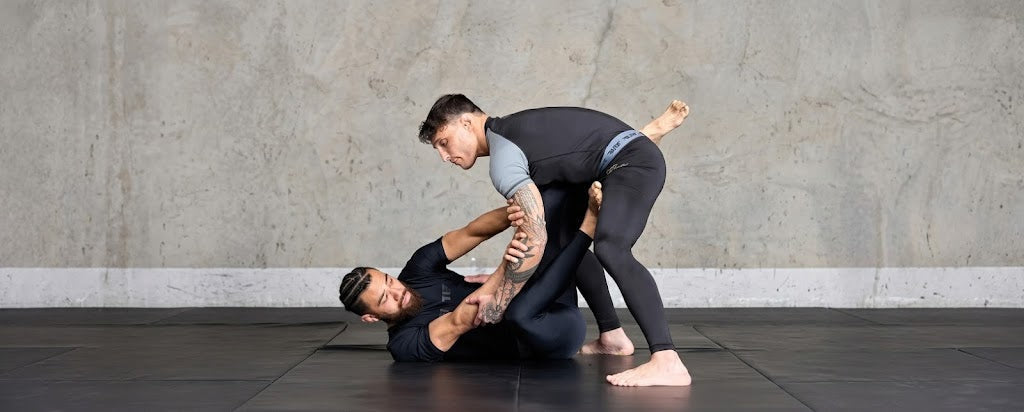
The key is keeping your neck below the opponent's shoulders and attached to their leg. If your neck is low and tight to their body, they have nothing to wrap. These details help.
- Clear the post. If the opponent posts on your shoulder, use a clamp grip just above their elbow and lower your level as you shoot.
- Attach the neck to the leg. Glue your neck to their leg so they cannot get their hands in. This is more important than the grip itself.
- Create an attachment behind the knee. This helps stop them from sprawling away.
- Stay tall and tight. Keep your elbows in, hips under you and chest up. Do not drop all the way to a knee.
- Pull yourself in as the leg moves back. When the opponent steps back, use that movement to close the distance.
If you want a broader menu of shots, see our guide to the most effective takedowns for older grapplers.
11. How to Finish the Head-Outside Single
You can finish the shot by sitting the opponent to their butt or by lengthening the lever if they sprawl. Both finishes rely on keeping the leg glued to your chest.
- The chest finish. Grip hand over wrist, pull the opponent's knee up into your belly button, drive with your chest and step your back leg back as you circle them down.
- The long lever finish. If they curl the heel back and start to sprawl, extend your arms down hand over hand and lengthen the leg. That gives you more leverage as you pull up at the ankle and push down with your chest.
- Enter with pressure. Drive into the hips and knock the opponent back when you arrive. Their weight shifts to the back leg, and the lead leg gets light.
If you are smaller than your opponent, do not go all the way under their hips. Stay out in front, where you can use their forward weight, because carrying a heavy opponent from under their hips is risky if they sprawl. Weight differences matter in grappling, which is why we explain how weight classes work in combat sports.
12. How to Defend a Guillotine
The best guillotine defense happens early, before the grip locks. If you shoot, keep your neck low and tight and finish quickly rather than holding a stalled position. If the choke is already on, stay calm, relieve pressure as soon as you can and tap if you are in danger.
Our article on common BJJ chokes explains the general principles, and your coach can show you the best escapes for your style.
13. Drills for the Guillotine and the Single Leg
Short, careful drilling builds the habits faster than random sparring. Try these.
- Shadow shots. Practice your level change and neck position without a partner.
- Front headlock grip drill. Practice getting the blade deep and making a fist grip on a partner who stays passive.
- Shot and counter. One partner shoots slowly, and the other applies the guillotine position without finishing, then switch roles.
- Dummy work. Use a BJJ dummy to practice entries, level changes and finishing mechanics without a partner. Our adult dummies are made for this kind of solo drilling.
Always keep drills controlled, and never apply a full choke on a partner who has not agreed to the drill.
14. What to Wear for Guillotine and Takedown Training
For takedown and choke training, simple no-gi clothing works well because it lets you move freely. A fitted BJJ rashguard protects your skin during front headlock exchanges, and BJJ shorts or BJJ spats help protect your legs during shots and scrambles.
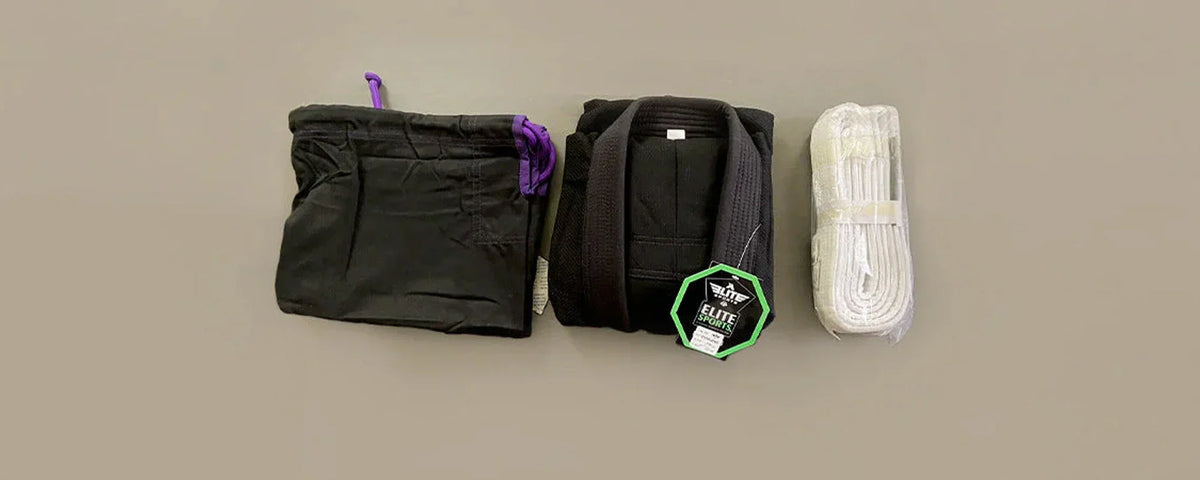
If you also train in the gi, a well-fitting jiu jitsu gi lets you practice the same positions with different grips, and Elite Sports also carries a women's BJJ gi range. If you are wondering how takedowns fit into BJJ, our guide to the best wrestling moves for BJJ and our article on whether BJJ helps your wrestling go deeper.
15. Guillotine Choke and Single Leg Takedown: Frequently Asked Questions
What is the guillotine choke in BJJ?
The guillotine choke is a front-headlock submission where your arm wraps around the opponent's neck and the blade of your forearm presses under their chin. It can compress blood vessels, the airway or both, depending on how it is applied.
What is the difference between arm-in and arm-out guillotine?
In the arm-out version, the opponent's arm is outside the choke and you finish with a high elbow. In the arm-in version, their arm is trapped inside, so you finish by bending the head down toward their belly.
Is the guillotine a blood choke or an air choke?
It can be either or both. The result depends on where your forearm sits and how the pressure is applied.
How do I finish the guillotine choke?
Get your wrist deep under the chin, use a fist grip, and keep steady pressure. For arm-out, lift your elbow high. For arm-in, bend the head toward the belly and use your legs to pull their lower body in.
Why does my guillotine not work?
The most common causes are a shallow wrist, losing your leg position so the opponent passes, squeezing without crimping the neck in the arm-in version, and a low elbow in the arm-out version.
Can you get guillotined when shooting a single leg?
Yes. A single leg exposes your neck if your head is low and unprotected. Keeping your neck tight to the opponent's leg and finishing quickly helps reduce the risk.
What is a head-outside single leg?
It is a single leg takedown where your head stays on the outside of the opponent's hip as you drive into the leg. It is sometimes called a high single or a high crotch.
Is the guillotine good for beginners?
Yes, it is often one of the first chokes beginners learn, but it should be taught carefully because chokes can injure. Learn it under a qualified coach.
Is the guillotine used in MMA?
Yes. It is one of the most common submissions in the UFC, partly because shots and scrambles expose the neck. Our article on why BJJ is essential for the UFC explains more.
Is it safe to practice the guillotine?
It is safe when you learn from a qualified coach, apply it with control and release immediately at a tap. Never hold a choke after your partner taps.
Is the guillotine choke legal in BJJ competition?
Yes, the guillotine is a legal choke in standard adult BJJ and submission grappling rules. Age-group and organization rules vary, so check the rulebook for your event.
Does the guillotine work in the gi and no-gi?
Yes. It does not depend on grips on the uniform, so it works in both gi and no-gi training.
How do I escape a guillotine choke?
Defend early, before the grip and the leg position are set. Coaches often teach keeping your weight and hips forward, controlling the choking wrist or arm, and moving your head and body in the direction that fits your position. If the choke is deep, tap. Because the best escape depends on whether you are in guard, half guard or a scramble, learn it with a coach.
16. Final Thoughts on the Guillotine Choke and the Single Leg
The guillotine and the single leg are two sides of the same exchange, and learning both makes you safer and more dangerous. If you attack the neck, get the wrist deep, choose the right finish for arm-in or arm-out and avoid the common mistakes. If you shoot takedowns, keep your neck low and attached to the leg, enter with pressure and finish the shot quickly.
Practice slowly, drill with partners you trust and tap early. That is how these techniques become reliable instead of risky.



Leave a comment
This site is protected by hCaptcha and the hCaptcha Privacy Policy and Terms of Service apply.