
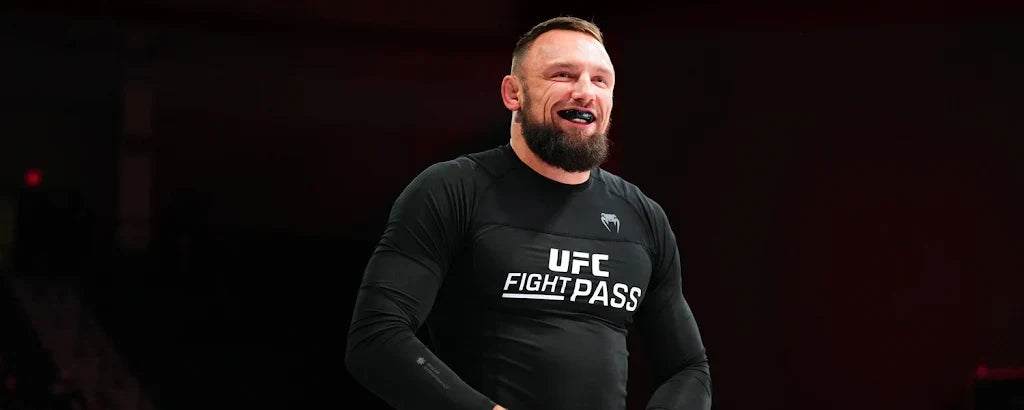
Craig Jones says he intends to stage the Craig Jones Invitational 3 (CJI 3) in 2027 , returning to an individual-bracket format. In a November 21 discussion, he proposed a 16-person, two-day tournament , a final of five five-minute rounds, a potential $1 million winner's prize , and new anti-stalling and submission-bonus incentives. The financial proposals are subject to change . A final event date, venue, athlete bracket, and binding rulebook were not established in the sources checked for this article.
Table of contents
A tournament announcement can be big news without being a finished fight card. That is the position CJI 3 is in right now. When a social graphic circulated with the message that CJI 3 would return in 2027 using the CJI 1 format, the obvious question was whether the million-dollar tournament was really coming back. Craig Jones has since offered a more detailed answer, and a few new questions.
The return of individual brackets is the story. But the most consequential proposal may be something else: taking money away from a potential winner for stalling, then letting that athlete earn it back by securing a submission. Here is what has been said, why the proposed format matters, and what still needs an official event announcement.
1. What has Craig Jones announced about CJI 3 in 2027?
Jones has discussed a 2027 return and shared planning details in a November 21, 2026 Reddit thread from his known account, u/johnbelushismom. He proposed a CJI 1-style individual tournament and invited community feedback. The later financial proposals were explicitly labeled subject to change , so they should not be described as contractual rules.
| Question | Status as of November 23, 2026 |
|---|---|
| Is CJI 3 planned for 2027? | Yes, according to Jones' recent announcements. A complete official event listing is still needed. |
| Individual or team competition? | The current plan is an individual 16-person tournament, not the CJI 2 team format. |
| How many days? | Two days in the current proposal. |
| Is $1 million being offered? | Jones has publicly promoted a $1 million winner's prize. Final financial terms should be checked against the official event announcement. |
| What are the proposed new incentives? | A $200,000 deduction from the potential winner's payout for stalling, plus $50,000 submission bonuses for eligible athletes; the details may change. |
| Who is competing, and where? | No complete 2027 athlete bracket, specific venue or precise event date has been established. |
The most important distinction is between Jones announcing an intended format and CJI publishing the final rules, contracts and card . Fans should not assume the proposed penalties have already become binding competition rules.

2. What does 'CJI 1 format' actually mean?
CJI's first two editions looked very different. That is why Jones' return-to-the-original-format announcement matters.
| Event | Competition format | Key prize structure |
|---|---|---|
| CJI 1 (2024) | Two 16-athlete individual no-gi brackets: under 80 kg and over 80 kg | $1 million to each bracket champion |
| CJI 2 (2025) | Eight teams of five in a team grappling competition, plus a separate four-athlete women's bracket | $1 million advertised for the team tournament; $100,000 for the women's bracket |
| CJI 3 (2027 plan) | Return to an individual 16-person, two-day tournament | $1 million for a winner has been promoted; number of brackets and final payout terms remain to be detailed |
At CJI 1, Kade Ruotolo won the under-80 kg title and Nick Rodriguez won the over-80 kg title . Both left with $1 million winner's prizes. The individual bracket gave each competitor a clear route through a field of opponents.
CJI 2 instead used team-versus-team grappling. The five bouts in the final between B-Team and New Wave ended without submissions, and B-Team won by a technical-decision tiebreak based on the final bout's score. Helena Crevar won the separate four-athlete women's bracket. The team format changed the tactics and the way viewers followed individual performances.
For 2027, Jones' November wording describes a 16-person tournament . It does not establish that both of CJI 1's 80 kg brackets will return, that there will be two million-dollar champions, or what a women's division might look like. Reusing the first edition's approach does not automatically confirm every detail of its field.
3. Why did CJI 3 announcements seem to contradict one another?
If you've seen stories saying the event was canceled, revived without a million-dollar prize, and then brought back with a million-dollar prize, you haven't necessarily been looking at the wrong event. Those claims came from different points in an unusually changeable 2026 planning cycle.
- Earlier in 2026: Jones floated ambitious financial concepts for a future edition.
- May 2026: He said CJI 3 was canceled in a widely reported online reply.
- July 2026: He discussed a 2027 return while cautioning fans not to expect another million-dollar prize.
- October-November 2026: His newer posts returned to the original-format idea and again promoted a $1 million winner's prize.
- November 21, 2026: He described the 16-person bracket and sought feedback on additional incentive rules.
For an evergreen reference page, that timeline is more useful than repeating whichever isolated quote attracts the most attention. The latest stated plan matters, but it is still a plan. Final details may change before contracts are signed and tickets go on sale.


4. How would the proposed $200,000 anti-stalling rule work?
Jones' idea is to attach a large financial consequence to passive grappling. Instead of relying only on the referee's warnings or the ordinary judge's scorecard, he proposed a separate group of five people assessing whether an athlete is stalling.
- Five selected observers would each be able to signal when they believe an athlete is stalling.
- If three out of five signal, the athlete could lose $200,000 from the potential $1 million winner's payout .
- The deducted money would be intended for charity.
- Jones also discussed warnings and audible signals so the athlete understands the risk before a deduction happens.
- Under a further proposed change, a later submission by that athlete would restore the $200,000 to the potential payout.
That is an incentive proposal, not a published final disciplinary code. It also does not mean a losing competitor would owe the promotion $200,000 out of pocket. The discussion concerns deductions from the money an athlete might win. Details such as how warnings accumulate, who selects the observers, and how disputes would be resolved have not been finalized publicly.

4.1 Why this is an interesting experiment
In a high-stakes submission-grappling final, a competitor may decide that holding a safe position is worth more than taking a risky submission chance. A large deduction tries to reverse that calculation. But it creates a different problem: a five-person group would be making decisions with major financial consequences, sometimes in positions where legitimate control and deliberate stalling can look similar.
Whether the system makes matches more exciting or merely increases disagreement will depend on a clear definition of stalling, consistent enforcement and a rules document that competitors can prepare for well in advance.
5. What about the proposed $50,000 submission bonuses?
In an update to the same November discussion, Jones described an investor-backed proposal for $50,000 per submission for eligible competitors. The proposed cap would prevent the eventual $1 million champion from collecting additional submission bonuses on top of that prize. He also said that submitting an opponent after a stalling deduction could restore the deducted $200,000.
That creates two possible rewards for attacking: the opportunity to advance in the bracket and a financial incentive for finishing. It does not mean every participant is guaranteed a bonus or that the exact system is locked. Jones specifically framed the changes as subject to revision.
Those details make the CJI 3 story more substantial than a single large number on a promotional poster. They also raise questions an official rulebook will need to answer: which submissions qualify, whether all bracket rounds count equally and how financial deductions interact with judging outcomes.
6. Who will compete in CJI 3?
That is still one of the biggest unknowns. No complete 16-person bracket has been established in the sources reviewed as of November 23, 2026. Craig Jones has used social posts to invite discussion about deserving competitors, but fan nominations are not signed athlete announcements .
A Craig Jones versus Dillon Danis match was announced earlier in 2026, before the event's cancellation-and-revival discussions. It should not be presented as a reconfirmed 2027 booking without a fresh card announcement.
The same applies to weight limits. Because the new outline refers to one 16-person field without specifying its weight class, it would be misleading to publish predicted brackets, confirmed division weights or a list of entrants as if they had already been finalized.

7. How is CJI different from ADCC and UFC BJJ?
That is still one of the biggest unknowns. No complete 16-person bracket has been established in the sources reviewed as of November 23, 2026. Craig Jones has used social posts to invite discussion about deserving competitors, but fan nominations are not signed athlete announcements .
A Craig Jones versus Dillon Danis match was announced earlier in 2026, before the event's cancellation-and-revival discussions. It should not be presented as a reconfirmed 2027 booking without a fresh card announcement.
The same applies to weight limits. Because the new outline refers to one 16-person field without specifying its weight class, it would be misleading to publish predicted brackets, confirmed division weights or a list of entrants as if they had already been finalized.
8. How is CJI different from ADCC and UFC BJJ?
All three are associated with high-level submission grappling, but they are not interchangeable competitions.
CJI is a Craig Jones-created invitational known for its high-profile prize money, evolving format and distinctive competition pit. ADCC is an established submission-wrestling championship with its own qualification routes, weight classes and rules. UFC BJJ promotes professional grappling cards with a separate judging and competition framework.
Those differences matter most when a viewer compares a sweep, a guard pull or positional control. The same exchange may have different strategic value under different scoring systems. It is safer to compare the rulebooks than to declare one promotion's athletes or techniques universally superior.
8.1 What does CJI 3 mean for everyday no-gi training?
Professional prize money does not change how academy classes work. CJI's no-gi format puts a spotlight on maintaining control without collar or sleeve grips , wrestling into dominant positions, defending leg entanglements, and creating submission opportunities. For one practical example, our body-lock passing guide explains how to stay connected to a guard player without relying on fabric grips.
In regular no-gi classes, athletes often wear a fitted no-gi rash guard rather than a traditional gi jacket. Choose one that allows comfortable movement and complies with your academy's requirements.
For the lower body, no-gi grappling shorts without exposed metal fasteners or hard pockets are a practical training option. Competition organizers may impose additional apparel restrictions.
No CJI 3-specific uniform rules have been verified for 2027. Training clothing linked here is not represented as approved or endorsed by the promotion ; entrants should check the event's final requirements when they are released.
9. What should fans check before CJI 3 begins?
Keep an eye on the details that turn an announcement into an actual event:
- The precise date, host city and venue.
- The final athlete list, division weight and bracket structure.
- The definitive competition rules, including the stalling process and final-round format.
- Signed financial terms, show money and eligibility for submission bonuses.
- Official broadcasting information and any rules on access or ticket sales.
Past CJI events have been available to watch free online, but it is too early to assume the same broadcaster or viewing arrangement for 2027.
10. Frequently asked questions
Is CJI 3 confirmed for 2027?
Jones has stated that he intends CJI 3 to return in 2027 and outlined a proposed individual tournament. That is not yet the same as a fully published event calendar entry ; the exact date, venue, lineup and final rules still require confirmation.
Will CJI 3 have a $1 million prize?
Jones has discussed a potential $1 million winner's prize in the latest proposals. Neither a signed purse agreement nor a final list of prize-eligible divisions has been published in the materials reviewed, so it should not be described as a guaranteed payout.
Is CJI 3 using the same format as CJI 1?
That is the current intent. Jones proposed a two-day, 16-person individual tournament rather than the team format of CJI 2. This does not automatically confirm that both of the original weight divisions will return.
When and where is CJI 3 taking place?
2027 is the publicly stated target year. An exact day and venue have not been consistently confirmed in a final event listing. Do not treat an unconfirmed month or placeholder event date as a fixed booking.
What is the $200,000 stalling penalty?
It is a proposal to deduct $200,000 from the potential champion's payout if three of five designated observers signal stalling, with the deducted amount intended for charity. Jones also discussed restoring the deduction if the athlete earns a submission. The system is not a finalized rulebook.
Are $50,000 submission bonuses guaranteed?
No. Jones proposed $50,000 per qualifying submission , with the eventual $1 million winner unable to collect extra submission bonuses beyond that cap. The terms were expressly described as subject to change.
Is CJI a gi or no-gi tournament?
The two previous CJI editions centered on no-gi submission grappling. The 2027 event has been discussed as a return to that individual grappling format; verify the official uniform requirements once they are released.
Has the Craig Jones versus Dillon Danis match been confirmed for 2027?
A matchup was announced earlier in 2026, before Jones later said CJI 3 was canceled and subsequently discussed its return. A current 2027 card has not established that the bout remains booked.
11. Summary: what matters about the CJI 3 return
- Craig Jones says CJI 3 is planned for 2027 and wants a return to individual brackets.
- The latest outline specifies 16 competitors across two days, but division details remain open.
- A $1 million winner's prize is being promoted, alongside proposed $50,000 submission bonuses and a $200,000 anti-stalling deduction.
- The precise date, venue, athletes and binding rules still need official confirmation.
For the sport, CJI 3's bigger question is whether the promotion can reward exciting submission grappling without creating unfair or confusing incentives. For fans, the answer will come when an actual bracket and enforceable rules are published, not when somebody wins a debate about who deserves the million.



Leave a comment
This site is protected by hCaptcha and the hCaptcha Privacy Policy and Terms of Service apply.