
Table of content
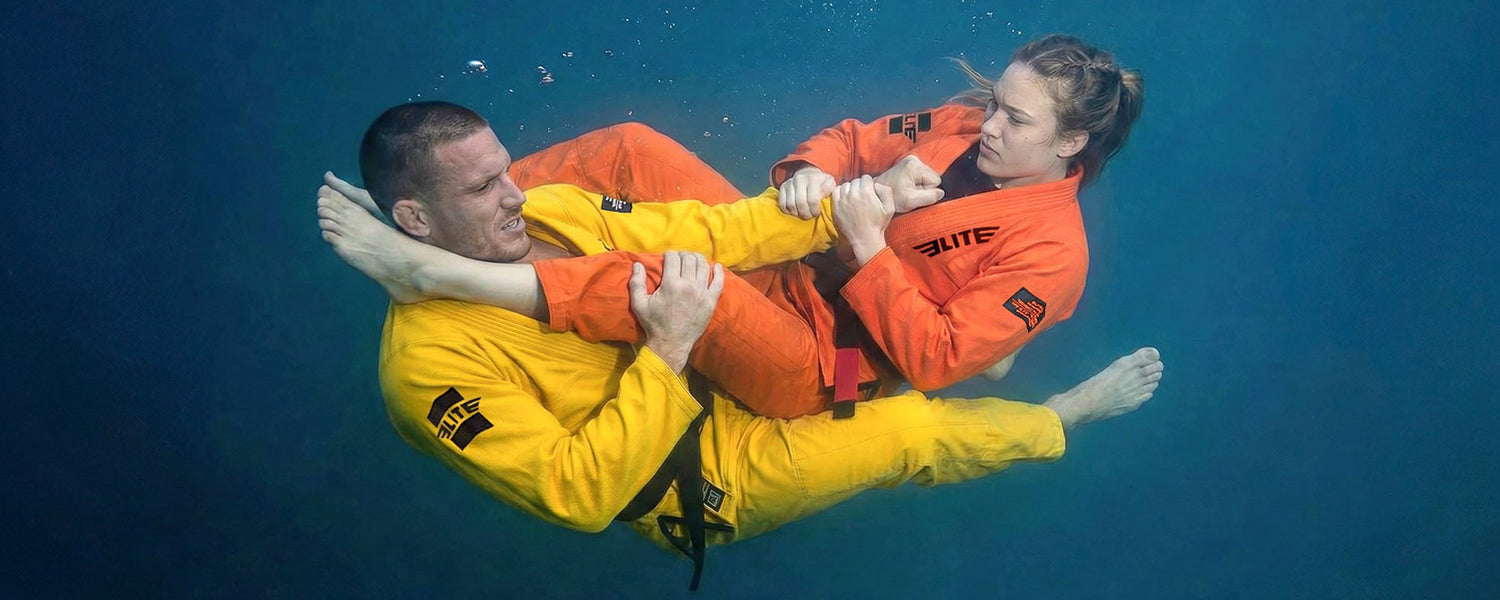
Imagine the worst-case scenario: a woman is grabbed, forced to the ground, and physically overpowered by a much larger attacker. In that terrifying moment, striking speed and raw strength mean almost nothing. What matters most are leverage, positional control, and calm, practiced technique. Brazilian Jiu-Jitsu (BJJ) was built for exactly this reality. It is the only martial art engineered from its inception to give a smaller, weaker person the tools to survive and overcome a larger, stronger aggressor. This foundational principle makes BJJ a uniquely powerful and practical choice for women’s self‑defense.
Yet technique alone is never the whole story. Reliable gear that can endure training also plays a critical role. As an industry‑leading, top‑rated BJJ gi manufacturer, Elite Sports specializes in creating durable BJJ gis, rash guards, and training apparel that allow practitioners to focus entirely on building life‑saving skills. Read on to learn why Brazilian Jiu‑Jitsu stands apart as the best self‑defense option for women, what the science says, and how the right equipment supports the journey to empowerment and safety.
1. Why Brazilian Jiu-Jitsu? Leverage, Not Strength
BJJ’s defining promise is that technique defeats size. Unlike striking arts, where reach, mass, and power dominate, BJJ treats the human body as a system of levers and fulcrums. A 120-pound woman can dismantle a 200-pound attacker by targeting joints that bend only in predictable directions.
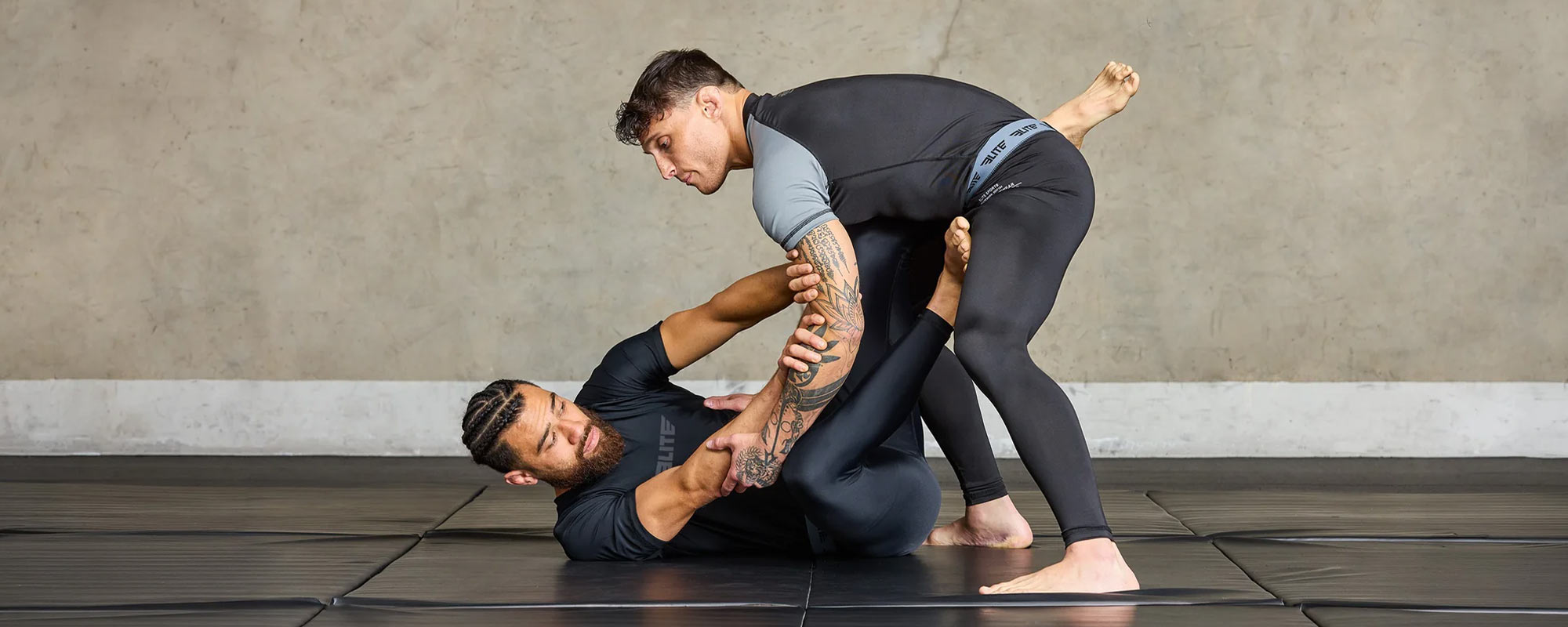
The Physics of Guard Work: When a woman wraps her legs around an attacker’s torso in closed guard and arches her hips, she uses the strongest muscle group in her body, the hips and glutes, against his far weaker posture muscles. No brute arm strength is required.
A History Built for the Smaller Fighter: BJJ was refined by the Gracie family in Brazil, who were often smaller than their challengers. They adapted traditional judo and jujutsu techniques into a system focused on ground fighting and submissions that work regardless of size.
Proven in Live Competition: In the early UFC, Royce Gracie, a lean 180‑lb fighter, consistently defeated opponents 50+ lbs heavier using only BJJ. For women, this same principle translates directly into real‑world encounters where attackers are almost always larger.
2. The Ground Reality: Why Women’s Self‑Defense Must Include BJJ

Most physical attacks against women are not stand‑up boxing matches. Attackers grab, push, pin, and drag, forcing the confrontation to the ground, where striking arts offer almost no viable response.
Research‑Backed Patterns: Studies analyzing real‑world self‑defense incidents show that BJJ techniques appear 5–10 times more frequently in successful civilian defense news reports than other systems like Krav Maga. The common thread: defenders used positional control, chokes, and joint locks to neutralize threats safely.
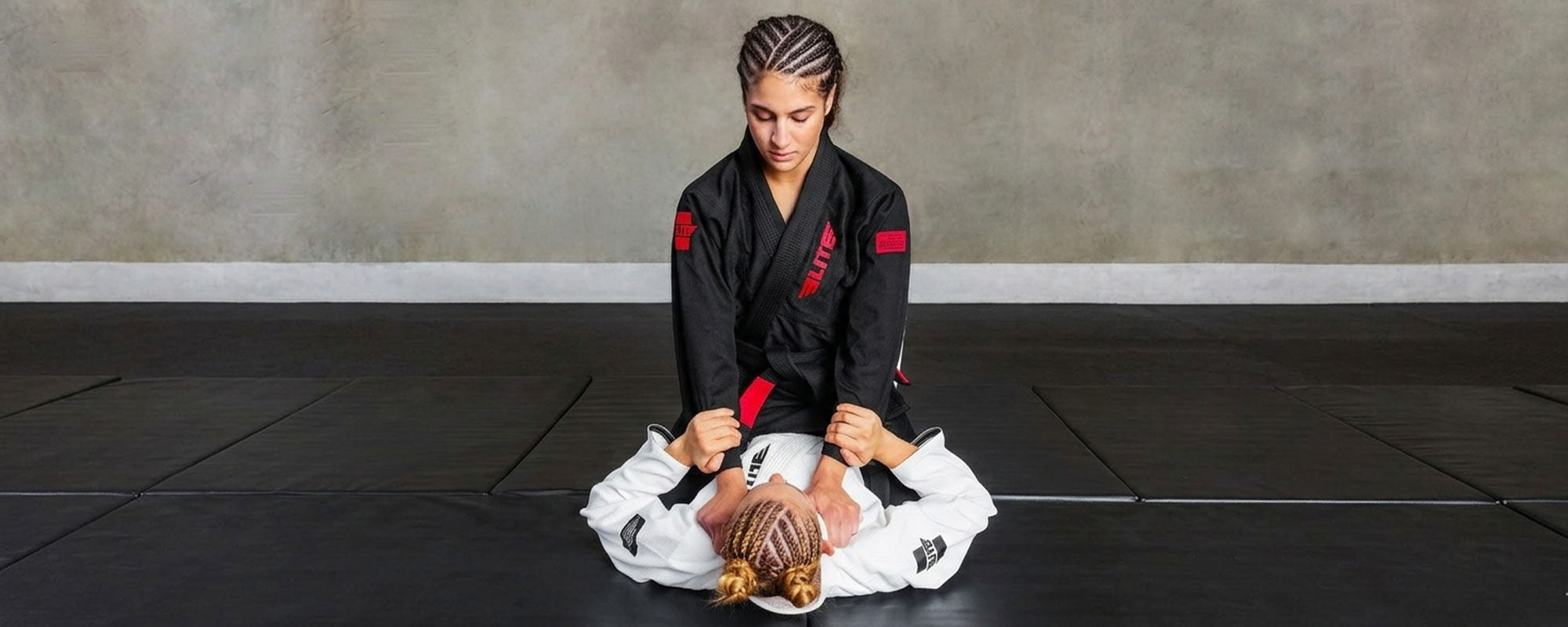
Addressing the Worst‑Case Scenario: Sexual assault often involves an attacker pinning a victim on her back and restricting her arms. BJJ trains women to survive and escape from exactly these positions: mount (attacker on top), guard (defender on back), and side control. No other martial art dedicates so much time to being calm and effective while on one’s back.
Live Resistance Training: In every BJJ class, practitioners engage in “rolling”, live sparring against fully resisting partners. This constant pressure testing builds instinctive reactions, so if a real confrontation occurs, the body already knows what to do.
3. BJJ Vs. Other Martial Arts: An Objective Comparison

No martial art is perfect for every situation, but BJJ’s specific strengths align remarkably well with the threats women most commonly face. The table below provides a clear, point‑by‑point comparison.
| BJJ Vs. Other Martial Arts | |||
|---|---|---|---|
| Martial Art | Primary Focus | Strengths for Women | Key Limitations |
| Brazilian Jiu-Jitsu | Ground grappling, submissions, positional control | Built for smaller defenders; trains worst‑case ground scenarios; live sparring reduces panic; subdues without striking. | Limited standing striking; less effective against multiple attackers. |
| Krav Maga | Aggressive striking, weapons defense, scenarios | Quick to learn basics; targets vulnerable areas; addresses weapons and multiples. | Fewer pressure‑tested sparring sessions; weaker ground defense. |
| Muay Thai | Standing striking (punches, kicks, elbows, knees) | Devastating strikes; excellent fitness; builds stand‑up confidence. | No ground survival; power and reach matter greatly; size disadvantage is harder to overcome. |
| Judo | Throws and takedowns | Off‑balancing larger opponents, grip strength, and breakfalls. | Limited ground submission work; many throws demand considerable strength. |
| Mixed Martial Arts (MMA) | A blend of striking and grappling | Most complete preparation; covers all ranges. | Longer learning curve; more physically demanding; needs athleticism. |
| Taekwondo / Karate | Kicking and striking at a distance | Flexibility, speed, discipline. | Sport‑oriented; weak close‑quarters and ground defense; rarely pressure‑tested against grapplers. |
BJJ’s advantage crystallizes when context is considered: attacks rarely start with an exchange of punches. They close suddenly into grappling range, a hair grab, a push against a wall, a tackle to the floor. In each of those moments, BJJ provides immediate, well‑rehearsed answers that a purely striking art cannot.
4. Science Supports BJJ for Women’s Safety

The case for BJJ is not built solely on martial arts tradition. Substantial research confirms that self‑defense training reduces victimization, and BJJ’s methodology aligns precisely with what the data identifies as effective.
Reduced Victimization: A review of 19 studies published in the Journal of the American Psychiatric Nurses Association found that women who completed self‑defense training reported significantly fewer incidents of attempted rape, completed rape, and nonconsensual sexual contact compared to controls.
Psychological Resilience: Trained women showed fewer PTSD symptoms, greater self‑efficacy, and measurably less fear‑motivated avoidance. BJJ’s constant, controlled exposure to physical pressure builds exactly the stress inoculation needed for real‑world readiness.
Lower‑Body Advantage in BJJ: Research indicates women often have proportionally stronger lower‑body strength. BJJ techniques such as the guard, triangle choke, and sweeps rely on hip and leg engagement, harnessing this natural advantage. A properly applied triangle choke uses the legs, not the arms, to cut off blood flow to the brain in seconds, requiring angles and leverage, not muscular force.
Mental Toughness Without Aggression: A Stanford study found that BJJ practitioners displayed higher mental toughness, resilience, and life satisfaction, with no increase in aggression. This counters the myth that martial arts make people violent.
5. Real‑World Evidence: BJJ in Action

Beyond academic studies, news reports provide a compelling record of BJJ working in real‑life civilian defense.
Documented Success Stories: Over five years, between 10 and 15 distinct, verified news stories explicitly credited BJJ techniques with stopping assaults, robberies, and street attacks. These appeared in outlets like The Guardian, ABC News, and People Magazine.
Common Elements in These Stories: Everyday citizens, not professional fighters, used leverage, positional dominance, and controlled submissions to hold attackers until police arrived. CCTV often captures the composed, methodical defense that is a direct product of BJJ’s training environment.
Why Outlets Cover BJJ: These incidents are visual, unambiguous, and deliver a satisfying narrative of a smaller defender prevailing without excessive force. BJJ appeared 5–10 times more often in verified self‑defense success stories than Krav Maga during the same period, a powerful empirical signal of practical effectiveness.
6. Mental and Emotional Transformations

Physical technique is only half the equation. The psychological shift that BJJ produces is equally life‑changing.
Embodied Confidence: A woman who knows she can escape a pin or choke a larger attacker develops a calm, unshakeable confidence that permeates daily life. Fear of walking alone diminishes.
Assertiveness and Body Image: University of Washington research found that self‑defense training significantly boosts self‑esteem, body image, and assertiveness, traits that extend far beyond physical safety.
Supportive Community: Many academies offer women‑only classes that provide a low‑pressure entry point. These spaces create camaraderie and allow women to drill techniques with peers before transitioning to mixed classes, where training with varying body types further sharpens realistic defense skills.
Consistency Breeds Competence: A woman training twice a week for two years logs hundreds of hours escaping bad positions and staying calm under pressure. That embedded muscle memory cannot be replicated in a weekend seminar, only through consistent, long‑term practice.
7. Honest Limitations of BJJ
A responsible self‑defense discussion must acknowledge where BJJ falls short.
Multiple Attackers: BJJ is designed for one‑on‑one combat. Going to the ground with multiple threats is dangerous. Smart training supplements BJJ with situational awareness and strategies to stay on the feet when possible.
Weapons Defense: Traditional BJJ curricula do not adequately address knives, guns, or improvised weapons. Programs that blend BJJ with weapon awareness modules (like Gracie Jiu‑Jitsu’s Women Empowered®) offer a more complete preparation.
Sport vs. Self‑Defense Gap: Modern competition BJJ features intricate sport guards (berimbolos, lapel guards) that have little street application. Women seeking practical skills should choose academies that explicitly teach a self‑defense curriculum including headlock escapes, punch‑block defense, and takedowns.
Size and Strength Still Matter: A trained female purple belt can reliably control an untrained larger man, but against a trained, athletic attacker, the margin for error narrows. BJJ improves the odds dramatically, but it does not confer invincibility.
8. Gi Vs. No‑Gi for Women’s Self‑Defense: What the Evidence Shows

A common debate is whether training with the traditional gi (cotton uniform) or without it (no‑gi) better prepares a woman for a real attack. Recent experiments have clarified the issue.
Clothing as a Gi: An experiment rolling in street clothes, t‑shirts, hoodies, button‑up shirts, and even a full suit, demonstrated that real‑world garments behave very similarly to gi fabric. T‑shirts bunch into collar grips; hoodies offer thick handles; button‑up shirts create lapel‑like structures.
Practical Implication: Training with a gi, which emphasizes fabric grips and friction‑based control, maps surprisingly well onto clothed attackers. Collar chokes, lapel drags, and sleeve controls practiced in the gym find direct real‑world analogs.
Best Approach: A mix of both gi and no‑gi training provides the most complete preparation. However, if only one modality is available, gi training arguably offers a slight edge for street applicability because attackers are almost always clothed.
9. Gearing Up: Equipment That Empowers

Self‑defense preparation depends on more than techniques; the gear a woman wears directly affects safety, hygiene, and skill development.
9.1 Why a Properly Fitted Gi Matters
A Training Tool, Not Just a Uniform: The gi functions as a fabric proxy for an attacker’s clothing. A gi that is too loose gives unrealistic grips; one that is too tight restricts hip movement and guard retention.
The Female Fit Challenge: Most traditional gis are cut for male bodies. Women often find the jacket baggy around the chest and waist, while the pants are excessively long. A women‑specific gi, tapered through the waist and fitted in the shoulders and hips, allows distraction‑free training for hours.
9.2 What Women Need to Start
A focused, effective self‑defense wardrobe includes:
A Women’s BJJ Gi: The core piece. Look for preshrunk 450‑500 GSM pearl weave fabric, reinforced stitching, and a cut designed for the female frame. Elite Sports offers the Ultra Light Women’s BJJ Gi in black, white, purple, and pink, each with ergonomic side slits and a secure drawstring closure. Explore the Women’s BJJ Gi Collection for the full range.
A Rash Guard: Worn under the gi, a rash guard wicks sweat, prevents mat burns, and provides a hygienic barrier. In no‑gi classes, it is essential. Elite Sports manufactures premium rash guards that stay in place during intense rolling.
A mouth guard protects teeth from accidental impacts common in close‑quarters grappling.
Training Shorts or Spats: For no‑gi sessions, flexible, moisture‑wicking shorts or spats allow unrestricted hip movement.
9.3 Quality That Lasts
Self‑defense training is relentless on gear. Grips are wrenched, fabric pulled, seams stressed. A gi that tears after a few months interrupts the consistent practice schedule that builds competence. Elite Sports has earned its reputation as the best women’s BJJ gi maker by using 450 GSM preshrunk fabric and reinforced stitching at all stress points, lapels, cuffs, and side splits. The result: a gi like the Elite Ultra Light Black Women’s Gi that withstands years of hard training, letting practitioners stay on the mats without equipment anxiety.
10. Key BJJ Self‑Defense Techniques Every Woman Can Learn
BJJ’s value becomes most apparent when specific techniques are understood. The following foundational skills do not require exceptional strength or flexibility, only consistent practice.
Trap‑and‑Roll Escape (Upa): When an attacker mounts a defender, this escape traps one arm, bridges the hips explosively, and rolls the attacker over. The posterior chain (glutes, hamstrings) powers the movement, making it effective against a much heavier opponent.
Rear Naked Choke: From behind, one arm wraps the attacker’s neck while the other hand grips the bicep to create a carotid choke. Blood flow to the brain ceases in 6–10 seconds. The technique relies on arm structure, not squeezing strength.
Triangle Choke from Guard: On the back with an attacker between the legs, the defender locks one leg over the attacker’s shoulder and under the other leg behind the neck. The choke uses the attacker’s own shoulder to compress the arteries, requiring only correct angle maintenance.
Wrist Grip Break: When an attacker grabs the wrist, the defender rotates her hand so the thumb points toward the attacker’s thumb (the weakest part of the grip), then pulls upward and out sharply. Drilled to reflex, this escape defeats grips far stronger than expected.
Hip‑Heist (Technical Stand‑Up): A method of getting back to one’s feet safely while maintaining a defensive frame, essential for escaping ground positions and creating distance.
11. Choosing the Right BJJ School
Not all academies are suitable for women seeking self‑defense. The right environment makes the difference between consistency and dropout.
Look for Self‑Defense‑Specific Classes: Schools offering dedicated “women’s self‑defense” or “Gracie Combatives” tracks emphasize practical, street‑ready techniques over sport point‑scoring.
Observe a Class First: Watch how instructors teach. Are the techniques explained clearly? Is the atmosphere supportive rather than ego‑driven? A room full of aggressive competitors may not be the safest starting space.
Ask About Women‑Only Classes: Many women feel more comfortable learning close‑contact techniques initially in a women‑only setting. The presence of these classes signals an academy that understands and addresses entry barriers.
Check Instructor Credentials: Instructors should trace their belt lineage to recognized BJJ figures and hold certifications (e.g., IBJJF). Lineage matters.
Evaluate Hygiene: Clean mats, enforced gi hygiene, and strict policies against training with skin infections indicate professionalism and respect for student safety.
Location and Schedule: Consistent training requires convenience. Choose a school within a manageable distance and with class times that fit a weekly routine.
12. Frequently Asked Questions (FAQs)
12.1 Is Bjj Safe for Women to Train?
Yes, when taught in a reputable academy. BJJ emphasizes controlled technique. Tapping out is universally respected, and injuries are less frequent than in high‑impact sports.
12.2 How Long Until BJJ Becomes Useful for Self‑defense?
With 2–3 sessions per week, functional skills develop in 6–12 months. Fundamental escapes and submissions become muscle memory. True reflex‑level proficiency typically requires 2–3 years of dedicated practice.
12.3 Do I Need to be Fit or Flexible to Start?
No. BJJ adapts to all body types. Techniques can be modified for limited flexibility. Fitness and flexibility improve naturally through training.
12.4 What If I’m Uncomfortable Training With Men?
Many academies offer women‑only classes as a comfortable entry point. These build skills and confidence before integrating into mixed classes if desired. The community formed in women’s classes often becomes deeply rewarding.
12.5 Can Older Women Benefit from BJJ?
Absolutely. Many BJJ techniques rely on leverage and timing, not athleticism. Modified training accommodates age‑related limitations while still teaching functional self‑defense.
13. Conclusion: Why BJJ Stands Alone for Women’s Self‑Defense
Brazilian Jiu‑Jitsu is the only martial art designed from the ground up to empower the smaller, weaker individual. It directly confronts the most common and dangerous scenario women face in real‑world assaults: being forced to the ground and physically controlled. BJJ provides not just a collection of techniques but a complete positional hierarchy that a practitioner can follow sequentially, escape to a better position, stabilize, control, submit if necessary, or survive until help arrives.
The evidence supporting BJJ as the best self‑defense choice for women is multidimensional. Controlled research shows reduced victimization and increased resilience. Biomechanics confirms that BJJ’s hip‑centric movements leverage women’s proportional lower‑body strength. Real‑world news stories repeatedly document successful civilian defenses using exactly the skills taught on the mats. And the mental transformation, the calm, confident self‑possession, is perhaps the most profound dividend of all.
Commitment is the decisive factor that turns knowledge into instinct. And that commitment is supported by equipment that can withstand the journey. As the best women’s BJJ gi manufacturer, Elite Sports provides durable, properly fitted gis like the Elite Ultra Light White Women’s Gi and the Core Blue Women’s Gi, engineered to endure years of intense training without compromise. From the full BJJ gi collection to the complete women’s line, Elite equips every woman to train consistently, safely, and with confidence.
The mats are waiting. The first lesson begins by showing up, prepared and committed to the most effective self‑defense system available for women today.



Leave a comment
This site is protected by hCaptcha and the hCaptcha Privacy Policy and Terms of Service apply.