
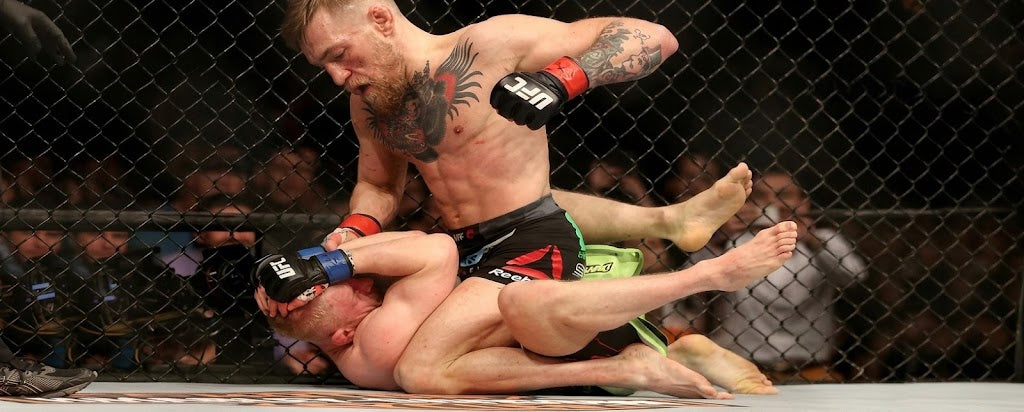
If you have ever been pinned under a heavier training partner, with their weight on your ribs and your arms running out of room, you know the feeling. The match is not over, but it sure feels that way. The good news is that how to escape the mount comes down to a system, not strength, and once you see the system, mount stops feeling like a trap.
Quick answer: to escape the mount, first protect your arms so your opponent cannot walk an underhook up. Then use one of three escapes: the elbow escape (frame, flatten the leg, turn to your hip, free the knee), the double-under counter if they lift the leg into a modified mount, or the kipping escape (hands on hips, elbows inside the thighs, bump, lift and kip the knees in).
Table of contents
1. What Is the Mount Position in BJJ?
The mount is a dominant pin where one grappler sits astride the other's torso with a knee on each side. In a low mount, the top player sits closer to the hips. In a high mount, they slide up toward the chest and armpits, which makes bridging harder and sets up chokes and armbars. An S-mount raises one knee to prepare an armbar. The escapes below work against all of them, but the earlier you act, the easier it gets.

2. Why Is the Mount So Hard to Escape?
The mount is one of the most dominant pins in Brazilian jiu-jitsu. Your opponent sits on your torso with their knees pinching your sides, so you cannot bridge freely or breathe deeply. In IBJJF competition, mount is worth four points, which tells you how much the sport values it, and it opens armbars, arm triangles and cross collar chokes.
Most people lose the position for the same reasons. They panic, push on the chest with straight arms, and bridge again and again until they are exhausted. Pushing with straight arms gives away your elbows, and that is exactly what the top player wants. A calm, structured escape beats that every time.
3. Protect Your Arms Before You Escape
Every escape below depends on one thing: keep both arms in front of you, elbows tight, hands near their hips. If your opponent slides a hand under your arm and starts walking the underhook up toward your neck, you have lost the escapes that need two free arms.
So make this your first job. If you feel that underhook coming, bridge toward the side where it is, which forces their hand to post and base out. Then bring your hand back to its spot. Frames first, escape second. It is also the habit that separates a clean escape from a messy scramble.


Escape 1: The Elbow Escape From Mount
This is the foundation, and it is worth learning in detail. The elbow escape (also known as the elbow-knee escape or shrimp escape) works because it breaks the mount into small, solvable problems instead of one giant one. If you have only seen the basic version, our guide to essential escapes every BJJ white belt should know covers the beginner version. Here is the more detailed, framework-style version.

Step 1: Knock them onto all fours
When your opponent is postured up, almost all of their weight sits on both knees and gets driven into you. Bring your heels close to your hips, place one knee against their back or glute, then lift your hips and push. They drop forward onto their hands and knees. Now their weight is split between upper and lower body, like a table, and their legs feel lighter.
Step 2: Build your frames
Make a frame with one hand and forearm against their hip or belt line. Put your other elbow inside their thigh and connect your hands. This frame does two jobs. It stops them driving their knees high into your armpits, and it blocks the underhook from walking up.
Step 3: Flatten the leg and turn
On the side where your elbow is inside their thigh, flatten that leg as much as you can, flatter than feels natural. Then turn onto your hip so they are sitting on your top hip bone. Picture a pole running through one hip and out the other.
One rule here: never let your elbow cross the center line of their chest. Keep it on the hip. If it crosses, they can drop their weight, trap your arm and go for an armbar, an arm triangle or your back.
Step 4: Spatula under the pancake
Turn onto your side so the bottom knee touches the mat and your heel lifts off it. Think of your knee as a spatula sliding under a pancake, and the pancake is their foot. Now do three things at the same moment:
- Lift with your frame at the knee.
- Push down with your elbow so their knee drops.
- Bring your knee up under their foot.
These three motions have to happen at the same time. Done one after another, the knee has time to slide back out.
Step 5: Turn hard and recover
The second their knee passes your inner thigh, turn fast and lock your feet. If you wait, they bring the knee back out and you start over. Take an underhook and block the near bicep so they cannot crossface you. You are now in half guard, where you can play deep half or a dogfight. To finish the escape to full guard, open the knee, shrimp out a couple of times and slip your heel free.
Common mistakes
- Turning onto your side without the elbow inside the thigh. This hands over your back.
- Letting the elbow slip past their center line.
- Escaping slowly. Hesitation lets them re-establish the knee.
- Skipping the flat leg. If the leg is not flat, your knee runs into their hamstring.
If your opponent settles into a technical mount instead, our breakdown of how to escape from the technical mount adds more options.
Escape 2: The Double-Under Counter to the Modified Mount
Better training partners will feel the elbow escape coming. Before you can reach the foot, they lift that leg and plant the foot on your hip. This is called a modified mount, and now there is nothing to scoop your knee under.
The fix needs speed. React the moment the foot comes up, before they can settle. As you turn, their hips rise slightly, which gives you room to go double under that leg with both hands, as deep as your elbows if possible. From there:
- Keep the leg trapped against your body.
- Shuck them over your head while moving your own body underneath them.
- Turn and scramble, ideally ending on top.
It is a scramble, not a clean escape, so expect to work for the top position. Few players are used to defending it, which makes it hard to stop.
If you land in a worse spot, such as side control, review our guide to the BJJ ghost escape.
Escape 3: The Kipping (Mermaid) Escape
This escape is especially popular in modern no-gi grappling. People call it the mermaid escape or the kipping escape, and it works best against opponents close to your size because it removes their weight instead of fighting it.

What you need
Two things only: your hands on their hip bones and your elbows inside their thighs. Without both, it will not work. Also check the underhook problem first. If their hand is under your arm, bridge toward it to base them out, then replace your hands.
How it works
- Bump them forward, almost like a bench press, so their hips travel over your chest.
- Lift their hips with your forearms and frames, not just your hands. You are not pressing them fully overhead, only getting them up onto your frames.
- Kip: bring your feet together, throw your heels toward your hips and drive your knees under their thighs until you are inside, in butterfly guard, half guard or full guard.
Now they sit on your shins instead of your chest. If the legs will not come out, rock them from one side to the other and your legs will usually slide free. If only one knee fits, bring that knee in, step the foot across and enter a leg entanglement.
One honest point: the kipping escape costs energy. If you are tired, or the other person is much heavier, the elbow escape is the safer choice.
4. Which Mount Escape Should You Use?
Situation |
Best choice |
|---|---|
You are fresh and they are near your size |
Kipping escape |
They are much heavier |
Elbow escape first |
They lift the leg into a modified mount |
Double-under counter |
They have an underhook |
Base them out, then reset your frames |
You are exhausted |
Elbow escape, built on frames |
5. Gi vs No-Gi: What Changes
The three escapes work in both, but the gi adds grips. The top player can use your lapel for cross collar chokes and your sleeves to trap your hands, so keep your elbows tight and your collar protected. Tie your belt snugly so your jacket stays closed, because loose fabric gives your opponent more to grab. A durable BJJ gi and a well-made BJJ belt also help your training, since you can drill hard without worrying about your uniform. In no-gi there are no fabric grips, so your frames and hip position do all the work.
6. How to Drill Mount Escapes
Knowing is different from doing, so train them in layers:
- Solo shrimping and bridging to build the hip movement.
- Slow partner drilling of each step until the three-part motion feels natural.
- Increase resistance gradually. Let your partner defend the knee, lift the leg, or grab the underhook.
- Positional sparring from mount. Start with them on top and play until someone escapes or submits.
If you are new to this, pair it with the trap-and-roll in our beginner guide to three escapes in BJJ.
Mount control and escapes keep mattering as you move up in rank. When you reach purple belt, our guide to ranking up from purple to brown shows how the mount fits into a higher-level game.
7. Mount Escape FAQs
What is the easiest way to escape mount in BJJ?
For most beginners, the elbow escape is the most reliable option, because it uses frames and angles instead of strength. The trap-and-roll is the other common starting point.
What is the mermaid escape?
It is another name for the kipping escape: bump the opponent forward, lift their hips, then kip your knees under their thighs to recover guard.
What is a modified mount?
A mount where the top player lifts one leg and plants the foot, which shuts down the standard elbow escape. A double-under shuck is a common answer.
How do you escape mount against a bigger opponent?
Start with the elbow escape and its frames. Heavier opponents make the lift in the kipping escape harder, so use it when you are fresh.
Why can't I escape the mount?
Three common causes are: the underhook has walked up, your elbow crossed their center line, or you did the three motions one after another rather than together.
Does this work in a real fight?
These escapes are built for sport jiu-jitsu. With strikes in play, protecting your head comes first, so treat this as grappling training and ask a qualified self-defense instructor about anything beyond that.
Can you escape the mount without being strong?
Yes. These escapes rely on frames, angles and timing, not strength. Technique and efficiency matter more than brute force when you are underneath.
What is the difference between high mount and low mount?
In a low mount the top player sits near your hips, so there is more room to bridge and turn. In a high mount they sit near your chest, which restricts your hips and opens up chokes and armbars. Escaping early, before they climb, is easier.
Do mount escapes change in no-gi?
The movements stay the same. In the gi you also have to protect your collar and sleeves, while in no-gi your frames and hip position carry the escape.
8. Mount Escape Checklist
- Protect your arms and stop the underhook from walking up.
- Knock them forward onto all fours to lighten their legs.
- Frame with one forearm on the hip and your other elbow inside the thigh.
- Flatten the leg and turn onto your hip, keeping your elbow off their center line.
- Lift, push and bring the knee up at the same time.
- Turn hard, take the underhook and recover half guard or full guard.
- If they lift a leg, go double under and shuck them over.
- If you are fresh, use the kipping escape: hands on hips, elbows inside the thighs, bump, lift, kip.
9. Final Thoughts
Once you stop treating the mount as a wall and start treating it as a sequence, how to escape the mount becomes a skill you can drill. Protect your arms, build frames, flatten the leg, move your hips, and keep the kipping escape in your back pocket for when you are fresh. Train all three, and you will spend a lot less time pinned and a lot more time playing guard.


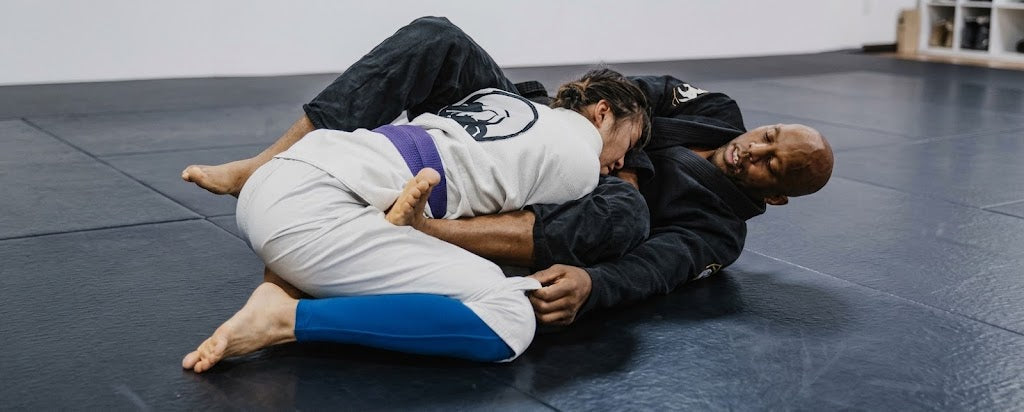

Leave a comment
This site is protected by hCaptcha and the hCaptcha Privacy Policy and Terms of Service apply.