
Table of content
Walk into any BJJ gym and ask ten grapplers how many gis they own, and you will get ten different answers. Some say two is enough. Others roll with a full rack of five or six. The truth sits somewhere in the middle, and it depends on far more than just personal taste.
For a full-time grappler, a gi is not just clothing. It is a piece of gear that takes a beating every single day. Sweat, mat bacteria, tight grips, and repeated washing all wear a gi down fast. Owning the right number, not too few, not too many, is a real training edge that most people never think about.
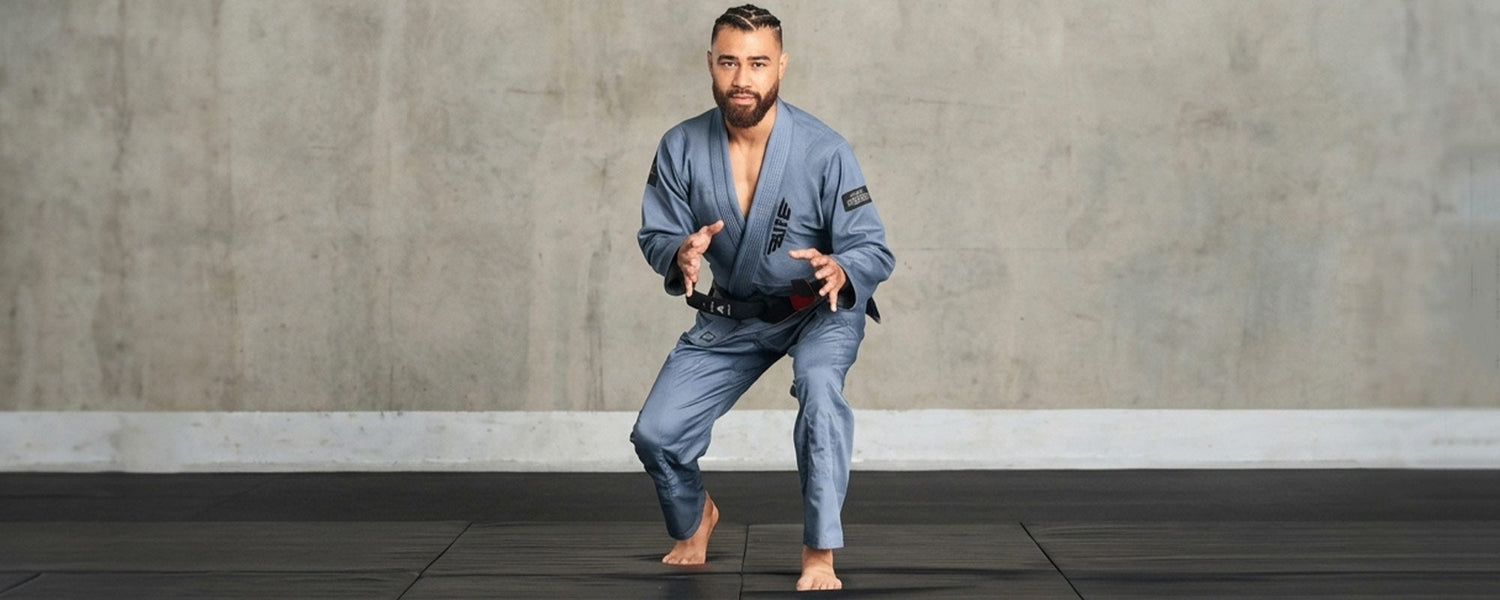
Elite Sports, one of the best BJJ gi makers in the world, builds its full line of BJJ Gis for men, women, and kids with full-time grapplers in mind. With pre-shrunk, machine-washable, IBJJF-approved gis at a fair price point, Elite makes it easy to build out a proper gi rotation without breaking the bank.
So how many gis do full-time grapplers actually need? Continue reading this article to break down the exact number, the logic behind it, and how to build a smart gi collection that keeps training clean, safe, and sharp.
1. Why the Number of Gis Matters More Than Most Grapplers Think

The question of "how many gis do I need?" is often brushed aside. Grapplers tend to focus on technique, mat time, and fitness, not gear logistics. But the size of a gi rotation has a direct impact on hygiene, gear longevity, and even how a grappler shows up at the gym.
Here is why it matters:
Hygiene and skin health: A gi soaked in sweat becomes a breeding ground for bacteria and fungi like ringworm and staph. Wearing a damp or dirty gi, even for a second session without washing, puts both the wearer and training partners at risk. Full-time grapplers who train 5–6 days a week simply cannot wash and fully dry a single gi fast enough between sessions.
Gear wear and lifespan: Washing a gi daily puts massive stress on the fabric and stitching. Rotating between multiple gis spreads that wash the load across several pieces, which means each individual gi lasts much longer. A well-rotated set of gis can last 2–3 years or more, while a single gi washed daily may show heavy wear in just a few months.
Performance and readiness: A freshly washed, fully dried gi feels better on the mat. It is lighter, less stiff, and more comfortable during rolls. A partially damp gi, on the other hand, is heavier and can cause chafing or skin issues over time.
Backup for emergencies: Torn seams, lost gis at tournaments, last-minute schedule changes, a spare gi means training never has to stop.
2. The Minimum: Why One Gi Is Never Enough

Some beginners try to get by with a single gi. This only works for those training once or twice a week. For a full-time grappler training five or more times per week, a single gi creates real problems.
A gi needs at least 24 hours to fully air dry after washing. In humid climates or during winter months, that drying window stretches even longer. If training happens every day, sometimes twice, there is simply no time for a single gi to dry between sessions.
Beyond drying time, daily washing on a single gi accelerates wear at the collar, cuffs, and knee panels. These are the areas that take the most grip stress, and frequent washing breaks down the fibers faster.
A single gi also leaves zero margin for error. A rip at a seam, a forgotten bag, a gi left behind at a weekend tournament, and training comes to a halt.
The verdict: One gi is a starting point for casual practitioners. For full-time grapplers, it is not enough.
3. The Sweet Spot: How Many Gis Does a Full-Time Grappler Actually Need?

The widely accepted recommendation among experienced BJJ practitioners and coaches is 3 to 4 gis for anyone training 4–6 days per week. This gives enough rotation to allow full drying time, spread out washing cycles, keep hygiene standards high, and have a reliable backup.
Here is how the logic works for a typical 5-day training week:
| Training Days Per Week | Minimum Gis Needed | Ideal Gi Count |
|---|---|---|
| 1–2 days | 1 gi | 2 gis |
| 3 days | 2 gis | 3 gis |
| 4–5 days | 3 gis | 4 gis |
| 6–7 days (competitor) | 4 gis | 5–6 gis |
| Tournament travel | Add 1–2 extra | Dedicated comp gi |
With 3–4 gis in rotation, each gi gets washed roughly once or twice per week. This is far more gentle on the fabric than daily washing. Each gi also gets ample time to fully air dry, keeping odor and bacteria at bay.
For grapplers who compete often or travel to camps and seminars, adding one or two extra gis, including a dedicated competition gi, makes a lot of sense.
4. Breaking It Down: What Each Gi in the Rotation Is For
Not all gis in a rotation serve the same role. Building a smart collection means assigning a purpose to each one.
4.1 The Daily Training Gi (2–3 in Rotation)
These are the workhorses of the collection. They go through the most washes, take the most grip damage, and need to perform session after session without issue.
The best daily training gis are lightweight, breathable, and pre-shrunk. The Elite Core BJJ Men's Gi is an ideal example. Built from a 450 GSM pearl weave fabric that is pre-shrunk and machine washable, it handles daily use without shrinking or falling apart. The reinforced stitching at the seams and key stress points means it holds up under consistent grip-heavy rolling.
Elite also offers the full Core line in black, blue, navy, gray, green, and more, all with the same construction and care-ease. Having 2–3 of these in rotation is the backbone of any full-time grappler's gear setup.
4.2 The Competition Gi (1 in the Collection)
A competition gi should be kept cleaner and washed less often than training gis. It lives at the back of the rack and comes out for tournaments and high-stakes rolls. Because IBJJF rules limit gi colors to white, blue, or black for sanctioned events, choosing a competition gi from one of these standard colors is a must.
The Elite BJJ Gi collection includes IBJJF-approved options in all legal competition colors, making it easy to pick a comp-ready gi from the same trusted lineup used for daily training.
4.3 The Backup Gi (1 in the Collection)
Every full-time grappler needs at least one gi that sits in the bag or locker as a true backup, ready to go if a primary gi is dirty, damaged, or forgotten. This can be an older training gi that is past its best but still functional, or a second color choice for variety.
5. Special Cases: When Grapplers Need More Than 4 Gis
For most people, 3–4 gis is the sweet spot. But certain training scenarios call for a larger collection:
Competitors in heavy prep phases: During competition prep, training volume can jump to twice-a-day sessions. At that rate, even 4 gis may not rotate fast enough. 5–6 gis gives the breathing room needed without scrambling to find a clean gi before a morning session.
Grapplers who travel often: Tournaments away from home mean gis need to pack well and dry fast in hotel rooms. Having an extra gi or two packed in the travel bag is a smart move. Lightweight gis like the Elite Core line, made from breathable 450 GSM pearl weave, pack down better than heavier single-weave or double-weave options.
Instructors who teach and train: BJJ coaches often teach multiple classes before getting on the mat themselves. That means longer wear time per session and more sweat absorbed. Instructors typically need one extra gi beyond the standard grappler count.
Young grapplers still growing: For kids in BJJ, growth spurts can mean a gi that fit perfectly three months ago no longer passes inspection. Having a spare Elite BJJ Gi for kids on hand avoids the scramble when a sizing change happens mid-season.g change happens mid-season.
6. The Case for Buying Gis in Sets

One of the smartest moves a full-time grappler can make is buying gis in a set rather than one at a time. Elite Sports offers the Core Black BJJ Gi Pack of 3, and similar packs in white and blue, which instantly set up the ideal 3-gi daily training rotation in a single purchase at a lower cost per gi.
This approach has several clear benefits:
Cost efficiency: Buying three gis in a pack saves money compared to buying each one separately. For full-time grapplers who know they need a proper rotation, it is the smarter financial move from day one.
Uniform look: Some training academies require all students to wear the same color gi. A 3-pack in black, white, or blue satisfies that requirement right away while giving a full rotation.
Consistent fit: Since all three gis in the pack share the same cut and sizing, there is no adjustment period between gis. The fit, feel, and movement are the same across all three pieces.
Comes with a free white belt: Each Elite Core Gi includes a free white belt, and the packs also come with a branded drawstring bag, a clean value addition for anyone starting out or refreshing a worn-down collection.
7. What to Look for in a BJJ Gi for Daily Use

Not every gi can handle the demands of full-time training. When stocking up a rotation, these are the features that matter most:
Pre-shrunk fabric: This is non-negotiable for anyone who washes their gi regularly. Most gi brands ask for cold water, hang-dry only, a tedious process that is hard to follow in daily life. Elite Sports solves this with a special pre-shrunk fabric across its full Core line. These gis can go through a standard machine wash, and even a machine dry without losing their fit. For full-time grapplers, this is a genuine quality-of-life upgrade.
Reinforced stitching at high-stress points: Collars, sleeve cuffs, knee panels, and armpit seams take the most grip and pull force. Strong double or triple stitching at these points is what separates a durable gi from one that starts fraying after two months.
Lightweight and breathable construction: Heavy gis feel sluggish after an hour of hard rolling. A 450 GSM pearl weave hits the right balance, tough enough to handle strong grips, light enough to stay comfortable through a full session.
IBJJF approval: Even if competition is not the immediate goal, an IBJJF-approved gi means the build and dimensions meet a high standard. It also means the gi is comp-ready the moment an event comes up, with no last-minute gear panic.
Side-slit design for range of motion: A gi that restricts hip and leg movement is a problem during guard work and takedowns. An ergonomic side-slit design allows a full range of motion without the jacket bunching up.
8. A Note for Female Grapplers

The gi rotation math applies equally to women on the mat. The key difference is that women-specific gis are cut and sized for a female frame, narrower shoulders, shorter sleeves, and a more fitted torso, which makes a real difference in comfort and function during rolls.
Elite Sports, widely regarded as one of the best BJJ gear brands available today, offers a full Elite Sports Women's BJJ Gi collection in white, black, pink, purple, and blue. The same pre-shrunk, machine-washable, IBJJF-approved construction carries over to the women's line, so female grapplers get the same daily-training durability in a proper fit.
Female grapplers training 4–5 days per week should follow the same 3–4 gi rotation as their male counterparts.
9. Gi Care Tips to Maximize Longevity Across the Rotation

Even the best gi will wear out fast if it is not cared for properly. These habits extend the life of every gi in the rotation:
Wash after every session, without exception. Leaving a sweaty gi in a bag, even overnight, allows bacteria and odor to set in. A quick machine wash removes this before it becomes a problem.
Use cold water for most washes. Hot water accelerates color fading and fabric breakdown. Cold water is gentler and still cleans effectively with a good detergent.
Avoid fabric softeners. Fabric softeners coat fibers and can reduce the grip resistance and structural strength of the weave over time.
Air dry when possible. While Elite Core Gis are built to handle machine drying, air drying extends the life of any fabric. Hang the gi by the collar or shoulders to maintain shape.
Rotate evenly. Do not always grab the same gi first. Rotating through the full set ensures even wear and washing across all pieces, so none of them age faster than the others.
10. Final Word: The Smart Grappler's Gi Count
For a full-time grappler training 4–6 days per week, the ideal gi count is 3 to 4 gis, with 3 as the minimum and 4 as the practical sweet spot. Competitors in heavy prep phases or instructors who teach and train every day may want to go up to 5 or 6.
Building this rotation does not have to be expensive or complicated. Elite Sports, a top-rated BJJ gi manufacturer trusted by thousands of athletes around the world, makes it easy with affordable Core Gis, convenient 3-pack bundles, and a wide range of IBJJF-approved colors for both training and competition.
Whether building a starter rotation or upgrading an aging collection, the full range of Elite BJJ Gis for men, Elite Women's BJJ Gis, and Elite Kids' BJJ Gis covers every need on the mat. Pre-shrunk, machine washable, reinforced, and competition-legal, these are gis built for the real demands of full-time grappling.
Train hard. Rotate smart. Stay clean on the mat.


Leave a comment
This site is protected by hCaptcha and the hCaptcha Privacy Policy and Terms of Service apply.