
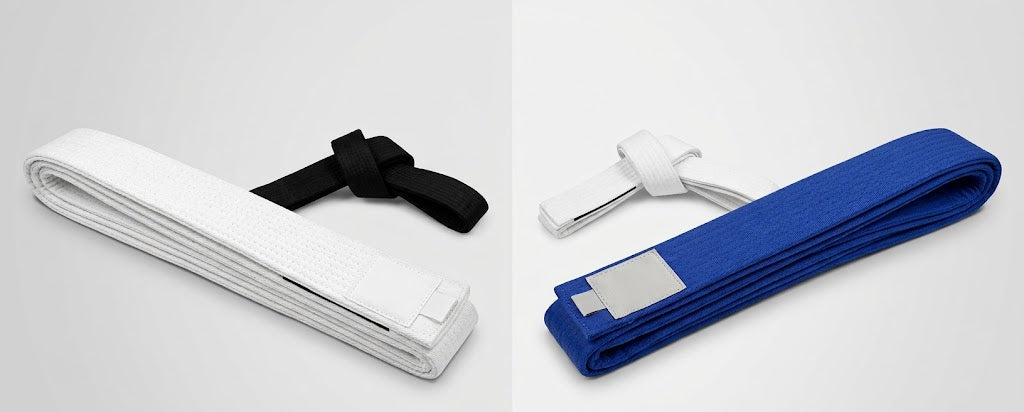
Cotton vs. poly-blend BJJ belts come with different tradeoffs. Higher-cotton belts generally soften faster with training and washing, while polyester-containing blends tend to retain color and resist fraying better. But fiber content is only part of the equation: weave, layers, stitching, construction, and care can all affect how a belt feels and how long it lasts. This guide compares cotton and poly-blend BJJ belts, explains how each material behaves over time, and shows what Elite Sports adult belts are actually made from.
Quick answer, if you're short on time:
- Higher-cotton belts generally soften faster but may show fading or fraying sooner with heavy use.
- Polyester-containing blends generally retain color and resist fraying better, although they may feel firmer when new.
- Elite Sports adult belts use a 65% polyester / 35% cotton blend across the rank colors.
- Construction and care matter alongside fiber content when evaluating belt durability.
Table of contents
1. What's Actually Different Between the Two BJJ Belts
Cotton is a natural fiber that absorbs moisture readily and softens with washing and wear. Polyester is a synthetic fiber that resists moisture absorption, holds its shape, and tends to resist fading and fraying better over repeated wear and washing. A poly-blend belt combines both, and the ratio between them, not just the presence of one fiber or the other, is what determines how a specific belt actually behaves.
Neither fiber is objectively superior for a rank belt. The two get emphasized differently depending on what a manufacturer is optimizing for: initial softness and feel, or long-term durability and color retention.
1.1. How Cotton Behaves Over Time
A higher-cotton belt tends to soften faster with washing and normal use, which some practitioners genuinely prefer. It's not just a lesser option waiting to wear out. Many people like exactly how a cotton-heavy belt feels after a season of washing and training: softer, more broken-in, easier to knot. The tradeoff is that cotton is more prone to fraying at the stitched ends and fading with repeated washing and sun exposure over the belt's lifespan, particularly for darker colors.
1.2. How a Poly-Blend Belt Behaves Over Time
Adding polyester to the blend generally slows down fading and fraying, since synthetic fiber tends to hold dye and resist breakdown better than cotton under comparable wear. That's a general tendency rather than a fixed rule. Construction, dyeing method, and how the belt is washed all affect the result too. The tradeoff shows up early rather than late: a poly-blend can feel stiffer out of the packaging and take a bit longer to soften with washing and training.

2. Durability Comparison
| Factor | Higher Cotton Content | Higher Poly Content |
|---|---|---|
| Initial softness | Often softens faster | May stay firmer initially |
| Moisture absorption | Absorbs sweat more readily | Resists moisture absorption |
| Color retention over time | May fade sooner | Generally better |
| Fraying resistance | Can show wear sooner | Often more resistant |
| Heavy-use durability | Depends heavily on construction | Depends heavily on construction |
These are general fiber tendencies, not guarantees for any specific product. Two bjj belts with the exact same fiber ratio can still wear differently because of weave, stitching quality, number of layers, and finishing. Construction is doing at least as much work as the fiber content itself.
Framed around what you actually care about most:
| If You Care Most About | Likely Better Fit |
|---|---|
| Faster softening | Higher cotton |
| A soft, broken-in feel | Higher cotton |
| Color retention | Higher polyester |
| Fraying resistance | Higher polyester |
| Frequent washing | Polyester-containing blend |
| Overall durability | Depends on construction and blend together |

3. What Elite Sports Belts Are Actually Made Of
Elite Sports adult belts are made from a 65% polyester, 35% cotton blend across every rank color, with reinforced stitching and a pre-shrunk, lightweight construction. That ratio leans toward the durability side of the general tendencies described above — more resistance to color loss and fraying — at the cost of a slightly longer break-in period than an all-cotton belt would have. Actual lifespan still comes down to how the belt is used and cared for. The blend ratio sets a general tendency, not a guarantee.

4. Does Material Affect Competition Legality?
Not directly. IBJJF's uniform standard sets requirements around belt width, how it's tied, and rank color, not a specific fiber percentage, and Elite Sports' adult belts are IBJJF approved and meet that standard regardless of blend ratio. Other organizations set their own rules, so if you compete outside IBJJF, check that organization's specific requirements rather than assuming they match.
5. Does Material Change Break-In and Care?
Somewhat. A belt with a higher poly content, like Elite Sports' 65/35 blend, may take slightly longer to feel fully broken in than a higher-cotton belt would. The basic principles are the same either way: normal training, gentle handling, proper washing — see Elite Sports' guide on how to break in a stiff new BJJ belt without damaging it for the full process. The time it takes and how stiff it feels along the way can still vary with fiber content and construction.
The same applies to long-term care. Storage and washing habits matter more for how long any belt lasts than the fiber ratio alone does — the belt care section of Elite Sports' guide on caring for your BJJ gi to make it last covers washing, drying, and storage practices that apply to the belt alongside the rest of the kit.
6. Signs a Belt Is Actually Wearing Out
Material tendencies aside, these are the concrete things worth checking on any belt, regardless of blend:
- Fraying at the stitched ends
- Loose or broken stitching anywhere along the belt
- Noticeable thinning in the fabric
- Significant, uneven fading
- Permanent creases or deformation that don't relax with normal handling
- Damage that keeps the belt from tying securely
Any one of these is a better reason to replace a belt than its age alone.
7. Which Belt Material Should You Choose?
If you're shopping specifically for an IBJJF-approved option without comparing blends yourself, Elite Sports' full lineup of rank belts uses the 65/35 poly-cotton blend across every color, landing on the durability side of the tradeoffs in the table above.
8. Bottom Line
If you want a belt that softens quickly and develops a broken-in feel, a higher-cotton construction tends to get there faster. If frequent training, color retention, and resistance to fraying matter more to you, a polyester-containing blend generally holds up better over time. Neither fiber determines durability on its own. Construction and care matter just as much as what the belt is made from.
9. Frequently Asked Questions
Does washing affect cotton and polyester belts differently?
Yes. Cotton absorbs more water and can change feel more noticeably after washing, while polyester absorbs less and generally holds its shape better. Either way, following the belt's care instructions matters more than the blend itself.
Does cotton shrink more than polyester in the wash?
Generally yes, especially with hot water, since polyester is more resistant to heat-related shrinkage than cotton is. This is one more reason to follow the care label rather than guessing at wash temperature.
How long should a BJJ belt last?
That depends on training frequency, construction, and care more than blend alone. Rather than going by age, check for the concrete wear signs above — fraying, thinning fabric, broken stitching, or uneven fading are more reliable indicators than how many years you've had it.
Are BJJ belts 100% cotton?
Some are, but many popular belts use a poly-cotton blend rather than pure cotton, generally for better color retention and fraying resistance. Elite Sports' adult belts, for example, use a 65% polyester, 35% cotton blend across every rank color.
Do poly-blend belts feel stiffer than cotton belts?
Generally yes, at first. A higher poly content tends to soften a bit more slowly with washing and training compared to a higher-cotton belt.
Does belt material affect how it feels when tied?
Yes, mainly through stiffness. A stiffer, higher-poly belt can feel bulkier in the knot and take a bit more effort to wrap tightly around the waist at first, while a softer, higher-cotton belt tends to conform and tie more easily right away. Both end up feeling similar once broken in.
Does belt material affect whether it's competition legal?
Not for IBJJF specifically. Its rules govern width, tying method, and rank color, not fiber composition. Other organizations may differ, so check the specific requirements of whichever organization is hosting your event.



Leave a comment
This site is protected by hCaptcha and the hCaptcha Privacy Policy and Terms of Service apply.