
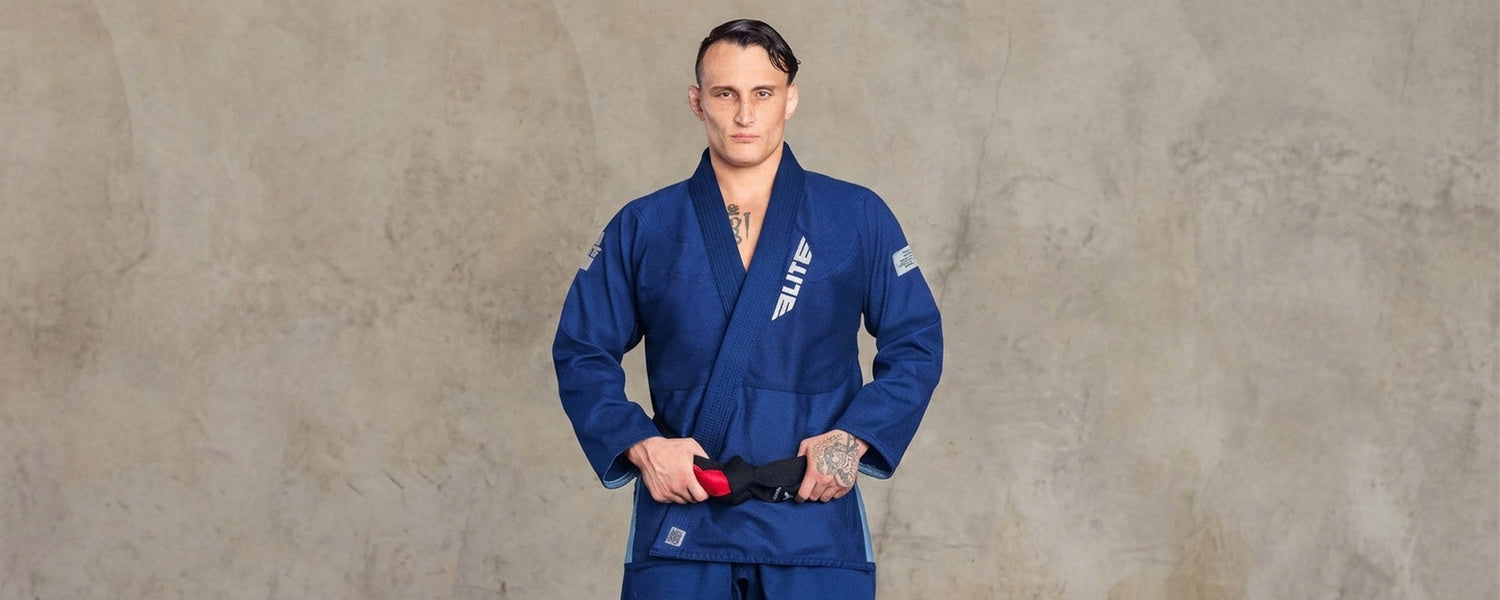
Not every BJJ gi is built for the same job. The gi you roll in five times a week, and the gi you compete in are designed around different priorities—and using the wrong one in the wrong setting can cost you comfort, durability, or even a match.
This guide breaks down exactly how competition gis and training gis differ, so you can decide what belongs in your gi bag for the gym and what belongs in it for tournament day.
What Is a Training Gi?
A training gi is built for volume. It's the gi you wear for daily drilling, live rolling, and open mat sessions where comfort, breathability, and durability under repeated use matter more than how the gi looks on a podium.
Training gis are designed to:
Withstand frequent washing and heavy use
Stay comfortable through long, sweaty sessions
Offer a relaxed, forgiving fit for different body types
Hold up to constant gripping, pulling, and friction
What Is a Competition Gi?
A competition gi is built for performance under strict rules. Tournament organizations like the IBJJF enforce specific requirements on gi color, weave, fit, and patches, so a competition gi has to check every regulatory box while still giving you an edge on the mat.
Competition gis are designed to:
Meet IBJJF (or other federation) sizing and construction standards
Fit close to the body to limit an opponent's grips
Use lightweight, high-performance fabric for speed and mobility
Look clean and professional under tournament lighting and judging
Competition Gi vs Training Gi: Key Differences
1. Fabric Weight
Training gis often lean mid-weight to heavyweight, since they need to survive frequent washing and rougher daily use. Competition gis tend to be lightweight or single-weave, prioritizing speed and reduced grip surface over sheer toughness.
2. Fit
Training gis are usually cut a little roomier for comfort across long sessions and varied body types. Competition gis are tailored to an athletic, close-to-body fit — looser fabric simply gives opponents more to grab during a match.
3. Durability vs Performance
Training gis prioritize longevity: reinforced knees, double stitching, and tougher weaves that survive months of abuse. Competition gis prioritize performance: every ounce of fabric is there for a reason, since extra weight or bulk can slow you down in a five-to-ten-minute match.
4. Rule Compliance
This is where competition gis really diverge. A gi worn for training has no formal requirements — wear what's comfortable. A competition gi must meet federation rules on color (typically white, blue, or black for IBJJF), collar thickness, patch placement, and overall construction, or you risk disqualification before the match even starts.
5. Price and Replacement Cycle
Because training gis take a daily beating, many athletes treat them as a replaceable cost — built tough, but not expected to last forever. Competition gis are often a smaller, higher-quality collection used selectively, so the cost per wear is higher but the gi sees far less wear and tear overall.
Quick Comparison Table
Factor |
Training Gi |
Competition Gi |
Primary goal |
Durability & comfort |
Performance & compliance |
Typical weight |
Mid to heavyweight |
Lightweight |
Fit |
Relaxed, forgiving |
Athletic, close-fitting |
Stitching focus |
Reinforced for daily wear |
Clean, regulation-compliant |
Rules |
None |
IBJJF or federation-specific |
Wash frequency |
Very high |
Low to moderate |
Best for |
Gym sessions, open mat |
Tournament day |
Do You Need Two Different Gis?
For casual or recreational practitioners, one quality gi can usually handle both roles. But for athletes who train often and compete regularly, having a dedicated training gi and a dedicated competition gi makes sense: it protects your competition gi from unnecessary wear and ensures you're never caught off guard by a rule violation on match day.
The real question isn't training gi or competition gi — it's finding a gi brand that performs well in both categories, so you're not forced to compromise either way.
Best Gi for Both Training and Competition: Elite Sports
If you want one brand that delivers on both fronts; Elite Sports is one of the strongest options on the market. Their gis are built with the durability and comfort needed for everyday training, while also meeting the construction quality and clean fit competitors look for on tournament day.
Here's why Elite Sports works for both use cases:
Durable construction — reinforced stitching and quality cotton weaves that hold up to daily training without breaking down
Athletic, competition-ready fit — a tailored cut that minimizes excess grip material when it matters most
Lightweight performance — fabric that stays comfortable through long training sessions and fast-paced matches alike
Reliable value — premium features without the premium-only price tag, making it practical to own more than one
Whether you're drilling techniques on a Tuesday night or stepping onto the competition mat on a Saturday morning, Elite Sports gives you a gi built to handle either situation without forcing you to choose between comfort and compliance.
Final Thoughts
A training gi and a competition gi are built around different priorities — durability and comfort versus performance and rule compliance. Understanding that difference helps you train smarter and compete with confidence. And if you'd rather not maintain two completely separate gi collections, a brand like Elite Sports proves you don't have to choose one over the other.
FAQ: Competition Gis vs Training Gis
Can I wear my training gi to compete? Only if it meets your federation's rules (color, collar thickness, patch placement, etc.). Many training gis aren't built to those exact specifications, so check before you register.
Is a lighter gi always better for competition? Not necessarily — lighter gis reduce grip surface and add speed, but they should still meet durability and rule requirements. The goal is the lightest gi that's still fully compliant and comfortable for the match.
How often should I replace a training gi? It depends on usage, but most training gis show real wear after 6–12 months of regular use. Reinforced stitching and quality cotton extend that lifespan significantly.
Is Elite Sports IBJJF compliant? Elite Sports designs gis to meet the fit, construction, and quality standards competitors look for — always double-check the specific model and current federation rules before your event.

Leave a comment
This site is protected by hCaptcha and the hCaptcha Privacy Policy and Terms of Service apply.